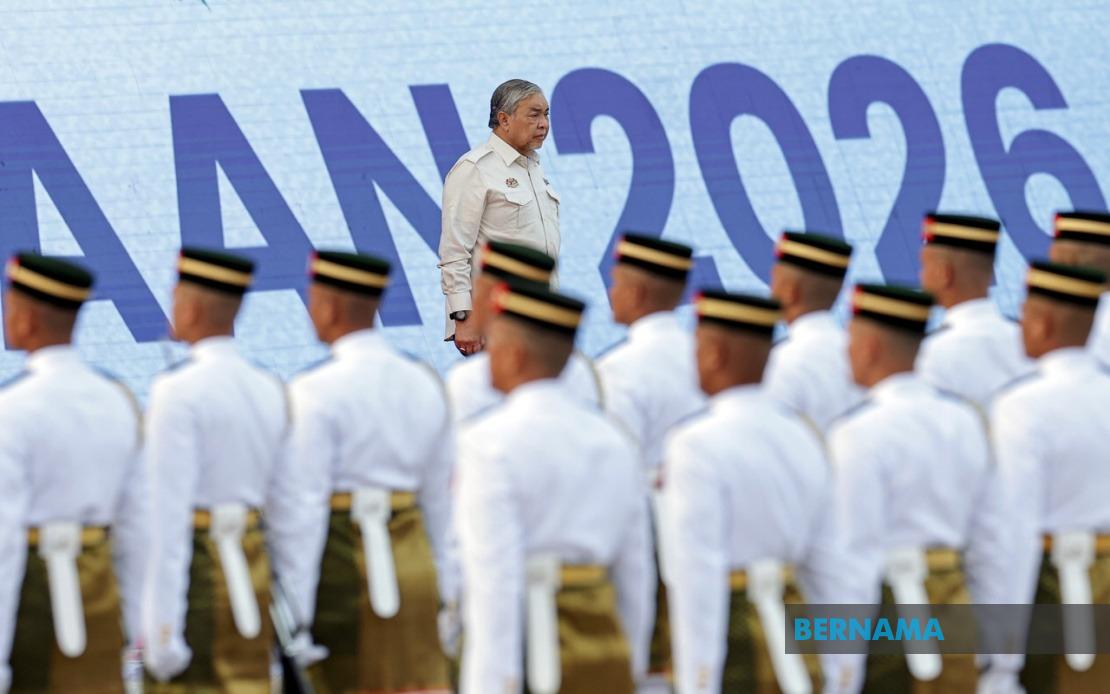
Malaysia's 2026 National Day celebration at Dataran Putrajaya marked a significant milestone in the nation's commemorative events, with Deputy Prime Minister Datuk Seri Dr Ahmad Zahid Hamidi characterising the day as notably more impressive than celebrations in previous years. Speaking to journalists following the festivities, Ahmad Zahid attributed the enhanced quality of the event to a tangible surge in patriotic sentiment among the Malaysian public, underscoring what he saw as positive developments in national consciousness.
The scale of public participation underscored the Deputy Prime Minister's assessment. More than 100,000 citizens converged on the Putrajaya administrative centre from dawn onwards, creating an atmosphere of collective celebration that extended throughout the day. The sheer volume of attendees, many arriving early to secure prime viewing positions for the parade and procession, illustrated the enduring appeal of National Day observances and suggested genuine grassroots engagement with the occasion.
The parade itself demonstrated meticulous organisation and substantial logistical coordination. A total of 10,819 participants marched across 76 distinct contingents, representing diverse sectors and communities throughout Malaysia. The inclusion of 22 marching bands added cultural richness and musical accompaniment to the procession, creating a multi-sensory experience that likely contributed to the event's perceived vibrancy and appeal to spectators of varying ages and backgrounds.
The theme selected for this year's National Day—"Malaysia MADANI: Kesejahteraan Dinikmati" (Malaysia MADANI: Prosperity Enjoyed)—carried particular resonance, linking the celebration to the government's broader policy framework and development vision. This thematic anchor provided conceptual coherence to the festivities, connecting public celebration with government priorities around equitable prosperity and well-being across diverse Malaysian communities.
The attendance of the nation's highest offices lent ceremonial weight and symbolic importance to the proceedings. His Majesty Sultan Ibrahim and Her Majesty Raja Zarith Sofiah, in their roles as King and Queen, provided institutional legitimacy and continuity to the celebration. The presence of Prime Minister Datuk Seri Anwar Ibrahim alongside Cabinet ministers reinforced the event's status as a focal point for national leadership and governmental representation, ensuring that the celebration commanded appropriate state recognition.
Ahmad Zahid's personal engagement with attendees throughout the day reflected a deliberate strategy of visible leadership presence at public events. By spending considerable time mingling with citizens who had gathered at Dataran Putrajaya, the Deputy Prime Minister demonstrated accessibility and a willingness to connect directly with ordinary Malaysians. This approach, increasingly common among political figures seeking to maintain relevance and public connection, transforms formal state occasions into opportunities for informal interaction and democratic engagement.
The Deputy Prime Minister's emphasis on growing patriotism warrants closer examination within Malaysia's contemporary political and social context. In recent years, observers have noted occasional fragmentation along communal and political lines, making statements about unified patriotic sentiment particularly significant. Ahmad Zahid's framing suggests an interpretation of National Day 2026 as evidence of social cohesion and renewed commitment to shared national identity, potentially serving as a counter-narrative to divisive tendencies or concerns about national unity.
From a regional perspective, Malaysia's ability to organise large-scale public celebrations involving over 100,000 participants reflects the country's institutional capacity and democratic stability. Compared to several Southeast Asian neighbours, Malaysia's tradition of relatively open, well-attended National Day celebrations demonstrates confidence in public assembly and freedom of expression, elements that international observers often cite when assessing regional democratic health and civic participation.
The scale and organisation of the 2026 celebration also carries implications for Malaysia's domestic tourism and events management sector. Successfully executing large-gathering events with over 100,000 participants, coordinating multiple contingents and marching bands, and maintaining public order while enabling genuine celebration requires substantial expertise and resources. The positive assessment from government leadership suggests satisfaction with execution quality, potentially encouraging similar large-scale civic events and supporting the domestic events industry's growth and capability development.
Looking forward, Ahmad Zahid's characterisation of the 2026 celebration as superior to previous years establishes a benchmark that may influence public expectations for future National Day observances. If citizens increasingly anticipate ever-larger and more impressive celebrations, organisers face mounting pressure to continuously innovate and expand these events, potentially straining resources while raising the bar for what constitutes a successful National Day. The Deputy Prime Minister's remarks thus carry implications extending well beyond the immediate event into the trajectory of future commemorations.
The emphasis on patriotism in Ahmad Zahid's public statements aligns with broader government messaging around national identity and social cohesion. In an era of rapid technological change, evolving cultural influences, and competing narratives around Malaysian identity, state encouragement of patriotic sentiment serves multiple political purposes: reinforcing national unity, legitimising government authority, and framing public enthusiasm as evidence of effective governance and social stability under the current administration's stewardship.

