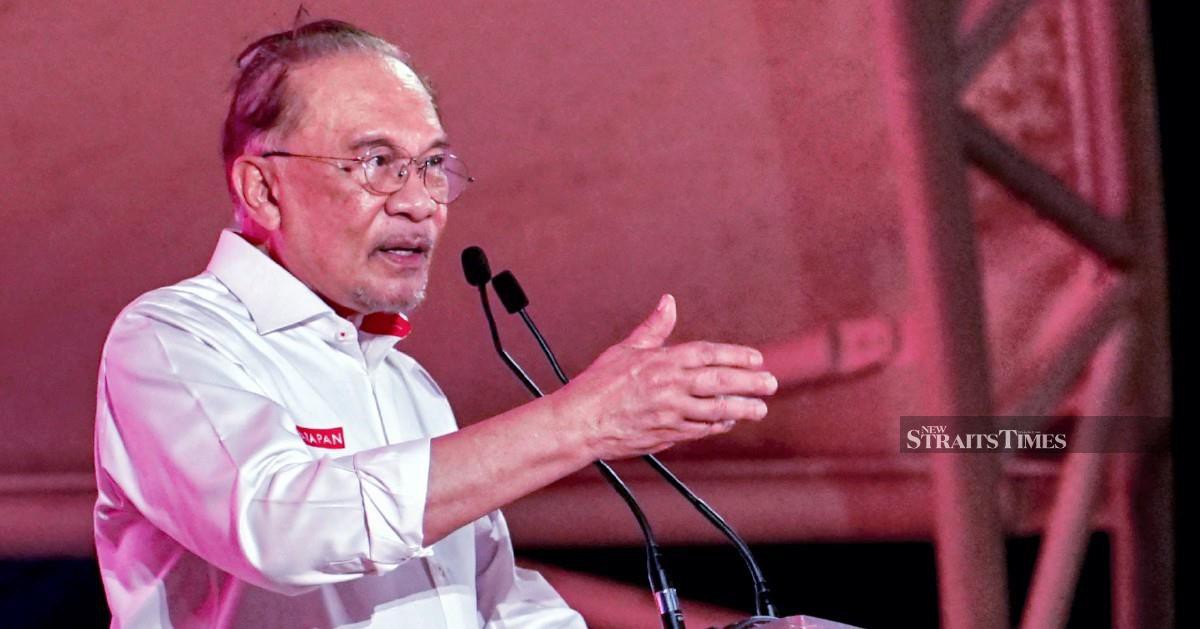
Prime Minister and Finance Minister Datuk Seri Anwar Ibrahim has pointed to Malaysia's second-quarter economic expansion of 5.8 per cent as evidence that the nation's economy is weathering challenges with considerable fortitude. The figure exceeded analyst expectations and demonstrates that the structural economic initiatives introduced under his administration's Madani Economic Framework are beginning to yield tangible results in domestic output and activity levels.
The Madani Economic Framework, launched as a comprehensive strategy to reposition Malaysia's economy for sustainable long-term growth, has become the centrepiece of the government's economic policy agenda. By anchoring development priorities around inclusivity, competitiveness, and resilience, the framework attempts to shift the economy away from heavy dependence on commodity exports and foreign direct investment toward more diversified and domestically driven sources of expansion. The second-quarter performance provides early validation that the approach is working, at least in the short term.
This growth trajectory is significant for Malaysia in regional context. Southeast Asia has faced headwinds from slower global demand, structural challenges in manufacturing competitiveness, and uncertainties surrounding international trade dynamics. While regional peers have experienced mixed results, Malaysia's ability to sustain growth above 5 per cent puts it in a relatively favourable position among ASEAN economies. The resilience demonstrated in the latest figures suggests that policy adjustments and sectoral rebalancing efforts are helping the country navigate an uncertain external environment more effectively than might have been anticipated.
However, Anwar's accompanying emphasis on the necessity of sustained reform measures reveals awareness that a single strong quarter does not guarantee long-term prosperity or insulate Malaysia from emerging risks. The prime minister's cautionary stance reflects understanding that macroeconomic growth figures, while positive, mask structural challenges that require ongoing attention. Digital transformation across industries, skills development aligned with future workforce needs, and improvements in productivity remain areas where Malaysia must compete more effectively to maintain its economic edge.
The Madani framework's focus on inclusion suggests acknowledgement that growth must be broadly distributed to maintain social cohesion and political stability. In Malaysia's context, where regional disparities in development and opportunities have historically created tensions, ensuring that economic expansion reaches beyond major urban centres and corporate headquarters becomes a policy imperative as much as an economic one. Growth concentrated in Kuala Lumpur and the Klang Valley, without corresponding development in Sabah, Sarawak, and other regions, risks deepening existing grievances.
Investors and policymakers will be scrutinising whether the second-quarter momentum can be sustained into subsequent periods. Economic data tends to fluctuate, and establishing whether 5.8 per cent represents a new baseline or a temporary peak will shape confidence in Malaysia's recovery trajectory. The government's ability to navigate external shocks, maintain investor sentiment, and implement reforms without triggering political backlash will determine whether this growth story becomes a durable trend or merely a cyclical uptick.
Anwar's dual role as Prime Minister and Finance Minister places him at the centre of both policy formulation and implementation. This concentration of authority enables more rapid decision-making but also means that any missteps or perceived inconsistencies in economic management carry immediate political consequences. The government's credibility depends on translating growth figures into improved living standards for ordinary Malaysians—higher wages, better employment prospects, and improved public services.
The reference to resilience in Anwar's statement carries political weight as well. Following years of political instability and governance challenges, the government has emphasised its capacity to provide steady hands managing the economy. Demonstrating that Malaysia can achieve respectable growth under its stewardship serves multiple purposes: vindicating the Madani framework, justifying policy choices made over the past period, and building momentum for more ambitious structural changes.
Looking ahead, several factors will determine whether Malaysia can sustain and build upon this growth. Domestic consumption patterns, business investment confidence, and export market access will all play crucial roles. Equally important are global economic conditions, particularly demand from trading partners and commodity price movements that continue to influence Malaysian economic activity despite diversification efforts. The government's assertion that internal structural improvements are driving growth suggests a degree of decoupling from external shocks, but complete independence remains unrealistic for a small open economy.
The emphasis on continuing reform underscores that Malaysia's policymakers understand the competitive pressures facing the nation. China's technological ascendancy, India's demographic dividend, and Vietnam's manufacturing renaissance all represent long-term competitive challenges that cannot be wished away by quarterly growth figures. Malaysia must continue upgrading its capabilities, improving governance, and creating an environment where innovation flourishes and talent is attracted and retained.
For Malaysian businesses and workers, the 5.8 per cent growth figure carries significance primarily to the extent it translates into tangible improvements in their economic circumstances. Job creation, wage growth, and business opportunities matter more than abstract growth statistics. The government's challenge lies in ensuring that its narrative of resilience and reform translates into concrete benefits distributed widely across Malaysian society, rather than accruing primarily to a narrow segment of beneficiaries.

