Malaysia's accountancy profession stands at a critical juncture, facing unprecedented pressure to reinvent itself as a driver of economic competitiveness in an era of rapid technological disruption and rising environmental accountability. According to the Malaysian Institute of Accountants (MIA), the profession must fundamentally reshape its identity around three pillars: technological readiness, unwavering ethical standards, and genuine stakeholder trust. This transformation is not optional but essential if Malaysia is to maintain its standing as a credible financial destination and attract both domestic and foreign investment in an increasingly scrutinised global marketplace.
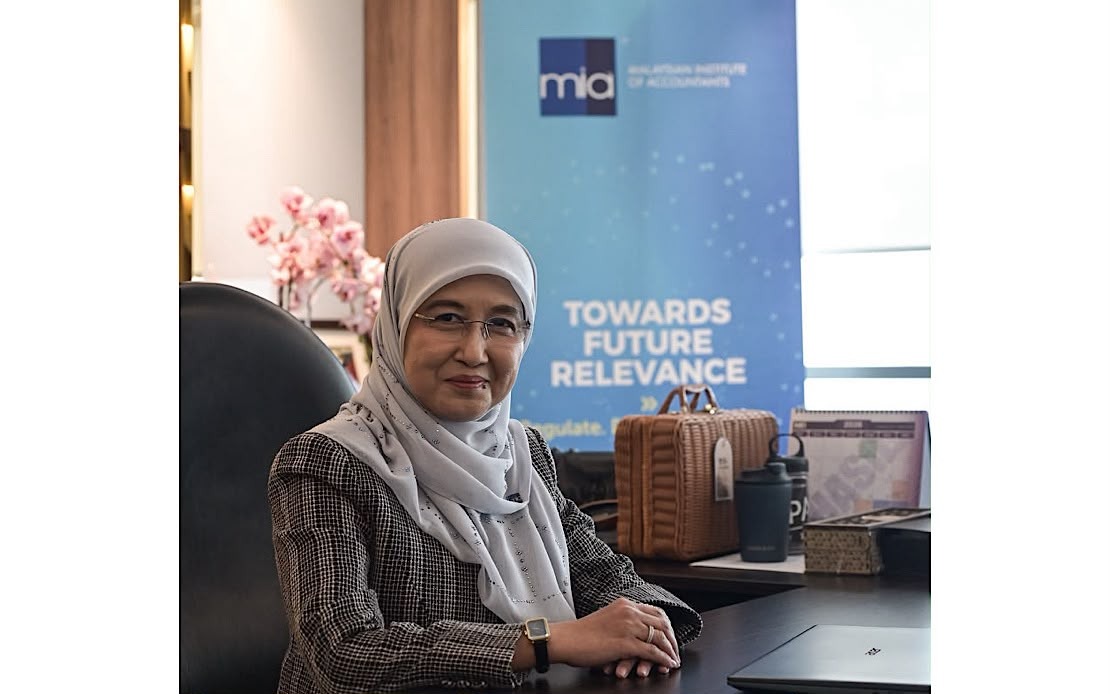
Datuk Saniza Said, MIA's first woman president elected in December 2025, articulated this vision during recent remarks to the national news agency. She emphasised that today's accountants operate far beyond the narrow confines of record-keeping and compliance. Instead, they function as strategic advisers, influencers of corporate governance, and custodians of financial integrity—roles that demand far deeper expertise and ethical fortitude than previous generations required. The expansion of the accountant's mandate reflects broader shifts in how businesses identify and manage risk, allocate resources, and communicate with stakeholders across increasingly complex supply chains and regulatory environments.
At the heart of Saniza's message lies an uncompromising stance on ethics and integrity. She stressed that the profession must actively champion transparency, accountability and adherence to professional principles not merely as compliance boxes to tick, but as the genuine foundation of public trust. This emphasis gains particular resonance in Southeast Asia, where corporate scandals and financial misconduct have periodically eroded investor confidence and damaged national reputations. By positioning ethics as non-negotiable and intrinsic to professional identity rather than peripheral to it, MIA signals a commitment to rebuilding and sustaining the credibility upon which Malaysia's role as a financial hub ultimately depends.
Paradoxically, the greatest threat to the accountancy profession's relevance comes not from unethical behaviour but from technological obsolescence. Saniza acknowledged that professionals unwilling or unable to adapt to rapid technological change risk becoming redundant in a workplace increasingly dominated by automation and artificial intelligence. Yet she deliberately rejected a fatalistic narrative in which machines eliminate human accountants. Instead, she articulated a more nuanced vision: artificial intelligence excels at handling repetitive, data-intensive bookkeeping tasks, but professional judgement—the ability to interrogate complex financial situations, identify hidden risks, and provide contextualised advice—remains stubbornly human. This distinction between technical automation and professional wisdom forms the conceptual bedrock upon which the profession's future viability rests.
G. Shanmugam, MIA's chief executive officer, expanded on this theme by describing the profession as approaching a genuine inflection point driven by AI, data analytics, automation and emerging technologies. He characterised this moment not as a crisis but as an opportunity for fundamental role elevation. As routine accounting tasks migrate to software, human accountants gain bandwidth to focus on higher-value functions including data analysis, business strategy development, risk identification and advisory services. This transition mirrors shifts already visible in other professions where technology handles the mechanical while humans concentrate on interpretation and strategy. In Malaysia's context, such repositioning could substantially enhance the profession's attractiveness to talented younger cohorts who seek intellectually engaging, dynamic career paths rather than repetitive clerical work.
The concept of foresight capabilities emerged as a distinctive competency Shanmugam flagged as increasingly critical. Modern management teams and stakeholders now expect accountants to function as forward-looking advisers capable of identifying emerging opportunities and threats before they fully materialise. This demands that accountants develop sophisticated capabilities in data analytics and predictive modelling—skills enabling them to discern patterns, anticipate market shifts, and recommend proactive strategic adjustments. The accountant's role thereby evolves from chronicler of past financial performance toward navigator of future possibilities, a shift that substantially elevates the profession's strategic value within organisations.
Sustainability reporting and assurance represent another frontier reshaping accountancy's scope and relevance. MIA recently launched its Sustainability Blueprint for the Accountancy Profession and a complementary Sustainability Roadmap, both designed to equip members with competencies necessary to support organisations navigating the increasingly complex terrain of environmental, social and governance (ESG) disclosure and reporting. As regulatory frameworks worldwide tighten around climate risk, emissions reporting and supply chain transparency, accountants will increasingly provide independent assurance over sustainability information—a function that mirrors their longstanding role in financial audit but extends into domains traditionally managed by sustainability specialists. For Malaysia, where palm oil, manufacturing and financial services sectors face mounting pressure to demonstrate environmental responsibility, the professionalisation of sustainability assurance could position Malaysian accountants as valuable advisers to domestic corporations navigating global ESG standards.
MIA's membership base of approximately 42,000, growing at between 1.5 and 2.0 percent annually, underscores the profession's ongoing expansion within Malaysia's economy. Yet sheer membership growth proves insufficient without corresponding investment in continuous upskilling and professional development. MIA currently delivers roughly 1,000 Continuing Professional Development programmes annually alongside conferences, online learning platforms and networking initiatives—a substantial educational infrastructure designed to keep practitioners abreast of technological shifts, regulatory changes and emerging best practices. This commitment to continuous learning distinguishes the profession from static occupations and signals to younger professionals that career trajectories within accountancy offer genuine intellectual progression rather than stagnation.
Shanmugam directly addressed widespread public anxiety about technological displacement, reframing automation not as a threat to employment but as a catalyst for professional enrichment. He argued that routine tasks increasingly automated by software represented precisely the work that deterred talented individuals from entering the profession. By eliminating tedium and bureaucratic drudgery, technology paradoxically makes accountancy more attractive to fresh talent, who can now progress more rapidly from entry-level data compilation into analytical, managerial and advisory responsibilities. This argument resonates particularly strongly in Malaysia's competitive labour market, where talent retention in knowledge-intensive professions remains challenging.
The broader implications for Malaysia's economic competitiveness extend beyond the accounting profession itself. International investors evaluating potential markets assess not merely macroeconomic fundamentals but the quality and integrity of financial reporting and corporate governance infrastructure. A profession characterised by high ethical standards, technological sophistication and genuine stakeholder trust functions as a competitive asset, differentiating Malaysia from regional rivals and enhancing the country's attractiveness as an investment destination. Conversely, erosion of professional standards or the perception that Malaysian accountants lag technologically could gradually undermine confidence in local financial systems.
Saniza's elevation as MIA's first female president also carries symbolic weight for a profession historically dominated by men. Her appointment signals organisational commitment to diversity and inclusive leadership, factors increasingly important to multinational corporations evaluating jurisdictions based on their broader governance and cultural characteristics. The messaging around future-readiness, trust and inclusive professionalism appeals both to established practitioners seeking relevance and to emerging talent considering career options in an economy transitioning toward knowledge and services intensity.
The convergence of technological transformation, sustainability demands and heightened stakeholder scrutiny creates an environment where Malaysian accountants must fundamentally reconceive their professional identity and value proposition. This transformation requires not merely technical reskilling but genuine commitment to ethical foundations that distinguish professionals from technicians. For a country positioning itself as a trusted regional financial centre, the stakes of this professional evolution could scarcely be higher.

