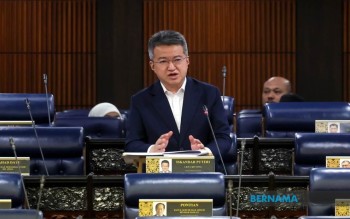
Malaysia's Deputy Finance Minister Liew Chin Tong has moved to reassure lawmakers that the government does not require immediate revisions to its fiscal framework for Budget 2027, despite mounting pressures from elevated global oil prices and regional instability. Speaking during parliamentary proceedings on July 15, Liew indicated the government is confident in its current budgetary assumptions and will only finalise updated projections when the full 2027 budget is presented to parliament in October, after a more complete assessment of economic trends and revenue performance becomes available.
The timing of this statement proves crucial given the backdrop of escalating tensions in West Asia, which have contributed to sustained upward pressure on crude oil prices and consequently strained Malaysia's fiscal position through higher fuel subsidies. Liew disclosed that the government's subsidy burden has ballooned by an estimated RM40 billion due to these elevated petroleum costs, representing a significant unanticipated drain on public finances. This acknowledgment underscores the delicate balancing act facing Malaysian policymakers as they navigate the tension between protecting consumers from volatile energy costs and maintaining fiscal discipline.
Yet the deputy minister pointed to a partial offsetting mechanism that provides some fiscal relief during this period of commodity price volatility. Every one-dollar-per-barrel increase in world crude oil prices translates into approximately RM300 million in additional petroleum-related revenue for the government, a dynamic that helps cushion the impact of rising subsidy expenditures. This revenue stream operates independently of the dividend contributions that Petronas, the national oil corporation, provides to government coffers, creating multiple pathways through which higher energy prices can benefit the public purse even as they simultaneously drive up subsidy costs.
The government's measured approach to fiscal projections reflects a strategic decision to gather more comprehensive data before committing to revised assumptions for the coming year. Rather than making hasty adjustments based on incomplete first-half 2026 performance figures, officials are adopting a wait-and-see posture that acknowledges the extraordinary level of uncertainty characterising current global conditions. This cautious stance carries implications for Malaysia's standing among international investors and rating agencies, many of which scrutinise the consistency and credibility of government revenue and expenditure forecasts. Premature revisions to fiscal targets, or conversely, the failure to adjust obviously unrealistic projections, can both damage confidence in Malaysia's fiscal management capabilities.
Liew's parliamentary statement also highlighted the government's expanded monitoring mechanisms designed to track economic developments and their potential fiscal impacts. The National Economic Action Council's crisis management task force has established a regime of continuous weekly engagement sessions to assess how unfolding geopolitical events might affect energy supply chains, commodity availability, and the broader economic environment affecting government revenues and spending pressures. This institutionalised crisis response infrastructure reflects acknowledgment that the threats to Malaysian fiscal stability now emanate from sources beyond the government's direct control, necessitating more sophisticated surveillance and response capabilities.
The maintenance of existing fiscal projections does not signal complacency regarding Malaysia's medium-term budgetary challenges, however. Liew explicitly reaffirmed the government's commitment to advancing what officials term a medium-term fiscal consolidation trajectory, a technical phrase encompassing a range of initiatives aimed at gradually reducing the structural fiscal deficit and improving the overall health of public finances. These consolidation efforts hinge upon the successful implementation of targeted subsidy programmes that direct support to those households most vulnerable to energy price shocks while reducing universalised subsidisation of fuel products consumed across all income segments.
Beyond subsidy restructuring, the government's fiscal consolidation strategy encompasses broader expenditure reallocation designed to ensure that spending priorities align with development objectives while maintaining macroeconomic stability. Officials are simultaneously pursuing improvements in spending efficiency—reducing waste and enhancing the return on public investment—whilst strengthening both revenue collection effectiveness and tax compliance among the country's business and individual taxpayer base. These multifaceted efforts collectively form the architecture of Malaysia's response to fiscal pressures, operating alongside the commodity revenue windfall that provides temporary relief.
The confidence Liew expressed regarding the sustainability of Malaysia's fiscal position rests implicitly on assumptions about the durability of these various measures and the absence of further deterioration in the external environment. Should West Asia tensions intensify further, pushing oil prices even higher and potentially disrupting regional commerce that feeds into Malaysian economic activity, the calculus underlying current fiscal projections could shift dramatically. Similarly, if revenue collection efforts falter or the government proves unable to implement its subsidy restructuring plans effectively due to political or administrative obstacles, previously adequate projections could quickly become obsolete.
For Malaysian citizens and businesses, the implications of the government's current fiscal stance are complex and multidirectional. The maintenance of existing subsidy frameworks for the near term provides continued price stability at petrol pumps and in electricity tariffs, protecting household purchasing power and business operating costs from abrupt increases. Yet the RM40 billion subsidy cost increase represents resources that cannot be deployed toward education, healthcare, infrastructure, or other development priorities without further straining fiscal space or requiring additional borrowing. The government's wager that higher oil-derived revenues and efficiency gains will bridge this gap between commitments and resources embodies both a realistic assessment of current constraints and an optimistic view of the policy instruments at its disposal.
The October presentation of Budget 2027 will represent a critical moment for Malaysian fiscal governance, as officials must translate these high-level assurances about fiscal sustainability into concrete tax, spending, and borrowing proposals. The budget tabling will reveal whether government projections of economic growth, revenue collection, and expenditure management prove realistic, or whether gaps between official assumptions and emerging realities force acknowledgment of more fundamental challenges to Malaysia's long-term fiscal trajectory. Until that October moment arrives, the government has signalled its intention to maintain course while intensifying monitoring of the economic conditions that might ultimately necessitate course corrections.

