Malaysia's drive to modernise its government administration has yielded tangible financial rewards, with the civil service paperless initiative delivering RM1.99 million in cost savings through the reduction of 116,405 reams of paper. This achievement underscores the practical benefits emerging from the government's commitment to digital transformation, moving beyond rhetorical pledges to demonstrate measurable outcomes in operational efficiency across the public sector.
The initiative was highlighted during a high-level meeting of the Digital Economy and Fourth Industrial Revolution Council (MED4IR), which Prime Minister Datuk Seri Anwar Ibrahim chaired on June 29. The gathering brought together key government figures to assess progress on the nation's digital agenda and chart a course for future development. Chief Secretary to the Government Tan Sri Shamsul Azri Abu Bakar, speaking in his capacity as Government Cluster Chairman, shared the paperless programme results as evidence of concrete progress in digitalising government operations.
Beyond the immediate paper and cost savings, the paperless transition reflects a broader strategic shift within Malaysian government administration. The initiative began in earnest on February 9, when the civil service formally commenced phasing out paper documentation for routine transactions. This measured rollout allowed departments and agencies to adapt their workflows and train staff on digital systems, creating a foundation for sustained change rather than disruption. The timing of the initiative aligns with global trends toward sustainable government operations and resource efficiency.
The broader context for this initiative extends well beyond administrative convenience. The MED4IR meeting where these figures were unveiled deliberated on several interconnected digital priorities that form Malaysia's roadmap toward technological modernisation. The council focused on advancing the MyDigital ID framework and the MyGov platform, both of which represent critical infrastructure for digital citizen-government interactions. These initiatives create synergies with the paperless programme, as reduced paper dependency naturally encourages migration toward digital service platforms.
Educational institutions emerged as another priority area discussed during the council meeting. The government has identified expanding digital access and capability across Malaysia's higher education sector as essential to building a digitally sophisticated workforce. Universities and colleges serve as incubators for technological innovation and talent development, making their integration into the national digital ecosystem vital for sustaining long-term competitiveness. This educational focus reflects recognition that infrastructure alone cannot drive digital transformation without sufficient human capital.
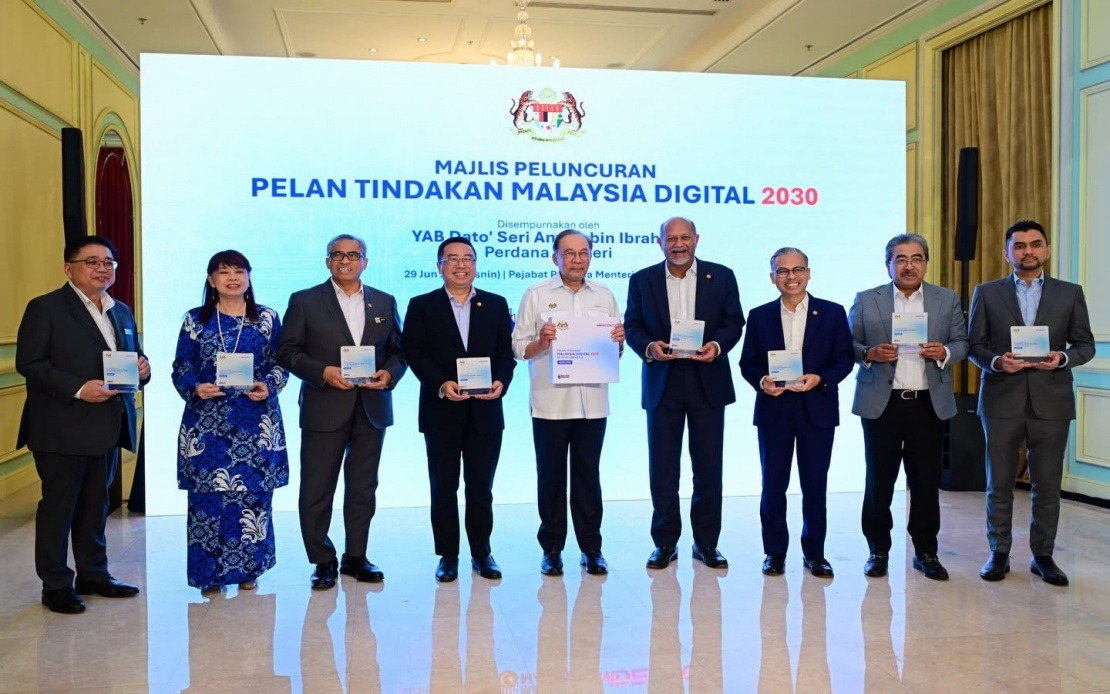
The government also advanced its vision of establishing Malaysia as an Artificial Intelligence Nation by 2030, a target enshrined in the Malaysia Digital 2030 framework that Prime Minister Anwar launched on the same day. This ambitious goal positions artificial intelligence as central to the nation's future economic and social development. Supporting this vision, the MED4IR council endorsed the formation of the MyMAHIR National AI Council for Industry, designed to cultivate comprehensive digital talent capable of working with AI technologies across sectors. This institutional approach acknowledges that AI adoption requires not merely technological implementation but also workforce capability development.
The paperless initiative's success offers practical lessons for other government modernisation efforts. The RM1.99 million saving, while significant, represents merely the financial benefit. The reduction of 116,405 reams of paper reflects environmental gains through decreased resource consumption, aligning Malaysia's administrative operations with sustainability principles increasingly important to international partners and domestic stakeholders alike. When scaled across multiple government initiatives, such environmental benefits compound substantially.
Implementation challenges that accompanied the paperless transition deserve consideration alongside its achievements. Civil servants across numerous agencies required training on digital systems and new workflows. Some departments faced technical infrastructure limitations requiring investment in hardware and connectivity. Legacy systems in certain agencies necessitated either integration with modern platforms or complete replacement. These implementation demands underscore why staged rollouts, beginning with simple transactions, provided a practical pathway toward comprehensive digitalisation.
The initiative demonstrates how operational efficiency gains can fund further digital transformation. The RM1.99 million saved through reduced paper expenditure could theoretically support investment in digital infrastructure improvements, training programmes, or systems upgrades. This self-reinforcing cycle, where productivity improvements finance continued modernisation, offers a sustainable model for government digital transformation, particularly relevant for developing economies managing constrained budgets.
For Malaysian businesses and citizens, these administrative changes carry broader implications. More efficient government operations reduce transaction times and friction in accessing public services. Digital government platforms create new opportunities for businesses to interact with authorities remotely and efficiently. Citizens benefit from simplified processes and reduced bureaucratic delays. These improvements accumulate into competitive advantages for an economy increasingly dependent on service quality and digital connectivity.
The paperless initiative also signals Malaysia's commitment to meeting international standards for digital governance. Developed nations have implemented similar programmes, and Malaysia's progress positions the country alongside regional and global peers in administrative modernisation. This positioning matters for international business confidence, digital skills attraction, and participation in global digital governance discussions.
Looking forward, the combination of paperless operations, MyDigital ID systems, enhanced educational digital access, and AI-focused talent development suggests an integrated strategy rather than disconnected programmes. Each component strengthens the others, creating a comprehensive ecosystem supporting digital transformation across government and society. The measured success demonstrated through the paperless initiative's concrete results provides momentum and validation for this broader vision as Malaysia works toward its 2030 digital targets.

