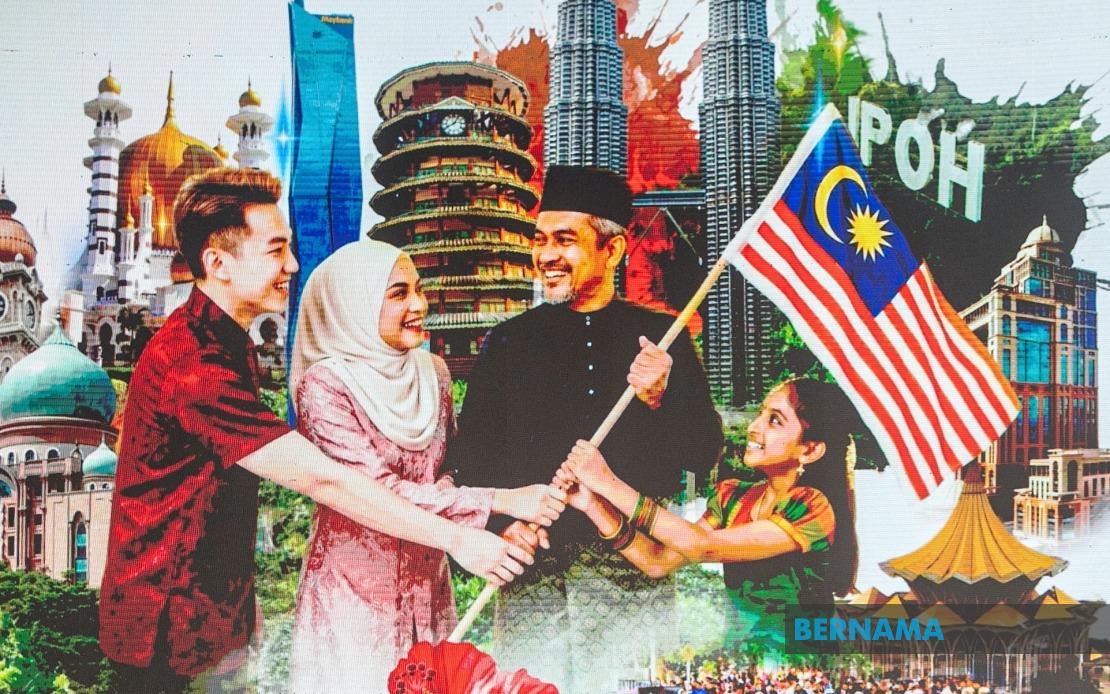
Communications Minister Datuk Seri Fahmi Fadzil has sounded an alarm about the potential misuse of artificial intelligence in producing visual content related to Malaysia's national flag, cautioning creators to ensure the Jalur Gemilang is rendered with complete accuracy. Speaking at the launch of the 2026 National Month and Fly the Jalur Gemilang campaign in Ipoh on July 19, Fahmi underscored the critical importance of maintaining the flag's integrity as a symbol of national identity, particularly as AI-generated imagery becomes increasingly commonplace in digital spaces.
The minister's concern centres on a specific and fundamental characteristic of Malaysia's flag: its 14 stripes, which form one of the most recognisable visual elements of the Jalur Gemilang. As artificial intelligence tools grow more sophisticated yet sometimes prone to inconsistencies, there is a genuine risk that automated content generation may inadvertently omit, duplicate, or misalign these defining features. Fahmi stressed that such errors, though potentially accidental, could undermine the dignity of the national symbol and create confusion about what constitutes an authentic representation of the flag.
The initiative comes at a particularly symbolic moment, with 2026 marking a significant year for Malaysian national celebrations. The government is launching a comprehensive campaign to encourage citizens nationwide to display the Jalur Gemilang from the present through at least September 16, aiming to cultivate patriotic sentiment across residential neighbourhoods, villages, and government facilities. This widespread public engagement with national imagery makes the accuracy issue more pressing, as incorrect depictions could proliferate rapidly through social media and other digital platforms before correction becomes possible.
Fahmi has committed to a collaborative approach with media institutions to monitor and maintain standards throughout the National Month period. The Communications Ministry intends to work alongside the Malaysian Press Institute and the Malaysian Media Council to establish oversight mechanisms that ensure any representation of the flag appearing in media outlets—whether generated by artificial intelligence or traditional means—meets exacting accuracy standards. This institutional coordination reflects recognition that addressing the issue requires multi-stakeholder involvement rather than government action alone.
When questioned about enforcement mechanisms, Fahmi adopted a measured approach that prioritises education over punishment. The ministry's first response to errors will be advisory in nature, involving direct contact with those who have inadvertently produced or displayed incorrect versions of the flag, requesting voluntary correction. Only if parties decline to rectify mistakes despite warnings would the government consider invoking existing legal frameworks that specifically govern the treatment and representation of national symbols. This graduated enforcement strategy acknowledges the likely inadvertence of most AI-related errors while reserving stronger measures for deliberate or persistent violations.
The existence of specific legislation governing flag representation is notable and reflects Malaysia's legal protection of national symbols. However, Fahmi's emphasis on initial persuasion over prosecution suggests confidence that most content creators and organisations will cooperate once made aware of their errors. This approach also avoids the perception of excessive legal stringency that could generate negative publicity, particularly if the ministry appeared to be criminalising innocent mistakes made in good faith by citizens attempting to participate in patriotic campaigns.
The event launching the campaign was officiated by Prime Minister Datuk Seri Anwar Ibrahim and attended by National Unity Minister Datuk Aaron Ago Dagang and Perak Menteri Besar Datuk Seri Saarani Mohamad, underscoring the federal government's commitment to the initiative. The venue itself—the Sultan Azlan Shah Ministry of Health Training Institute in Tanjung Rambutan—was chosen to incorporate national health infrastructure into the celebrations, linking patriotic expression with institutional pride across government sectors.
Plans for the 2026 National Day and Malaysia Day celebrations are proceeding with Putrajaya designated as the host city for National Day festivities, while Sarawak will welcome Malaysia Day celebrations, though the specific venue in the East Malaysian state remains under discussion. This geographic distribution underscores the inclusive nature of national celebrations and recognises the distinct constitutional significance of Malaysia Day, which commemorates the formation of Malaysia and holds particular importance for Sabah and Sarawak.
For Malaysian content creators, digital designers, and media organisations, Fahmi's message represents both a cautionary note and an invitation to exercise technical vigilance. As AI tools become standard in newsrooms and creative studios, implementing verification checks to ensure the 14 stripes are present and correctly proportioned should become routine practice. Small oversights in algorithmic outputs can easily be corrected during human review stages, yet without deliberate quality assurance, such mistakes may reach audiences undetected.
The broader implications extend beyond flag representation to questions about AI governance in Malaysia more generally. As artificial intelligence becomes embedded in content creation workflows across the economy, the government faces mounting questions about how to maintain standards and protect cultural and national symbols without stifling technological innovation or imposing burdensome restrictions. Fahmi's emphasis on collaboration with media institutions and preference for advisory approaches suggests an emerging regulatory philosophy that seeks balance between protection and pragmatism.
For regional observers, Malaysia's proactive approach to AI-generated national imagery offers a model for how Southeast Asian governments might address similar challenges. As AI adoption accelerates across the region, questions about protecting national symbols and ensuring accurate cultural representation will likely emerge in neighbouring countries as well. Malaysia's measured response—combining clear communication, institutional partnerships, and graduated enforcement—provides a case study in thoughtful governance of emerging technologies.
The timing of this announcement during preparations for major national celebrations reflects strategic government planning. By issuing guidance and coordinating with media partners well in advance, officials aim to prevent errors from occurring in the first place rather than managing a crisis of widespread inaccurate flag depictions. This preventive emphasis demonstrates confidence in public cooperation and suggests that most Malaysians, when informed of the importance of accuracy, will prioritise getting national symbols right.

