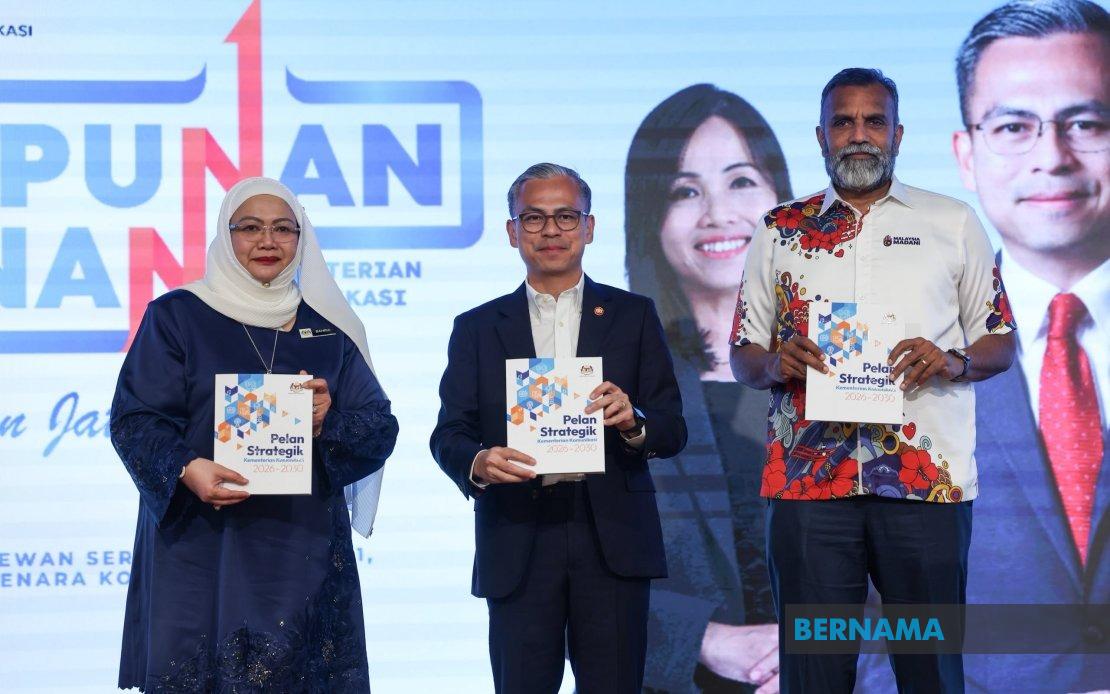
Communications Minister Datuk Seri Fahmi Fadzil has formally introduced the ministry's Communications Strategic Plan (PSKK) 2026-2030, a comprehensive roadmap designed to align departmental operations with Malaysia's broader development ambitions under the 13th Malaysia Plan and the Malaysia MADANI vision. Unveiled at the ministry's headquarters in Putrajaya on July 20, the five-year strategy encompasses 94 specific programmes and establishes a coherent framework for how the ministry and its subsidiaries will address communications challenges facing the nation.
At its core, the strategic plan distils the ministry's direction into three foundational priorities that resonate with contemporary governance challenges. The push for better internet infrastructure addresses Malaysia's ongoing digital divide, particularly in rural and underserved urban areas where connectivity remains inconsistent. The emphasis on more creative content reflects the government's recognition that the regional creative economy—spanning film, music, animation, and digital media—represents a significant untapped growth engine that can generate employment and international revenue. The commitment to more accurate information tackling misinformation and disinformation, especially as social media becomes increasingly central to how Malaysians consume news.
The overarching vision articulated within PSKK 2026-2030 is 'A Connected, Informed and Creative Malaysia,' a formulation that captures three distinct but interlocking societal objectives. The strategic design recognises that connectivity alone is insufficient; citizens must have access to reliable information and platforms that facilitate cultural and economic expression. This holistic approach differs from earlier, more fragmented communications policies that treated infrastructure, content, and information separately.
Three missions form the operational backbone of the strategy. The first mission concentrates on fortifying the nation's communications architecture—improving connectivity, expanding service availability, and establishing robust regulatory frameworks that protect consumers while encouraging innovation. The second mission prioritises the development and distribution of trustworthy, representative information that serves diverse demographic segments and prevents the spread of falsehoods that erode public trust. The third mission aims to catalyse a thriving local creative ecosystem capable of competing regionally and globally, moving Malaysia beyond a consumer market for international content toward a producer and exporter of original creative works.
To translate these missions into tangible outcomes, the ministry has identified four strategic thrusts that will guide resource allocation and programme design. Strengthening the national communications ecosystem focuses on delivering inclusive, high-quality, and secure connectivity—acknowledging that digital access must also mean digital safety and protection from cybersecurity threats. The second thrust addresses the specific imperative to enhance competitiveness in Malaysia's film and music sectors, industries where the country possesses talent and cultural assets but faces intense regional competition from Thailand, Indonesia, and South Korea. The third thrust involves transforming how government and public institutions deliver information to citizens, moving toward integrated systems that reduce fragmentation and ensure consistency. The fourth thrust emphasises customer-oriented service delivery, reflecting contemporary expectations that government agencies must be responsive, transparent, and user-focused.
Minister Fahmi indicated during his remarks that many recurring concerns raised by citizens, media practitioners, and industry stakeholders regarding communications infrastructure and services will find resolution through implementation of this strategic plan. The ministry's framing suggests it has conducted extensive consultation and identified systemic gaps that this blueprint addresses. The fact that programmes are already being executed according to this strategic direction indicates that the formal launch represents crystallisation of initiatives already underway rather than an entirely new departure.
The 94 strategic programmes embedded within the five-year framework represent considerable scope, though the condensation into three priorities and four thrusts suggests an effort to maintain strategic discipline and prevent dilution of effort. For Malaysian stakeholders, particularly those in technology, media, and creative industries, the plan signals the government's intended focus areas and likely investment trajectories. Telecommunications companies can anticipate regulatory direction and infrastructure incentives; content creators can expect supportive policies and potential funding mechanisms; and technology innovators may find opportunities aligned with the government's digital ambitions.
From a regional perspective, Malaysia's strategic priorities align with broader Southeast Asian trends toward digital nation-building. Countries across the region face similar challenges: rural-urban digital divides, the need for local content production to maintain cultural autonomy amid globalisation, and the imperative to combat misinformation without stifling expression. The PSKK 2026-2030 positions Malaysia within this regional conversation, suggesting learning and potential cooperation with neighbouring countries pursuing compatible objectives.
The integration with the Malaysia MADANI agenda—the government's overarching development framework—indicates that communications policy is understood not as a technical domain but as central to achieving a more prosperous, inclusive, and dignified Malaysia. This positioning elevates the ministry's work beyond infrastructure provision toward broader nation-building objectives, which may influence budget allocations and political prioritisation over the next five years.

