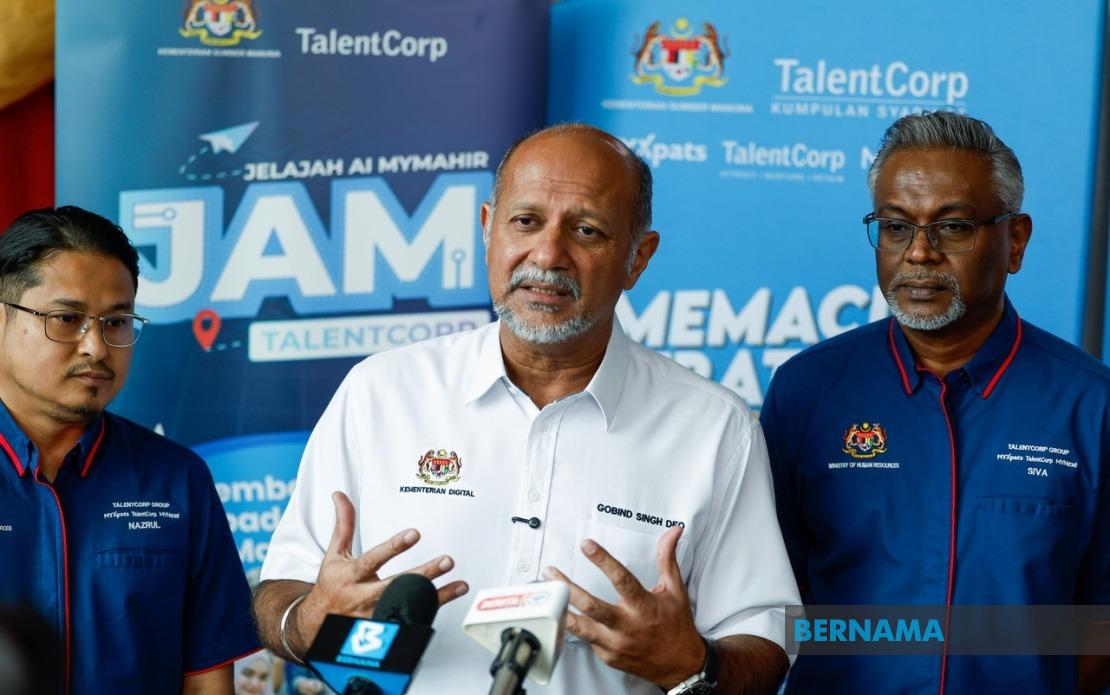
Malaysia's digital creative sector has emerged as a significant economic powerhouse, generating RM92.5 billion in revenue while simultaneously establishing itself as an export-oriented industry with RM12.1 billion in international sales. The sector has also attracted RM85.7 billion in investments, underscoring growing confidence from both domestic and foreign investors in the nation's creative capabilities. These figures, unveiled by Digital Minister Gobind Singh Deo at the Borneo Animation and Games Festival 2026 in Kuching, reveal an industry that extends far beyond traditional creative expression into substantial commercial territory.
The emergence of homegrown intellectual properties has proven instrumental in demonstrating Malaysia's creative competitiveness on the global stage. Beloved animated series such as Upin & Ipin, Ejen Ali, and Mechamato have transcended their domestic origins to capture international audiences, establishing Malaysian content as a viable export commodity. This success indicates that the nation possesses the storytelling capacity and technical expertise to compete with established animation powerhouses in Asia and beyond, a competitive advantage that was largely absent from Malaysian creative discourse a decade ago.
Gobind emphasised that viewing the digital creative industry purely through an artistic lens understates its transformative economic potential. Strong intellectual property development generates multiple revenue streams beyond initial production, including licensing agreements, merchandise opportunities, and cross-platform adaptations. The minister's remarks suggest a strategic reorientation within government thinking, positioning creative industries not as cultural amenities but as legitimate engines of economic growth comparable to traditional manufacturing or technology sectors. This perspective aligns with broader Southeast Asian trends where countries like Thailand, Indonesia, and Vietnam increasingly invest in their creative ecosystems.
The government's projection that the digital economy will contribute 30 per cent of Malaysia's GDP by 2030 represents an ambitious but achievable target given current trajectories. Equally significant is the commitment to create 500,000 high-value digital jobs over the next four years, a figure that dwarfs the current 11,000 positions and suggests substantial expansion plans across animation, games, digital content, and related sectors. These employment figures carry particular resonance for Malaysian professionals seeking career opportunities that offer both competitive remuneration and intellectual engagement, addressing a persistent concern about brain drain to developed economies.
Sarawak's designation as a focal point for Malaysia's digital creative expansion reflects strategic geographical and cultural considerations. The state possesses a distinctive narrative heritage and diverse communities whose stories remain underrepresented in mainstream global media. Furthermore, Sarawak's emerging digital infrastructure and growing tech-savvy population create conditions favourable for attracting creative enterprises and talent. The Federal Government's commitment to strengthen Sarawak's digital capabilities signals recognition that Malaysia's creative future cannot be concentrated solely in the Klang Valley, but must develop regionally distributed centres of excellence.
The BAGFest 2026, positioned as Borneo's first international animation and games festival of significant scale, serves as both practical venue and symbolic statement of Sarawak's aspirations. Such events function as magnets for industry professionals, investors, and emerging talent, facilitating knowledge exchange and business development while simultaneously raising the state's profile within regional and global creative networks. The festival's thematic emphasis on forging Sarawak's identity as a regional hub acknowledges that competition for creative industry investments extends beyond Malaysia to encompass the broader Southeast Asian landscape.
Connecting Sarawak's creative community to opportunities across Malaysia, Southeast Asia, and internationally represents a crucial infrastructure challenge that extends beyond simple promotional activities. Digital distribution platforms, venture capital networks, talent recruitment mechanisms, and technical training programmes must all develop cohesively to ensure Sarawak-based creators can operationalise their potential. Without these supporting systems, even culturally compelling intellectual property risks remaining underexploited, a pitfall that has constrained creative industries in developing markets historically.
The partnership framework between the Federal Government and Sarawak illustrated by Gobind's remarks suggests a devolved yet coordinated approach to creative industry development. Rather than imposing uniform policies, this model recognises state-specific advantages while maintaining national standards and facilitating inter-state collaboration. Such approaches have demonstrated effectiveness in other Southeast Asian jurisdictions, where regional creative hubs have flourished while maintaining connections to national and regional value chains.
For Malaysian investors and creative professionals, these developments indicate expanding opportunities across multiple subsectors. The animation industry requires voice actors, translators, and cultural consultants alongside technical specialists. The gaming sector demands narrative designers, community managers, and regional marketing expertise. Digital content creation encompasses educational materials, corporate communications, and entertainment platforms. This diversification reduces dependency on any single subsector while creating entry points for professionals with varied skill sets.
The financial scale of Malaysia's digital creative industry investments—RM85.7 billion—demonstrates that major corporations and institutional investors view this sector as economically legitimate and potentially lucrative. This investor confidence should accelerate ecosystem development, as capital availability encourages entrepreneurship and enables scaling of promising ventures. For Southeast Asia more broadly, Malaysia's progress contributes to a regional reputation for creative innovation, potentially attracting additional international investment flows that benefit the entire region.
Looking forward, Sarawak's positioning as a regional animation and games hub carries implications extending beyond mere commercial considerations. The sector can become a vehicle for cultural preservation and promotion, ensuring that indigenous Malaysian stories and artistic traditions reach global audiences while generating economic value. This dual benefit—simultaneous cultural and commercial returns—represents an opportunity that many developing nations struggle to realise, making Malaysia's trajectory particularly noteworthy for observers across Southeast Asia.
The minister's emphasis on viewing creative industries through an economic rather than purely cultural lens reflects global best practices increasingly adopted by governments serious about innovation-driven growth. By integrating creative sector development into broader digital economy strategies and establishing clear employment and investment targets, Malaysia has moved beyond treating creative industries as peripheral economic concerns. Whether Sarawak can successfully translate this strategic focus into concrete business results remains to be seen, but the framework and commitments now exist to support such transformation.

