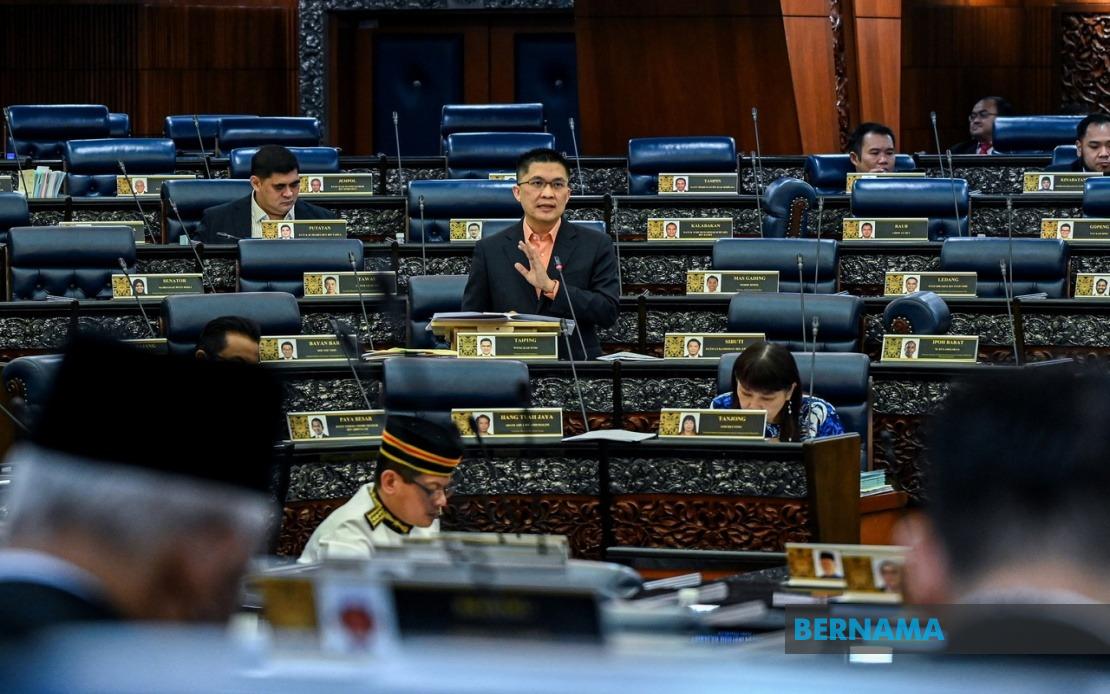
Malaysia's push to democratize digital learning across its education system has entered a new phase with Deputy Education Minister Wong Kah Woh outlining comprehensive strategies to ensure no student falls behind due to geographic location or socioeconomic circumstances. Speaking during parliamentary proceedings on July 15, Wong articulated the Ministry of Education's determination to systematically dismantle barriers that have historically disadvantaged learners in rural and underserved communities, establishing digital equity as a cornerstone principle within the Malaysia Education Blueprint (RPM) 2026-2035.
The ministry's approach centres on guaranteeing that every school, whether nestled in metropolitan areas or remote villages, receives high-speed internet infrastructure tailored to local conditions and technological requirements. Rather than imposing a one-size-fits-all solution, education planners have committed to deploying appropriate technologies suited to each region's unique geography and existing infrastructure. This nuanced strategy acknowledges that rural deployment differs fundamentally from urban rollout, requiring customized approaches that account for topographical challenges, existing telecommunications frameworks, and community-specific needs.
Beyond connectivity, the ministry recognizes that access to devices and platforms alone proves insufficient. Wong emphasized that all students must attain at least intermediate proficiency on the Digital Competency Score, establishing measurable standards for what meaningful digital literacy entails. This benchmark-setting approach transforms digital access from a binary yes-or-no proposition into a graduated competency framework, ensuring that provision of technology translates into genuine skill development and educational outcomes rather than mere infrastructure deployment.
The Digital Education Policy and the Digital Educational Learning Initiative Malaysia (DELIMa) platform form the operational backbone of this agenda. DELIMa functions as a comprehensive repository where digital learning materials, curricula resources, and instructional tools have been systematically uploaded, creating a centralized ecosystem accessible to educators and students across the nation. By concentrating educational content on a dedicated platform, the ministry creates a levelled playing field where a teacher in Pahang can access identical pedagogical resources as a counterpart in Selangor, assuming internet connectivity exists.
Enhancing infrastructure represents only half the equation; equitable resource distribution constitutes the complementary imperative. Wong underscored the ministry's commitment to fairly and equitably allocating digital devices and educational materials to all schools, explicitly targeting the reduction of access disparities separating urban and rural educational institutions. This distribution philosophy recognizes that digital divides often reflect historical under-investment in peripheral regions, requiring deliberate corrective measures rather than market-based allocation mechanisms that naturally gravitate toward densely populated, economically vibrant areas.
Quantifiable evidence of past progress provides encouragement for current initiatives. Under the previous Malaysian Education Development Plan (PPPM) 2013-2025, performance gaps narrowed substantially across multiple dimensions. The average grade score disparity between urban and rural students taking the 2024 Sijil Pelajaran Malaysia (SPM) examination contracted by 26.23 per cent, demonstrating that targeted interventions can meaningfully reduce geographic achievement gaps. Even more striking, gender-based disparities in SPM certification eligibility shrank by 52.78 per cent, whilst gaps rooted in socioeconomic status declined by 57.75 per cent, suggesting that structural reforms yield tangible returns when sustained across multiple years.
These reductions in educational inequality reflect systemic changes extending beyond simple resource transfers. They indicate that when infrastructure improves, teaching quality enhances, and student support systems strengthen, measurable educational outcomes shift. The ministry's track record suggests that the new blueprint's initiatives, if implemented with comparable rigor, can continue this momentum rather than plateau at current achievement levels. However, maintaining momentum requires sustained political will, consistent budget allocation, and resistance to programme discontinuity when administration changes occur.
Complementing digital infrastructure investments, the ministry maintains focus on educator welfare as a precondition for educational quality. Since 2023, seven measures have been introduced to alleviate teachers' administrative burden, including elimination of redundant and overlapping documentation requirements. The recognition that teacher wellbeing correlates with instructional effectiveness demonstrates holistic policy thinking that avoids the trap of assuming technology alone drives educational improvement. When educators struggle under excessive bureaucratic demands, digital platforms become additional labour burdens rather than productivity enhancements.
The timing of these initiatives proves strategically significant for regional development. Southeast Asia confronts persistent rural-urban educational disparities that constrain human capital development and perpetuate regional inequality. Malaysia's systematic approach to bridging these gaps through the 2026-2035 framework offers a testable model that neighbouring nations, particularly those with comparable geographic and demographic profiles, might adapt and learn from. Success in Malaysia could demonstrate that planned, multi-year digital equity initiatives can meaningfully reshape educational landscapes in developing middle-income economies.
Implementation challenges, however, remain substantial. Sustaining momentum across a ten-year planning horizon requires organizational persistence beyond typical political cycles. Teacher training in emerging pedagogical approaches facilitated by digital platforms demands investment that sometimes competes with infrastructure spending. Community engagement in rural areas ensures that technology provision aligns with parental expectations and local educational priorities, preventing scenarios where sophisticated infrastructure serves communities uninterested in utilizing available resources.
The blueprint's success ultimately hinges on translating policy commitments into tangible classroom transformations. Infrastructure provision represents a necessary but insufficient condition for educational equity. When students in Kelantan access DELIMa with identical speed as those in Kuala Lumpur, yet receive inferior instructional quality, digital divides persist in modified form. The ministry's emphasis on teacher welfare and digital competency standards suggests awareness of these complexities, though execution will determine whether policy architecture translates into lived educational reality.
Looking forward, the RPM 2026-2035 positions digital equity not as peripheral concern but as foundational principle shaping educational infrastructure, teacher practice, and assessment frameworks. This elevation of digital justice from aspirational rhetoric to systematic policy objective marks a maturation of Malaysia's approach to educational inequality. Whether subsequent administrations sustain these commitments through inevitable budget pressures and competing priorities will ultimately determine whether the blueprint achieves its transformative potential or remains an unfulfilled articulation of worthy intentions.

