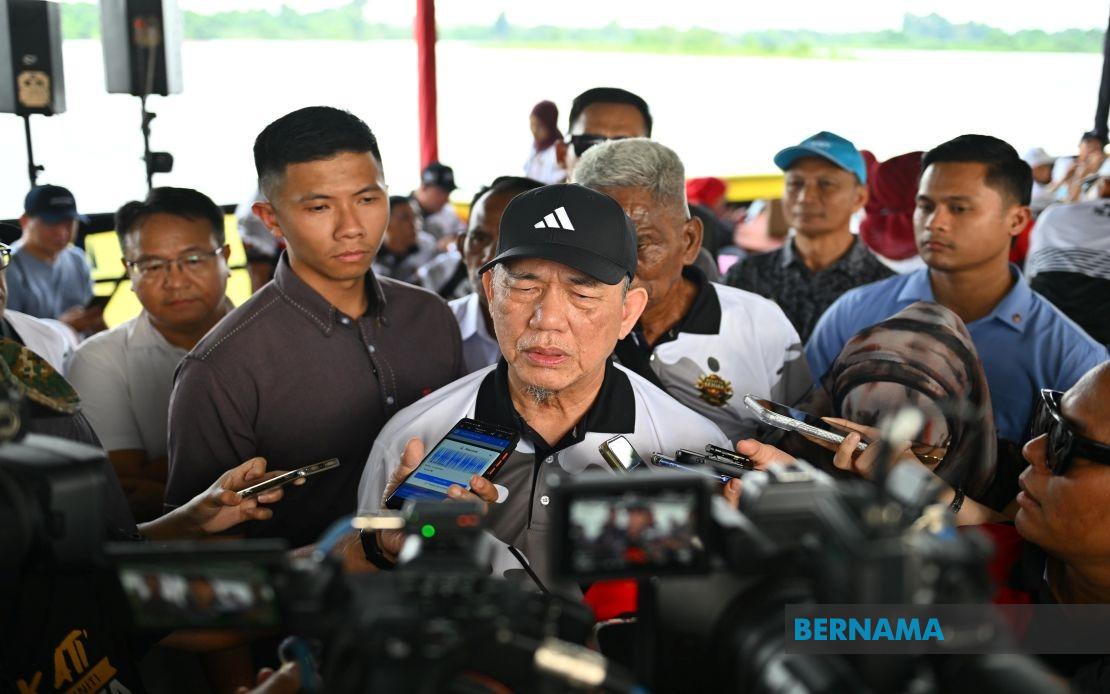
Malaysia's energy supply position remains stable despite rising geopolitical tensions in a critical global shipping corridor, according to Deputy Prime Minister Datuk Seri Fadillah Yusof. Speaking after attending the Regatta 2026 closing ceremony at the main jetty in Kampung Sejijak, Kuching on July 12, Fadillah assured the public that the nation is not currently facing fuel supply disruptions and that vigilant government oversight continues as situations develop in the Strait of Hormuz.
The Strait of Hormuz represents one of the world's most strategically vital energy chokepoints, with roughly one-third of global seaborne oil trade passing through its narrow waters annually. Any sustained disruption in this waterway can send shockwaves through international energy markets and impact importing nations like Malaysia. The government's close monitoring reflects awareness of these vulnerabilities and the potential cascading economic effects that could ripple across Southeast Asia if major supply routes face prolonged interruption.
Fadillah indicated that Malaysia's current energy security rests on proactive diplomatic engagement rather than passive observation. Petronas, the national oil and gas company, has been coordinating with Prime Minister Datuk Seri Anwar Ibrahim on multiple negotiation fronts aimed at safeguarding the nation's supply chains. These multilevel diplomatic efforts suggest Malaysia is leveraging both formal government-to-government channels and industry-level partnerships to maintain access to energy resources in an increasingly unpredictable global environment.
The assurance of stable supplies marks a significant point for a nation whose economy remains partially dependent on energy imports and whose manufacturing and transportation sectors rely on predictable fuel availability. Any disruption would immediately threaten production schedules, increase operational costs for businesses, and potentially dampen economic growth. The government's proactive stance signals recognition that energy security directly translates into economic resilience and job protection across multiple sectors.
However, Fadillah, who also serves as Energy Transition and Water Transformation Minister, was candid about the persistent challenge facing Malaysia even with adequate physical supply. Global oil and gas price volatility presents a distinct problem from supply availability, and geopolitical uncertainty continues to exert upward pressure on international energy costs. This divergence between supply security and price stability reflects the fundamental mismatch between Malaysia's ability to physically obtain energy resources and the market forces determining how much it must pay for them.
Price instability in global energy markets creates secondary economic pressures that complicate government finances and consumer welfare. As international crude prices fluctuate based on geopolitical events, production decisions, and speculative trading, Malaysia's import bills and domestic fuel costs shift accordingly. Even with adequate supplies flowing to ports and refineries, higher benchmark prices mean greater expenditures on the same volume of energy, effectively reducing purchasing power across the economy.
The minister acknowledged that this pricing pressure forces difficult budgetary trade-offs. The government maintains subsidy programmes and direct assistance schemes aimed at buffering citizens and businesses from sudden fuel price shocks. These safety nets, while crucial for social stability and competitiveness, create fiscal demands that must be balanced against other development priorities and infrastructure investments. Fadillah framed this as a fundamental tension between fulfilling current welfare obligations and maintaining long-term financial sustainability.
Malaysia's position illustrates challenges facing many Southeast Asian energy-importing nations. Unlike major oil producers with substantial sovereign wealth funds, Malaysia must carefully manage its budgets while protecting citizens from global price volatility. The government's strategy appears to combine three elements: securing supply through diplomatic engagement, monitoring geopolitical risks continuously, and maintaining domestic support programmes while seeking long-term fiscal balance.
The emphasis on multilevel negotiations suggests Malaysia is neither relying on a single energy supplier nor betting entirely on stable market conditions. Diversifying sources and maintaining multiple diplomatic channels reduces vulnerability to supply disruptions from any single region or partner. This approach reflects lessons learned from previous periods of energy market turbulence and recognises that regional conflicts or unexpected production shutdowns elsewhere can rapidly alter global market dynamics.
Fadillah's comments arrive at a moment when energy markets remain sensitive to Middle Eastern developments. The Strait of Hormuz's critical importance means that even unconfirmed threats or minor incidents can trigger speculative price movements. Malaysia's transparent communication about its supply status and government preparedness serves both domestic and international audiences, signalling stability to investors while reassuring citizens that authorities are actively managing risks.
Looking forward, Malaysia faces the dual challenge of maintaining energy security while transitioning toward renewable and cleaner energy sources. The Energy Transition and Water Transformation Ministry's involvement underscores that short-term supply management must occur within a framework addressing long-term sustainability and climate commitments. Balancing these competing demands requires sustained investment, technological innovation, and continued regional cooperation on energy matters.
The government's measured tone—acknowledging both supply security and price volatility without exaggeration—aims to maintain public confidence while being realistic about external constraints. This approach avoids panic about supply while being honest that geopolitical and market forces beyond Malaysian control will continue shaping energy costs and availability. For businesses and households planning ahead, this message provides assurance about physical fuel availability while suggesting that price pressures will likely persist.

