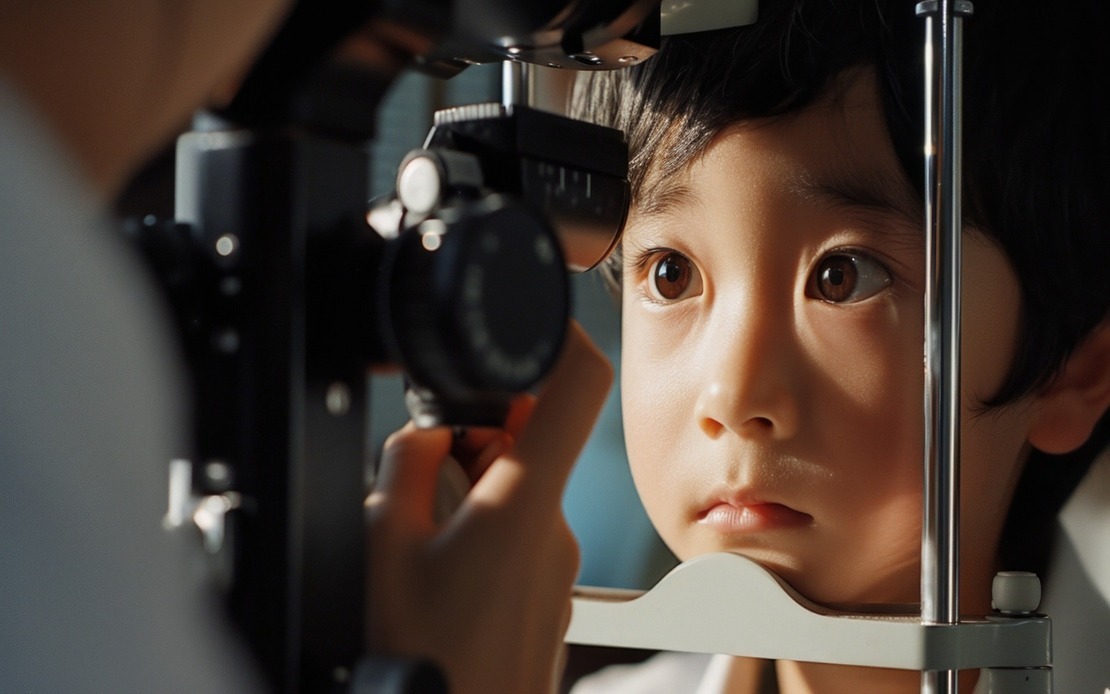
Vision problems affecting Malaysian children and elderly citizens often go undiagnosed until serious damage has already occurred, yet many of these conditions remain treatable through early intervention, according to a consultant ophthalmologist at Sunway Medical Centre. Dr Fazilawati A Qamarruddin, who specialises in both general and paediatric eye care, emphasises that squinting and cataracts represent the most prevalent yet frequently overlooked eye disorders affecting Malaysians, with implications extending far beyond simple discomfort into educational performance and quality of life throughout the ageing process.
Squinting, medically known as strabismus, occurs when the eyes fail to align properly, with one eye pointing in a markedly different direction than the other. This misalignment disrupts not only immediate vision but also depth perception, the child's ability to learn effectively in classroom settings, and their social confidence during formative years. While uncorrected refractive errors form the primary culprit, the condition can also stem from nerve damage, neurological deficits, physical trauma, or abnormal growths in the brain or eye sockets. In adult patients, squints may either persist from childhood or emerge suddenly in later years, and when accompanied by double vision, such cases demand urgent medical evaluation to eliminate the possibility of serious underlying pathology including brain and orbital tumours.
The scale of the issue deserves serious attention. International research estimates that between two and four per cent of children worldwide experience strabismus, a figure that may appear modest until translated into Malaysian demographics—representing thousands of affected children across the country. Yet the concerning reality is that the vast majority of these cases remain undetected in their early stages, only coming to light once educators notice declining academic performance or parents observe withdrawn behaviour and loss of confidence in social settings. The window for intervention gradually closes as children progress through school, making early identification absolutely critical for optimal outcomes.
Without treatment, untreated strabismus frequently progresses to amblyopia, commonly termed lazy eye, wherein the brain's visual processing mechanism gradually privileges the stronger eye and suppresses signals from the weaker one. This neurological adaptation, while initially seeming like a compensatory mechanism, ultimately results in permanently reduced vision in the affected eye that cannot always be reversed even with later correction. This cascade of deterioration underscores why Dr Fazilawati recommends comprehensive vision screening by age three and again before children transition to primary school, when accurate visual acuity becomes essential for learning success.
Refractive errors—including myopia, hyperopia, and astigmatism—remain among Malaysia's most prevalent eye conditions and fortunately respond well to early intervention through prescription eyeglasses or contact lenses. Parents should remain vigilant for behavioural indicators suggesting visual difficulty: children who tilt their heads at unusual angles, squint excessively, position themselves extremely close to television screens, or frequently complain of headaches may all be experiencing undetected refractive errors. Rather than waiting for schools to identify problems through screening programmes, Dr Fazilawati advocates for proactive parental action, since prompt diagnosis and correction can mean the difference between simple spectacle adjustment and lifelong visual impairment requiring ongoing management.
Cataracts represent the second major condition requiring public awareness, though this condition predominantly affects older Malaysians. The clouding of the natural lens typically manifests in individuals over 60 years old, though accelerated onset occurs among those with diabetes, smokers, and individuals with prolonged sun exposure without adequate protection. Symptomatic patients experience progressive vision clouding, halos and glare around lights especially during night driving, and gradual fading of colour perception that can profoundly affect quality of life and independence. Modern surgical approaches have revolutionised cataract management compared to techniques available even a decade ago, transforming what was once a dreaded condition into a highly manageable health issue.
Contemporary phacoemulsification technology utilises ultrasonic energy to fragment the clouded lens into microscopic particles that are then extracted through a remarkably small surgical incision, typically measuring only 2-3 millimetres. This minimally invasive approach dramatically reduces postoperative recovery duration compared to traditional large-incision cataract extraction. Many procedures proceed as same-day outpatient surgery, with patients returning home the same afternoon, resuming light household activities within one week, and achieving complete visual rehabilitation within fourteen days. For older Malaysians concerned about lengthy recuperation periods potentially disrupting family life or independence, these advances offer genuine reassurance that cataract treatment need not impose significant lifestyle burden.
Dr Fazilawati also raises growing concern regarding the escalating prevalence of myopia among Malaysian children and teenagers, attributing this trend substantially to accumulated screen exposure without adequate visual rest. Contemporary schooling and entertainment patterns expose young eyes to sustained near-focus activity for extended periods, straining the ciliary muscles and potentially accelerating myopic progression during critical years of visual development. To counteract this risk, she advocates adoption of the 20-20-20 rule: every 20 minutes of screen engagement should be interrupted by a 20-second viewing period focused on an object situated approximately 20 feet distant. This simple intervention leverages the eye's natural relaxation response when viewing distant objects, providing meaningful relief from accumulated strain and potentially slowing myopic progression.
Screening recommendations extend across the entire lifespan with age-specific protocols reflecting changing risk profiles. Adults reaching 40 years of age should commence regular comprehensive eye examinations to detect age-related changes including presbyopia, glaucoma susceptibility, and early cataract formation. Children ideally undergo assessment before school commencement when visual acuity becomes academically essential. Diabetic patients require particular vigilance through annual eye examinations, since diabetic retinopathy can progress with alarming rapidity from minimal symptoms to significant vision loss, yet responds favourably to treatment when detected during earlier stages before retinal damage becomes irreversible.
The broader implications of delayed eye care extend far beyond individual vision loss. Children with uncorrected visual problems face elevated risks of academic underperformance, affecting educational trajectories and future employment opportunities. Elderly citizens experiencing vision loss from cataract development encounter increased falls, reduced independence in driving and household management, and heightened social isolation as mobility becomes compromised. Yet these outcomes remain largely preventable through systematic screening and timely intervention. Dr Fazilawati's core message resonates powerfully: early detection fundamentally transforms life trajectories by enabling uncomplicated treatments rather than managing irreversible damage. Malaysian families postponing eye examinations inadvertently forfeit opportunities for straightforward corrective measures, potentially condemning themselves to preventable visual disability and diminished quality of life spanning decades.

