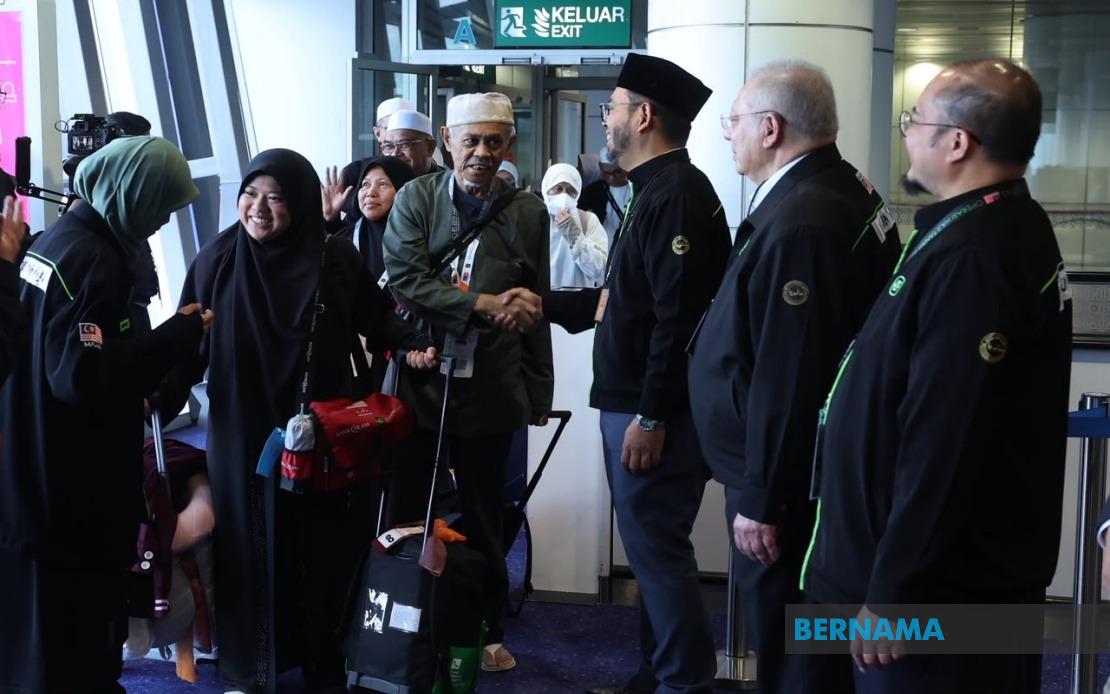
The arrival of 258 Malaysian pilgrims at Kuala Lumpur International Airport on Tuesday afternoon symbolises the triumphant conclusion of this year's Haj operations, with all worshippers having departed the Holy Land in good health and safety. The group touched down at 12.10 pm after boarding Malaysia Airlines flight MH 8385 from Madinah, which had lifted off at 10.14 pm Saudi Arabian time the previous evening. This final homecoming represents the culmination of months of logistical coordination and reflects the entire undertaking's flawless execution across a challenging geopolitical landscape.
Minister in the Prime Minister's Department (Religious Affairs) Dr Zulkifli Hasan formally declared the 1447 Hijrah season complete during remarks to assembled media at the airport terminal. He emphasised the significance of completing the pilgrimage cycle with every participant returning safely, describing this outcome as a manifestation of divine blessing warranting deep gratitude. The minister's presence alongside Deputy Minister Marhamah Rosli and Tabung Haji chairman Tan Sri Abdul Rashid Hussain underscored the government's commitment to recognising the successful management of what remains one of Malaysia's most complex annual undertakings.
The achievement has garnered international validation through the award of the Labbaikum Diamond Award, presented by Saudi Arabia's Ministry of Haj and Umrah as the world's premier recognition for haj management excellence. This distinction places Malaysia among the global elite in pilgrimage administration, acknowledging not only the operational mechanics but the quality of services extended to participants throughout their spiritual journey. The accolade carries particular significance given the volatile regional environment, demonstrating that Malaysia's institutional frameworks and diplomatic standing enabled seamless coordination despite broader West Asian instability affecting neighbouring nations' operations.
The success achieved this season reflects sustained investment in pilgrim preparation protocols that extend far beyond basic logistical arrangements. Tabung Haji implemented intensive educational courses preparing participants for the physical, spiritual, and emotional dimensions of the pilgrimage, establishing a foundation of informed consciousness that translated into disciplined conduct during the actual journey. Dr Zulkifli specifically credited this preparatory rigour as a cornerstone of operational success, noting that Malaysian pilgrims' commitment and comportment significantly reduced potential complications that might otherwise emerge from managing large congregations in congested sacred sites.
Technological advancement played a tangible role in streamlining administrative processes throughout the season. The deployment of the MyNIISe system modernised visa management procedures, eliminating bureaucratic friction that historically complicated the pre-departure phase. This digital infrastructure innovation demonstrates Malaysia's capacity to apply contemporary solutions to traditional frameworks, creating efficiencies that ultimately enhanced the pilgrim experience while reducing administrative burden on government personnel and service providers.
Physical infrastructure improvements implemented this season reflected careful attention to pilgrims' comfort and wellbeing in the Arabian environment. The provision of enhanced accommodation including sofa beds and upgraded tent facilities addressed practical concerns arising from previous years' feedback, while the establishment of round-the-clock bus services connecting mosques to sleeping quarters ensured accessibility and reduced fatigue associated with daily movement between prayer sites and resting locations. These seemingly modest enhancements collectively generated meaningful quality-of-life improvements for aging populations and those with mobility challenges, demonstrating how systematic attention to detail translates into demonstrable humanitarian outcomes.
The entire operational ecosystem benefited from coordinated efforts across multiple government institutions and private sector partners. The Health Ministry ensured medical preparedness and rapid response capability, immigration authorities streamlined departure and return processing, whilst airlines and logistics providers maintained supply chains and transport reliability. This interdepartmental collaboration exemplifies Malaysia's capacity for whole-of-government coordination when stakes are sufficiently elevated, offering lessons applicable to other complex national undertakings requiring similar institutional synchronisation.
Dr Zulkifli's announcement that post-mortem evaluations and systematic review processes have already commenced signals a commitment to continuous improvement rather than complacency born of success. Tabung Haji's deliberate approach to identifying refinement opportunities reflects institutional maturity and understanding that each season generates new insights into optimization possibilities. This forward-looking orientation ensures that recognition of achievements does not obscure identification of remaining shortcomings or emerging challenges.
The National Haj Muzakarah conference scheduled for August will provide formal channels for stakeholder deliberation on operational issues, policy considerations, and proposed enhancements affecting future seasons. This structured engagement mechanism institutionalises dialogue between government, religious authorities, service providers, and representatives of the pilgrimage community, creating feedback loops that translate lived experience into policy adjustments. Such inclusive deliberation mechanisms strengthen legitimacy of subsequent decisions and ensure that improvements reflect genuine understanding of participant needs rather than administrative presumptions.
For Malaysian society broadly, the successful completion of this season affirms the resilience and competence of national institutions managing religiously significant undertakings despite external pressures. The West Asian conflict that created operational uncertainties for other nations neither disrupted Malaysian operations nor compromised pilgrims' safety, reflecting both astute diplomatic positioning and institutional preparedness. This achievement carries implications beyond the immediate religious sphere, demonstrating Malaysia's reliability as an administrator of complex transnational religious and humanitarian operations in a region increasingly characterised by geopolitical volatility.
The recognition accorded through the Labbaikum Diamond Award positions Malaysia advantageously within international networks of pilgrimage management expertise. Future collaboration opportunities may emerge from this demonstrated capability, potentially expanding Malaysia's role in assisting other nations' haj programmes or contributing technical expertise to multilateral pilgrimage administration initiatives. The award thus represents not merely acknowledgement of past performance but validation of Malaysia's institutional capacity that may generate opportunities for regional influence and technical leadership.
Looking forward, the successful 1447H season establishes a benchmark against which future operations will be measured whilst identifying specific dimensions requiring sustained attention. Emerging challenges including climate impacts on participants' physical wellbeing, evolving security considerations in the Middle Eastern context, and technological opportunities for enhanced service delivery will feature prominently in upcoming deliberations. The demonstrated capacity to successfully manage this season provides confidence that Malaysia possesses institutional foundations necessary for navigating whatever operational complexities the next cycle presents.

