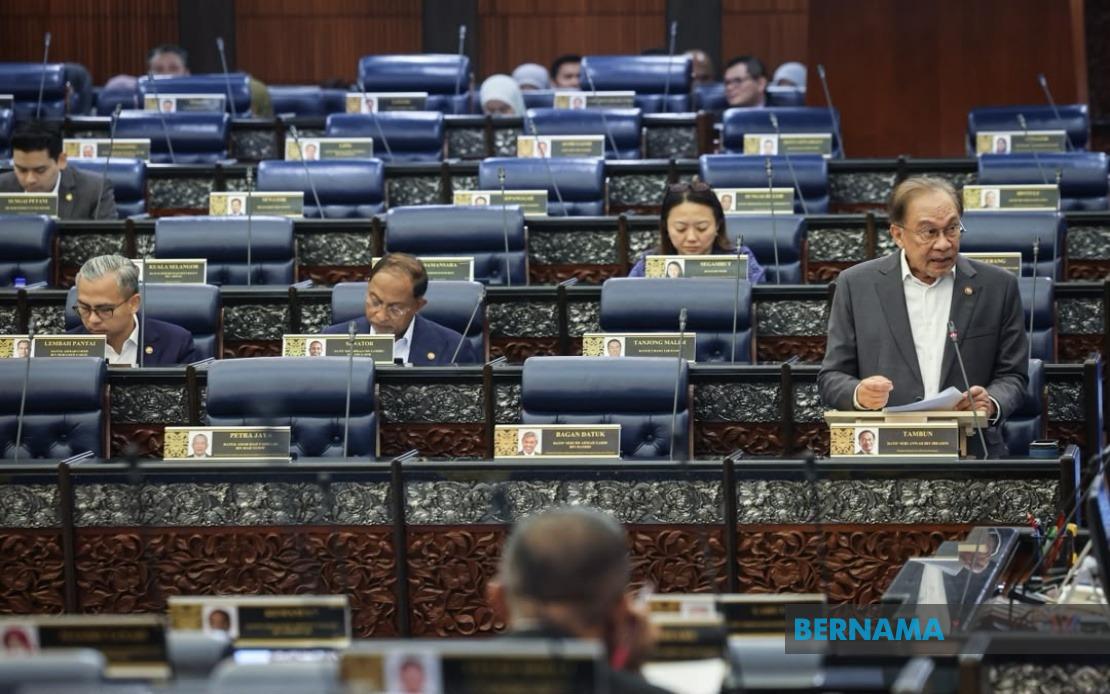
Prime Minister Datuk Seri Anwar Ibrahim moved to counter criticism of Malaysia's fuel pricing strategy by pointing to comparative costs in the Gulf region, asserting that domestic retail prices remain more affordable than those in major petroleum-producing nations. Speaking in Parliament on July 14, he highlighted that the subsidised RON95 petrol price under the BUDI MADANI initiative stands at RM1.99 per litre, a rate that undercuts current pricing in Saudi Arabia, which has climbed above RM2.40 per litre. This comparison forms the centrepiece of his defence against suggestions that Malaysia has lost its competitive edge in fuel affordability relative to other oil-exporting countries.
The Prime Minister's statement directly addressed persistent claims in public discourse that Malaysian petrol has become uncompetitively priced. By juxtaposing domestic rates against those in recognised global oil producers, Anwar sought to reframe the narrative around fuel policy. His assertion that Malaysia maintains lower prices than both Qatar and the United Arab Emirates serves a dual purpose: it demonstrates the tangible benefits of government subsidy mechanisms while simultaneously rebutting the premise that Malaysia's fuel market has slipped behind peer nations. The comparison carries particular weight given that Saudi Arabia and Qatar are among the world's largest oil reserves holders, making their higher retail prices a notable reference point.
The BUDI MADANI initiative, under which RON95 petrol is priced at RM1.99, represents a cornerstone of the government's approach to managing cost-of-living pressures for ordinary Malaysians. By maintaining this subsidised rate despite global crude price volatility, the administration signals its prioritisation of domestic affordability over market-driven pricing mechanisms. The programme's stability—with prices held constant rather than fluctuating with international crude movements—contrasts sharply with pricing structures in neighbouring Gulf states, where citizens sometimes experience price increases even as major crude exporters. This distinction underscores a deliberate policy choice to shield Malaysian consumers from petroleum market shocks.
Anwar's parliamentary remarks were prompted by a supplementary question from Datuk Rosol Wahid (PN-Hulu Terengganu), who raised the historical context of fuel pricing under the previous administration of Datuk Seri Najib Razak. The question implicitly invited scrutiny of whether the current government had fulfilled its earlier opposition-era promises to reduce fuel costs. By anchoring his response in regional comparisons rather than historical benchmarks, Anwar shifted the evaluative framework from Malaysian performance relative to past domestic levels to Malaysian performance relative to international competitors. This rhetorical approach emphasises absolute affordability over temporal progression.
The gap between Malaysia's RON95 price and Saudi Arabia's current rate—roughly 40 sen per litre—carries significance for regional wage comparisons and purchasing power parity assessments. While the differential may seem modest in absolute terms, it reflects the relative commitment different governments make to consumer price controls. Notably, Anwar referenced historical pricing from when opposition parties called for fuel costs to be reduced to RM1.50, noting that Saudi Arabia's price at that historical juncture was approximately 50 sen. This temporal comparison illustrates how global crude pricing dynamics have shifted dramatically over recent years, making direct historical comparisons within Malaysia less meaningful without acknowledging the international context.
The United Arab Emirates presents an instructive case within Anwar's argument. As a major crude producer that nonetheless raised fuel prices two months prior to his parliamentary statement, the UAE exemplifies how even petroleum-rich nations face pressures to adjust domestic pricing structures. This reality undercuts any assumption that oil producers automatically maintain perpetually low consumer prices. The UAE's pricing increase, despite its hydrocarbon wealth, suggests that global economic realities and fiscal sustainability considerations increasingly shape fuel policy across the region, with few nations able to indefinitely subsidise petrol at levels decoupled from production costs.
For Malaysian consumers navigating household budgets, the significance of fuel pricing extends beyond the pump. Petrol costs represent a foundational input for transportation, logistics, and numerous economic activities, making them a crucial variable in inflation calculations and cost-of-living assessments. The BUDI MADANI initiative's stability at RM1.99 provides households with pricing certainty, enabling more predictable household budgeting compared to regimes where prices adjust monthly or quarterly with global crude movements. This predictability carries economic value that transcends the simple numerical comparison of price per litre.
The broader context of Anwar's statement reflects ongoing political scrutiny of fuel policy in Malaysia, where this issue carries considerable salience for public perception of government economic management. Opposition figures have periodically questioned whether current pricing arrangements represent optimal use of government resources or whether alternative subsidy mechanisms might prove more equitable. By presenting evidence that Malaysia outperforms major oil producers on price competitiveness, the government attempts to neutralise such critiques through factual assertion backed by regional data.
Looking ahead, Malaysia's positioning as a net petroleum exporter faces long-term complexities not captured in simple price comparisons. While current crude reserves remain substantial, production trends and global energy transition dynamics will eventually reshape the economic equations underlying fuel policy. The present snapshot of Malaysia offering cheaper petrol than Saudi Arabia may not persist indefinitely as global crude markets evolve. Nevertheless, Anwar's immediate argument rests on contemporary facts, establishing a temporal baseline against which future policy discussions may be measured.
The comparative pricing framework Anwar employed also speaks to broader questions about government intervention in commodity markets. Unlike some nations that permit market forces to determine retail petroleum prices, Malaysia maintains targeted subsidies for specific fuel grades. This policy reflects particular domestic priorities and fiscal calculations, though such interventions carry long-term budgetary implications that policymakers must continually assess. The government's demonstrated commitment to maintaining the BUDI MADANI price point, despite international crude volatility, illustrates how political commitments to affordability can override short-term revenue considerations.

