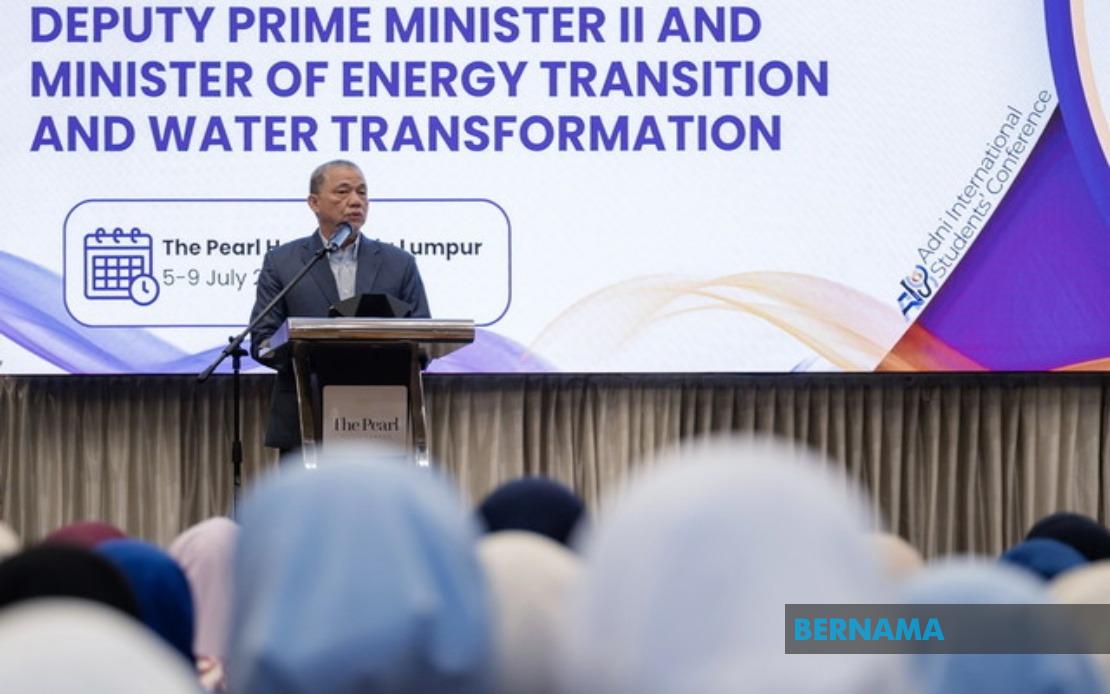
Malaysia's trajectory in the coming decades will be determined less by its economic output or technological capabilities than by the calibre of its workforce and citizenry, Deputy Prime Minister Datuk Seri Fadillah Yusof declared while launching a major international student conference in the capital. Speaking at the opening of the ADNI International Students' Conference (AISC) 2026, Fadillah articulated a vision of national progress that transcends conventional measures of development and places human potential at the centre of policy-making.
The Deputy Prime Minister's emphasis on human capital reflects a growing recognition across Southeast Asia that traditional drivers of growth—industrial capacity and digital infrastructure—are no longer sufficient in an era of rapid global transformation. Fadillah stressed the necessity for individuals equipped with critical thinking skills, strong communication abilities, and the flexibility to navigate an increasingly interconnected world where challenges respect no borders and solutions demand cross-sectoral approaches.
Unpacking this vision, Fadillah outlined the constellation of contemporary challenges that no single nation or institution can resolve independently. Climate change, pandemic preparedness, the digital revolution's socioeconomic implications, and deepening inequality all demand coordinated responses that involve governments, universities, businesses, civil society organisations, and young people working in concert. This framing positions human capital development not as an isolated educational concern but as a foundational element of Malaysia's capacity to meet emerging global imperatives.
The MADANI Government, Fadillah indicated, has embraced this philosophy by making human capital development integral to its policy agenda. He invoked the legacy of Malaysia's third Prime Minister Tun Hussein Onn, whose conviction that national strength derives from the cohesion and moral character of the population resonates with contemporary thinking about sustainable development. This historical reference grounds modern aspirations in Malaysia's own governance traditions, suggesting continuity between past wisdom and present-day policy directions.
Fadillah distinguished between the superficial connectivity enabled by technology and the deeper social bonds that sustain thriving communities. While digital networks link devices and platforms, he noted, only a foundation of shared principles, reciprocal regard, and institutional trust can forge genuine societal connection. This observation carries particular significance for Malaysia, a multicultural nation where social cohesion remains both a competitive advantage and an ongoing challenge requiring intentional cultivation.
The Deputy Prime Minister articulated a holistic conception of development that extends well beyond conventional metrics. Authentic progress, in his formulation, embraces not only formal education but also citizen well-being, ethical formation, intellectual creativity, environmental sustainability, and social integration. This multidimensional approach aligns with international frameworks such as the United Nations Sustainable Development Goals, positioning Malaysia within a broader movement toward more inclusive development paradigms.
The AISC 2026 conference itself embodies many of these principles. Themed 'Thriving Together: Diversity, Education and Wellness in a Digital World,' the gathering assembled approximately 150 participants—both Malaysian and international—including representatives from Thailand, the Philippines, and Indonesia. This regional composition underscores the interconnectedness of Southeast Asian societies and the value of cross-border intellectual exchange among young people who will shape the region's future.
Fadillah emphasised that opportunities for substantive dialogue across cultural boundaries represent an investment in producing globally aware individuals who maintain strong personal values and authentic cultural identities. The conference format, bringing together diverse student voices to explore contemporary issues, creates the type of intellectual space where Malaysian youth can engage with peers grappling with similar regional challenges while developing the collaborative skills necessary for multinational problem-solving.
Amid discussions of artificial intelligence and technological progress, Fadillah introduced a philosophical counterpoint: machines may become increasingly sophisticated, but they will never embody wisdom. Similarly, he argued, technological systems, no matter how advanced, cannot replicate human compassion. This observation serves as a corrective to techno-optimism that dominates some policy circles, reminding Malaysian leaders and citizens that technology is a tool serving human purposes rather than an end in itself.
For Malaysian policymakers, Fadillah's address suggests that competitive advantage in coming decades will accrue to nations that balance technological investment with sustained commitment to education, ethical development, mental and physical well-being, and social cohesion. The emphasis on human capital places responsibility on multiple institutions—schools, universities, employers, and civil society—to cultivate citizens capable of thriving in an uncertain, interconnected world.
The Deputy Prime Minister's framing also carries implications for how Malaysia positions itself regionally. By emphasising shared challenges and the necessity of collaborative solutions, Fadillah articulates a vision of Southeast Asian integration based not primarily on trade arrangements or strategic alignments, but on mutual investment in human development and cross-cultural understanding. This approach may prove more durable than purely transactional relationships, building regional resilience through genuine people-to-people connections.
Looking forward, Malaysia's success in elevating its human capital will require sustained investment in education quality, particularly in critical thinking and adaptability; support for young people's physical, mental, and emotional development; and deliberate cultivation of multicultural understanding and ethical leadership. The AISC 2026 conference represents one initiative among many that will be necessary if Malaysia is to realise its potential as a nation whose greatest resource is not its natural wealth or technological prowess, but the capability and character of its people.

