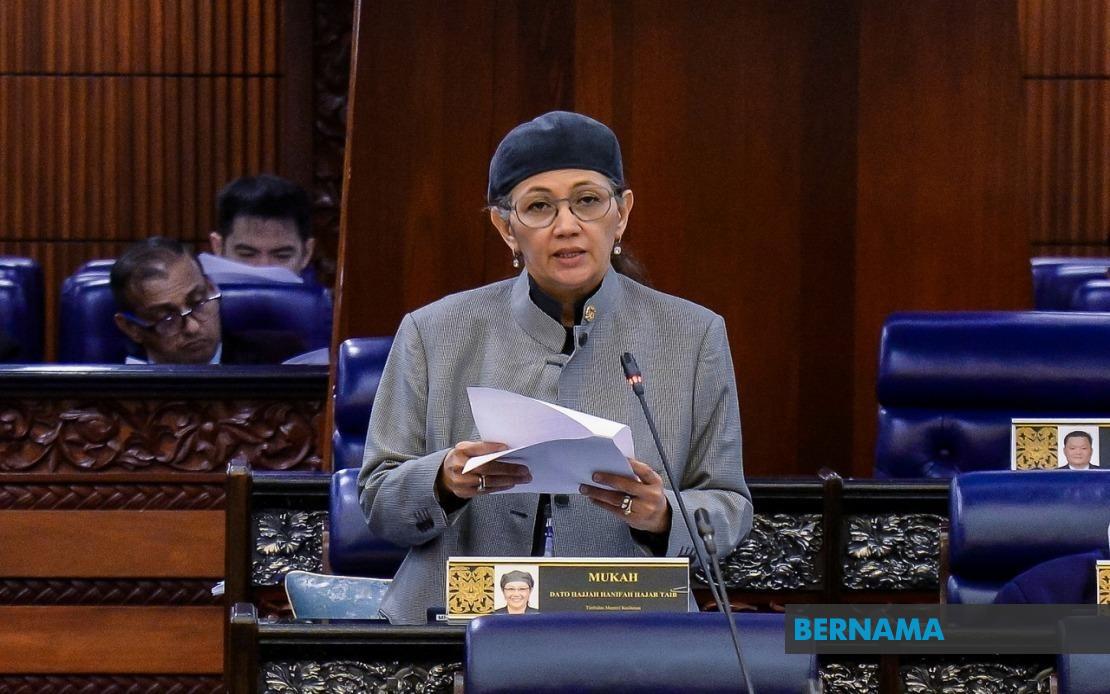
The Ministry of Health is launching an ambitious recruitment drive to tackle Sabah's longstanding doctor shortage, announcing plans to appoint 560 permanent medical officers to the state beginning in October. Deputy Health Minister Datuk Hanifah Hajar Taib disclosed the initiative during a parliamentary session, acknowledging that the initiative represents a substantial effort to bridge a significant healthcare workforce gap in Malaysia's largest East Malaysian state. The announcement comes as Sabah faces a documented shortfall of 256 medical officers, a deficit that has strained health services across the state's sprawling geography and dispersed population.
Yet beneath this headline figure lies a sobering reality that has plagued healthcare recruitment across Malaysia. Historical data reveals that only approximately 50 per cent of doctors offered permanent positions in Sabah have actually taken up their postings, suggesting that of the 560 new appointments, roughly 280 are likely to materialize. This acceptance rate underscores a persistent challenge facing the Ministry—while formal positions are available, geographic isolation, limited professional development opportunities, and lifestyle considerations continue to deter medical graduates from committing to long-term postings in East Malaysia. Even with the optimistic scenario of 280 arriving, the state would still fall short of closing its 256-officer deficit, meaning Sabah would require additional recruitment rounds to achieve adequate staffing levels.
The broader recruitment strategy forms part of a nationwide push by the Ministry to fill 4,500 permanent medical officer positions across Malaysia through two accelerated phases. The first phase, which commenced in June 2026, offered permanent appointments to 328 officers, with 39 targeted for Sabah. However, the results illustrated the challenges facing the scheme: only 20 of those 39 candidates reported to their postings, whilst 19 declined their assignments entirely. This 51 per cent rejection rate in the initial phase has informed the Ministry's approach to subsequent recruitment rounds, prompting enhanced incentives and systemic refinements to improve acceptance rates.
Current staffing data paints a detailed picture of Sabah's medical workforce situation. The state maintains 2,803 established medical officer positions, of which just 1,863 positions (66.5 per cent) are actively filled. A further 366 officers (13.1 per cent) are currently on study leave undertaking professional development, effectively removing them from daily clinical duties. This leaves 570 positions (20.3 per cent) completely vacant—a figure representing both unfilled authorized posts and positions abandoned by officers who have opted out of their assignments. The Ministry has attempted to compensate for these gaps by deploying 680 contract medical staff to Sabah, creating a patchwork of permanent and temporary arrangements that strain operational coherence and continuity of care.
Despite these challenges, there are measurable signs of progress that offer some encouragement. According to the 2024 Health Indicators report, Sabah remains among eight Malaysian states that fall below the national average for the doctor-to-population ratio, indicating that the state's physician density lags behind federal benchmarks. However, Sabah's metrics improved substantially between 2020 and 2023, with the ratio rising by 25.1 per cent over that three-year period. This upward trajectory, while still insufficient to meet population needs, suggests that targeted interventions and sustained recruitment efforts can generate measurable improvements in workforce composition.
To sustain this momentum and address the persistence of rejection rates, the Ministry has implemented several structural and incentive-based reforms designed to increase the attractiveness of Sabah postings. A key mechanism involves modifying the e-Placement system—a digital platform managing physician assignment decisions—to require doctors transitioning from contract to permanent employment to select at least one placement preference in Sabah, Sarawak, or Labuan. This approach creates mandatory engagement with East Malaysian postings as a condition of permanent status, potentially broadening the pool of candidates willing to consider these assignments. The Ministry rolled out enhancements to this system in 2025 to facilitate smoother implementation of these requirements.
The geographic distribution of permanent posts under the e-Placement quota system reveals the Ministry's prioritization of workforce challenges in East Malaysia. Sarawak has been allocated 650 permanent medical officer positions, whilst Sabah receives 310 postings through the e-Placement scheme. Together, these allocations represent 42.7 per cent of the total nationwide quota of 2,248 permanent positions across all Malaysian states. This heavy concentration reflects the Ministry's acknowledgment that East Malaysia faces disproportionate workforce pressures compared to the peninsula, where urban concentrations and established medical infrastructure make recruitment comparatively easier. The massive proportion of national resources directed to East Malaysian postings underscores the scale of regional disparity in healthcare workforce distribution.
For Malaysian healthcare observers and policymakers, the Sabah initiative illustrates the complex mechanics of physician distribution in a geographically fragmented nation. Malaysia's peninsular heartland, particularly major urban centers like Kuala Lumpur, Selangor, and Penang, attracts medical professionals through superior amenities, research facilities, and career advancement pathways. East Malaysia, despite its substantial population of 3.4 million residents, remains less appealing to many doctors despite competitive salary structures. The 50 per cent historical acceptance rate represents not merely administrative friction but a profound preference signal—doctors are actively choosing to reject even permanent, secure positions in Sabah. Addressing this requires interventions beyond recruitment mechanics, potentially including enhanced allowances for rural service, accelerated career progression pathways, and institutional investments in professional development infrastructure in East Malaysian health facilities.
The implications extend beyond Sabah's borders to challenge Southeast Asian healthcare systems more broadly. Nations across the region—Indonesia, Philippines, Thailand, and Vietnam—face analogous workforce distribution challenges, with urban concentration limiting access to care in peripheral regions. Malaysia's structured approach through e-Placement systems and centralized recruitment represents a more organized response than many neighbors employ, yet continues to struggle with fundamental market preferences that incentivize professional agglomeration. The 25.1 per cent improvement in Sabah's doctor-to-population ratio demonstrates that targeted policies can shift outcomes measurably, though the state's persistent gap below national averages indicates that systemic change requires persistence across recruitment cycles.
Looking forward, the success of the October recruitment phase will provide critical intelligence for evaluating whether the Ministry's refined placement mechanisms and structural requirements can meaningfully improve acceptance rates beyond historical 50 per cent levels. Should the second phase achieve substantially higher acceptance percentages, it would validate the e-Placement system reforms and inform recruitment strategies for future cycles. Conversely, if acceptance rates remain stagnant despite enhanced requirements, the Ministry may need to explore more fundamental incentives—such as accelerated pathways to specialization, leadership opportunities in East Malaysian institutions, or differential compensation packages reflecting regional disadvantages. Either outcome will resonate across Malaysian healthcare policy for years to come, influencing how the nation approaches the persistent challenge of equitable professional distribution across its diverse geography.

