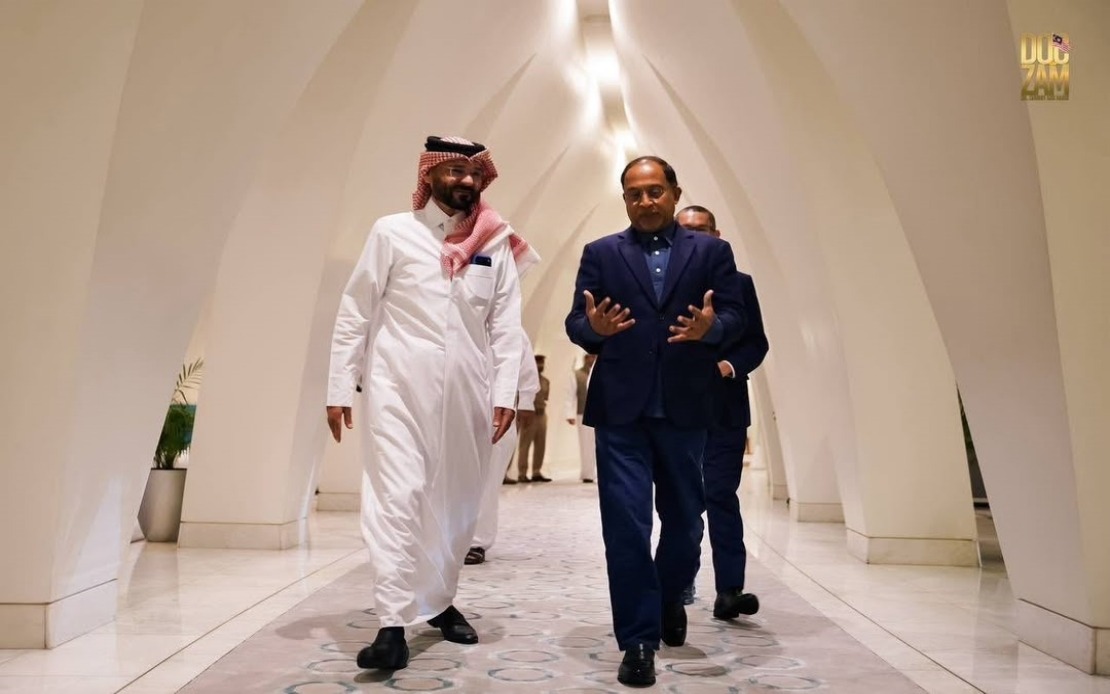
Higher Education Minister Datuk Seri Dr Zambry Abd Kadir touched down in Doha early on Tuesday morning, undertaking a diplomatic mission to represent Malaysia's government in honouring the late Father Amir of Qatar, Sheikh Hamad bin Khalifa Al Thani. The minister's presence at this moment of national mourning underscores the historical ties and strategic partnership between Malaysia and Qatar, two Muslim-majority nations with deep cultural and economic connections in the Gulf region.
Zambry announced his intention to meet with the incumbent Amir of Qatar, Sheikh Tamim bin Hamad Al Thani, at the Lusail Palace on the day of his arrival. This planned audience reflects the formal protocols observed when senior officials visit neighbouring states during periods of national mourning, allowing Malaysia to express its condolences directly to the current leadership whilst paying tribute to the predecessor's legacy.
Through a statement issued on social media, the Malaysian delegation conveyed the nation's heartfelt sympathies. The minister articulated that Malaysia stands in solidarity with Qatar's leadership and its citizenry during this period of grief, recognising the significant role Sheikh Hamad played in shaping the modern Gulf state. Such gestures carry considerable diplomatic weight, reinforcing bilateral relationships that extend beyond formal state interactions into cultural and religious dimensions shared by both nations.
Sheikh Hamad bin Khalifa Al Thani passed away on Sunday morning at the age of 74, according to an official announcement from Qatar's Amiri Diwan. His death marked the end of an era for one of the Arabian Peninsula's most influential leaders, whose tenure witnessed Qatar's transformation from a regional backwater into a global economic and political powerhouse. His strategic vision and modernisation agenda fundamentally reshaped the nation's trajectory.
The late Father Amir governed Qatar for eighteen years, from 1995 until his voluntary abdication in 2013. During his reign, he presided over unprecedented development, the discovery and exploitation of vast natural gas reserves, and the establishment of regional media influence through Al Jazeera. His decision to hand authority to his son, Sheikh Tamim, represented a planned succession that ensured continuity whilst positioning Qatar for the next phase of its evolution as a major international player in diplomacy and commerce.
Qatar's government implemented a four-day period of official mourning beginning on Sunday, July 12, reflecting the nation's deep respect for the departed leader. Throughout this mourning interval, all government ministries, state entities, and public institutions across the country were ordered to cease regular operations. This demonstrates the cultural and constitutional significance accorded to the late Amir, whose contributions to Qatar's development remain central to national identity and institutional memory.
For Malaysia, the dispatch of a senior cabinet minister to attend funeral rites carries symbolic importance. The Higher Education Ministry's representation signals that Malaysian leadership views the occasion as sufficiently significant to warrant high-level governmental participation. In the context of Southeast Asian-Gulf relations, such diplomatic gestures help maintain the networks of mutual respect and understanding that facilitate cooperation in education, investment, and regional security matters.
The relationship between Malaysia and Qatar has historically been characterised by mutual support within Islamic forums and multilateral organisations. Qatar's growing economic influence and Malaysia's established position as a Southeast Asian anchor state create complementary interests in promoting Islamic finance, interfaith dialogue, and regional stability. The timing of this condolence mission reinforces these bonds during a transitional moment in Qatar's leadership.
Sheikh Tamim bin Hamad Al Thani, who assumed the throne eleven years ago, faces the task of navigating complex international relations whilst honouring his father's legacy. The participation of regional leaders and their representatives at these funeral observances provides him an opportunity to reaffirm Qatar's commitment to existing partnerships and diplomatic relationships. Malaysia's presence through its Higher Education Minister contributes to this broader tapestry of international acknowledgement and support.
The passing of Sheikh Hamad also prompts reflection on the leadership models and state-building approaches that have characterised Gulf governance over recent decades. His voluntarily relinquishing power represented an uncommon approach in a region where succession disputes have occasionally destabilised nations. For Malaysian observers, the orderly transition in Qatar offers perspective on governance transitions and institutional continuity in monarchical systems.
At a broader level, this diplomatic engagement reflects how Malaysian foreign policy navigates relationships across the Islamic world and the Gulf region specifically. Beyond formal state relations, Qatar hosts significant Malaysian diaspora communities and serves as an important economic partner. The government's participation in mourning ceremonies acknowledges these multifaceted connections and demonstrates commitment to maintaining strong regional partnerships during significant moments.

