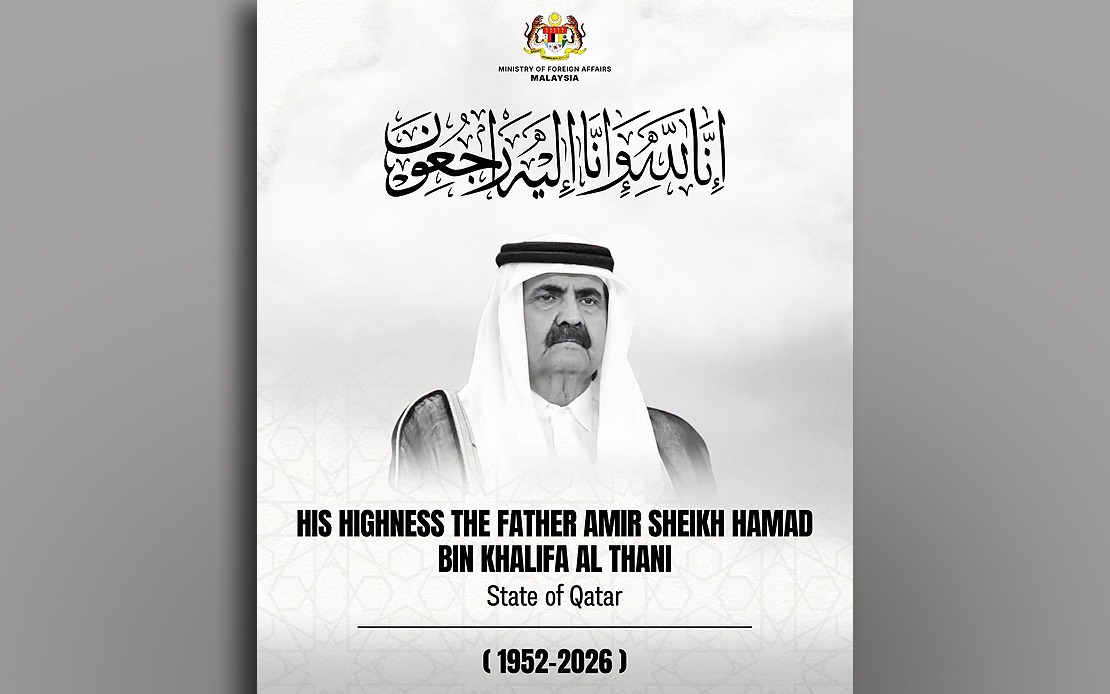
Malaysia has deployed its Higher Education Minister, Datuk Seri Dr Zambry Abdul Kadir, to attend official mourning ceremonies in Qatar following the death of the country's former ruler, Sheikh Hamad bin Khalifa Al Thani. The minister will represent the Malaysian government during the two-day condolence period from July 13 to 14, participating in formal rites organised at Lusail Palace in Doha, where the ruling family will receive dignitaries from around the world.
The passing of Sheikh Hamad bin Khalifa Al Thani, who served as Emir of Qatar until his abdication in 2013, prompted the Gulf state to declare four days of national mourning beginning July 12. During this solemn period, all government ministries, public institutions, and administrative entities across Qatar have suspended operations, reflecting the gravity afforded to the occasion within the nation. The extended closure underscores the ceremonial importance placed on honouring the late leader's legacy and allowing the state and its citizens to observe formal mourning protocols.
The current Emir, Sheikh Tamim bin Hamad Al Thani, will personally receive condolences at Lusail Palace from July 13 through July 15, welcoming heads of state, members of the Al Thani ruling family, international dignitaries, and Qatari citizens who wish to pay their final respects. This carefully structured schedule allows for an orderly flow of delegations while ensuring the immediate family has adequate time to greet visitors during an emotionally significant period. The three-day reception window reflects the tradition of extended condolence ceremonies in Gulf Arab customs, where foreign representatives typically queue to offer formal sympathies.
Malaysia's decision to send a cabinet-level representative underscores the importance Kuala Lumpur places on its bilateral relationship with Qatar. Through a statement released by the Foreign Ministry, Malaysia expressed profound sadness at the loss and emphasised the nation's solidarity with both the Qatari leadership and its broader population during the mourning period. Such symbolic gestures are integral to maintaining warm diplomatic ties in the Gulf region, where ceremonial participation in significant national events carries substantial political weight and reinforces mutual respect between governments.
The late Emir's tenure fundamentally transformed Qatar's regional and global standing. During his rule from 1995 until his son succeeded him in 2013, Sheikh Hamad bin Khalifa Al Thani oversaw dramatic economic expansion driven largely by natural gas exports, particularly liquefied natural gas (LNG) ventures that repositioned Qatar as a major energy exporter. His modernisation agenda also laid groundwork for Qatar's subsequent hosting of major international events, including the FIFA World Cup in 2022, which became a defining symbol of the nation's development trajectory and global aspirations.
Malaysia's participation in these state funeral proceedings also reflects broader Southeast Asian engagement with the Gulf Cooperation Council states. Relations between Malaysia and Qatar have historically encompassed trade partnerships, investment flows, and cultural exchanges. Qatari investments in Malaysian real estate and infrastructure, coupled with Malaysian energy sector involvement in Gulf projects, have created mutually beneficial economic interdependencies that political leaders on both sides seek to strengthen through regular ceremonial and diplomatic interaction.
The timing of Dr Zambry's visit occurs within a broader context of heightened diplomatic activity across the Muslim world, where significant events involving major Islamic nations attract considerable attention and participation from the Organisation of Islamic Cooperation membership. Qatar's prominence as both an energy superpower and a nation with considerable soft power influence in global affairs means that state occasions warrant representation from counterparts across diverse geographic regions and political systems.
From a practical standpoint, the four-day national mourning declaration in Qatar creates cascading effects across the Gulf's business and financial sectors, with many entities closing or operating under restricted capacity. International delegations attending the funeral ceremonies must adjust their travel and scheduling accordingly, making attendance a deliberate commitment that signals respect and prioritisation of bilateral relations. Dr Zambry's deployment therefore carries implicit messaging regarding Malaysia's commitment to maintaining strong connections with Qatar regardless of domestic political pressures or competing diplomatic obligations elsewhere.
The formal nature of state funerals also provides opportunities for informal bilateral discussions among attendees. Senior government officials converging on Doha during the mourning period often use the occasion to hold side meetings, strengthening personal relationships between leaders and discussing matters of mutual interest. For Malaysia, such interactions with senior Qatari officials could touch upon trade facilitation, energy cooperation, or broader regional security concerns affecting Southeast Asia and the Middle East alike.
Sheikh Hamad bin Khalifa Al Thani's death represents the closing of an era in Gulf history, marking the transition away from a leader who reshaped his nation's geopolitical relevance within a single generation. His legacy encompasses not merely economic transformation but also a particular vision of Qatar's regional diplomacy, including its complex relationship with neighbouring Saudi Arabia and its broader engagement with Western powers. Malaysian observers of Gulf affairs recognise his passing as a significant moment in understanding how Qatar will continue evolving under the current Emir's leadership.
Malaysia's formal representation at the funeral ceremony demonstrates how ceremonial diplomacy remains an essential tool for maintaining interstate relationships in the modern era. While conducted amid genuine expressions of condolence, the government's decision to dispatch a minister rather than a lower-ranking representative signals recognition of Sheikh Hamad bin Khalifa Al Thani's historical importance and respect for Qatar as a nation. This calculated diplomatic gesture contributes to the broader architecture of Malaysia-Qatar relations while allowing Kuala Lumpur to participate meaningfully in a significant moment within the Muslim world.

