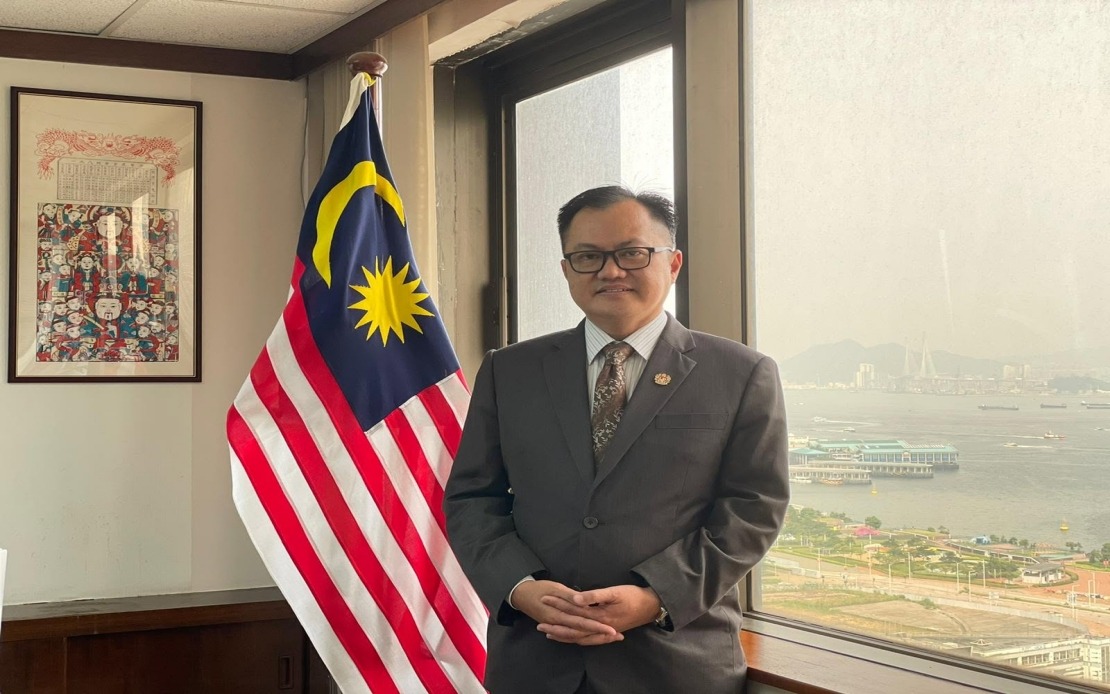
Malaysia's Consulate General in Hong Kong has pushed back against allegations that overseas voters lacked sufficient information to participate in the recent Johor state election, with Consul General Muzambli Markam asserting that his mission executed a deliberate and wide-ranging public communication strategy to ensure eligible citizens understood their voting rights and registration procedures.
The statement comes in response to a South China Morning Post article published on July 9 that suggested Malaysian expatriates in Hong Kong faced barriers to voting in state-level elections due to tight deadlines and inadequate awareness of participation opportunities. The article, which prompted considerable online discussion among the overseas Malaysian diaspora, prompted the consulate to clarify its role and efforts in facilitating democratic participation among citizens abroad.
Muzambli emphasised that the consulate had moved beyond passive information provision to create an active engagement ecosystem. The mission consistently published advisories and instructional materials across its official digital platforms and worked in tandem with the Malaysian Association of Hong Kong, a prominent community organisation representing tens of thousands of Malaysians, to distribute timely updates about registration windows and encourage civic participation. This collaborative approach sought to reach Malaysians through multiple trusted channels rather than relying solely on official government sources.
The consul general specifically criticised the media outlet's headline as a significant misrepresentation of both the Election Commission's modernisation efforts and the broader Malaysian government commitment to facilitating overseas voting. He contended that the framing suggested systemic failure when, in reality, substantial infrastructural improvements had been implemented to accommodate citizens voting from abroad. The characterisation of the situation as Malaysian voters being "locked out" of elections contradicted the consulate's assessment of the accessibility mechanisms now available.
Regarding the article's suggestion that the consulate's lack of local voter statistics represented an administrative gap, Muzambli offered a counterintuitive defence. He explained that the Election Commission had deliberately restructured the overseas voting system to eliminate intermediary gatekeepers, allowing Malaysians abroad to submit registration applications directly through the centralised MySPR online portal. The consulate's absence from this workflow reflected intentional system design rather than negligence, as the direct-to-system architecture prioritised both efficiency and security while reducing bureaucratic friction.
The modernisation of Malaysia's overseas electoral infrastructure represents a significant shift from traditional paper-based processes that required physical presence at embassies and consulates. By enabling digital submission directly to the electoral authority, the system theoretically allows Malaysians in any location with internet connectivity to register without geographical or temporal constraints tied to consulate operating hours. This technological advancement particularly benefits working professionals and students who may struggle to visit diplomatic facilities during business hours.
The dispute between the consulate and the media outlet reflects broader tensions surrounding overseas voting accessibility in Southeast Asia. Malaysia, like several regional neighbours, grapples with balancing inclusive democratic participation for its diaspora with practical administrative constraints. The tight registration windows referenced in the original article stem partly from constitutional and electoral law requirements that create compressed timelines for overseas voters compared to domestic participants. Understanding these legal frameworks is essential for evaluating whether criticism of the system addresses design flaws or inevitable structural limitations.
For Malaysian expatriates across Asia and beyond, the exchange underscores the importance of proactively seeking voting information well in advance of election periods. While consulates and community organisations disseminate details through their channels, individual voters cannot assume that information will reach them passively. Those who missed registration deadlines for the Johor election should note that the MySPR system remains open between election cycles, allowing continuous registration rather than requiring action only during election windows.
The consulate's emphasis on partnership with the Malaysian Association of Hong Kong highlights the critical role that community organisations play in connecting government services with expatriate populations. These grassroots groups often possess superior cultural knowledge and community trust compared to formal diplomatic institutions, making them invaluable intermediaries for public information campaigns. The success of voter awareness initiatives frequently depends less on government effort than on whether community organisations choose to amplify those messages through their networks.
Muzambli's statement ultimately framed the discourse around overseas voting as one of sophisticated electoral infrastructure versus incomplete information dissemination. The consulate contended that technical barriers to participation have substantially diminished through digitalisation, shifting responsibility partly toward voters to seek out available information and meet registration deadlines. This perspective may satisfy those who believe digital-era voting systems have evolved sufficiently, while others might counter that mere availability of information differs fundamentally from ensuring informed, barrier-free access.
The Malaysian government's commitment to facilitating overseas voting has become increasingly significant as the nation's diaspora grows and remittance flows from abroad become economically important. Elections that include overseas participation carry greater legitimacy and representativeness, even as they create administrative complexity. How Malaysia balances inclusivity with practical constraints will likely influence voting participation rates among its expatriate communities in coming electoral cycles and may serve as a reference point for other Southeast Asian nations managing similar challenges.

