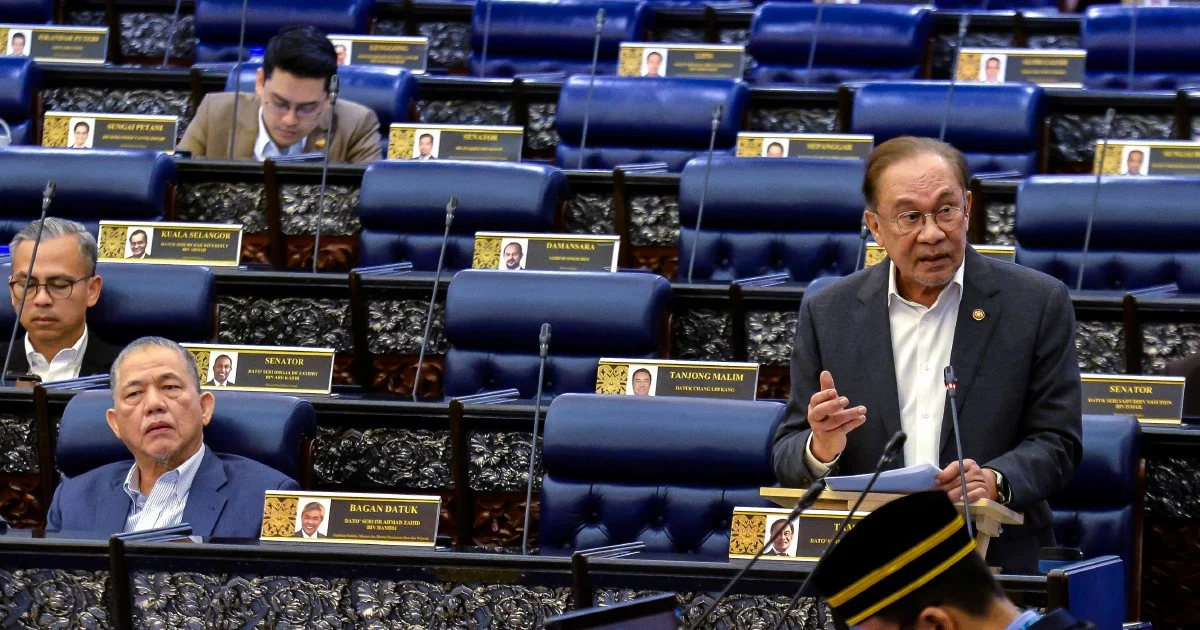
Prime Minister Datuk Seri Anwar Ibrahim has disclosed that Malaysia's household debt burden reached RM1.73 trillion as the first quarter of 2026 concluded, a figure that represents 84.4 per cent of the country's gross domestic product. This revelation underscores the substantial financial obligations carried by Malaysian families and raises questions about the sustainability of current consumer spending patterns and household financial health across the nation.
The magnitude of household debt relative to GDP provides a critical measure of financial vulnerability within the economy. When household debt exceeds 80 per cent of GDP, economists typically flag this as a warning sign that consumer finances may be stretched, potentially limiting future spending capacity and economic growth. Malaysia's position at 84.4 per cent places the country in a position where household deleveraging—the process of reducing debt levels—becomes increasingly important for long-term economic stability.
Rising household debt reflects multiple underlying factors within the Malaysian economy. Property prices, particularly in major urban centres such as Kuala Lumpur, Petaling Jaya, and Selangor, have surged over the past decade, forcing homebuyers to take larger mortgages. Additionally, credit card usage has expanded, car financing remains widespread, and personal loans have become more accessible through digital banking platforms. The cost of living, encompassing housing, education, healthcare, and transportation, continues to exert downward pressure on household savings rates.
The debt accumulation trend carries significant implications for Malaysian consumers already navigating higher interest rates. Central bank monetary tightening over recent years has increased borrowing costs, meaning households servicing variable-rate mortgages and personal loans face larger monthly obligations. This squeeze on disposable income can reduce consumption, which in turn slows economic expansion—a concern for policymakers seeking to maintain steady growth across the region.
Context matters when assessing Malaysia's household debt position relative to other Southeast Asian economies. Singapore and South Korea, both developed economies with high living standards, operate with comparably elevated household debt ratios, yet their stronger institutional frameworks, higher per-capita incomes, and established social safety nets provide different risk profiles. Malaysia, as an upper-middle-income nation still developing certain institutional safeguards, faces different constraints and vulnerabilities when managing such debt levels.
The banking sector's exposure to household debt creates systemic risks worth monitoring. Should economic conditions deteriorate—through job losses, business failures, or unexpected shocks—loan default rates could climb significantly, straining bank balance sheets and reducing their capacity to extend credit to businesses. This transmission mechanism from household financial stress to broader economic dysfunction underscores why debt levels command attention from regulators and policymakers.
Younger Malaysians entering the workforce face particularly acute challenges. Housing affordability has deteriorated markedly, with first-time homebuyers in Klang Valley and other developed regions requiring 10 to 15 years of salary to purchase an entry-level property. This forces younger cohorts into extended periods of heavy debt servicing, delaying other life milestones such as marriage, education, and family formation. The long-term social and demographic consequences of these trends warrant consideration alongside purely financial metrics.
Government interventions have sought to address household financial stress through various mechanisms. Targeted subsidies for essential goods, support for low-income households, and financial literacy programmes aim to ease pressures on household budgets. However, policymakers face a fundamental tension: measures that provide short-term relief may inadvertently encourage further borrowing if not accompanied by structural reforms addressing underlying cost drivers such as housing and healthcare expenses.
The debt composition matters significantly when evaluating risk. Mortgage debt, while substantial, typically carries lower interest rates and longer repayment horizons compared to credit card and personal loan debt. If most of Malaysia's household debt consists of mortgages backed by tangible assets, the risk profile differs from economies where unsecured consumer debt dominates. Nevertheless, without detailed breakdowns, broad assessments must remain cautious.
Looking forward, managing the trajectory of household debt requires multifaceted approaches. Enhancing wage growth through productivity improvements and skills development helps households service existing obligations more comfortably. Addressing supply-side constraints in housing markets could moderate property price inflation. Strengthening financial literacy and consumer protection frameworks reduces the likelihood of households taking on unsustainable debt burdens. Regional economic stability, given the exposure of Malaysian workers to regional labour markets, also influences household financial capacity.
Prime Minister Anwar's disclosure serves as a data point in ongoing policy debates about Malaysia's economic direction. Whether this debt level represents a manageable equilibrium or an unsustainable trajectory depends partly on assumptions about future income growth, employment stability, and interest rate movements. For Malaysian households themselves, the figure represents the cumulative weight of individual financial decisions made within an economic environment shaped by structural forces largely beyond personal control.
The challenge ahead involves balancing immediate support for households managing debt repayments with longer-term structural reforms that address root causes of rising indebtedness. Without such balance, Malaysia risks entering a cycle where households become increasingly leveraged, economic growth slows due to reduced consumer spending capacity, and financial stability concerns mount. Regional observers watching Malaysia's policy response to this challenge may find lessons applicable to their own contexts.

