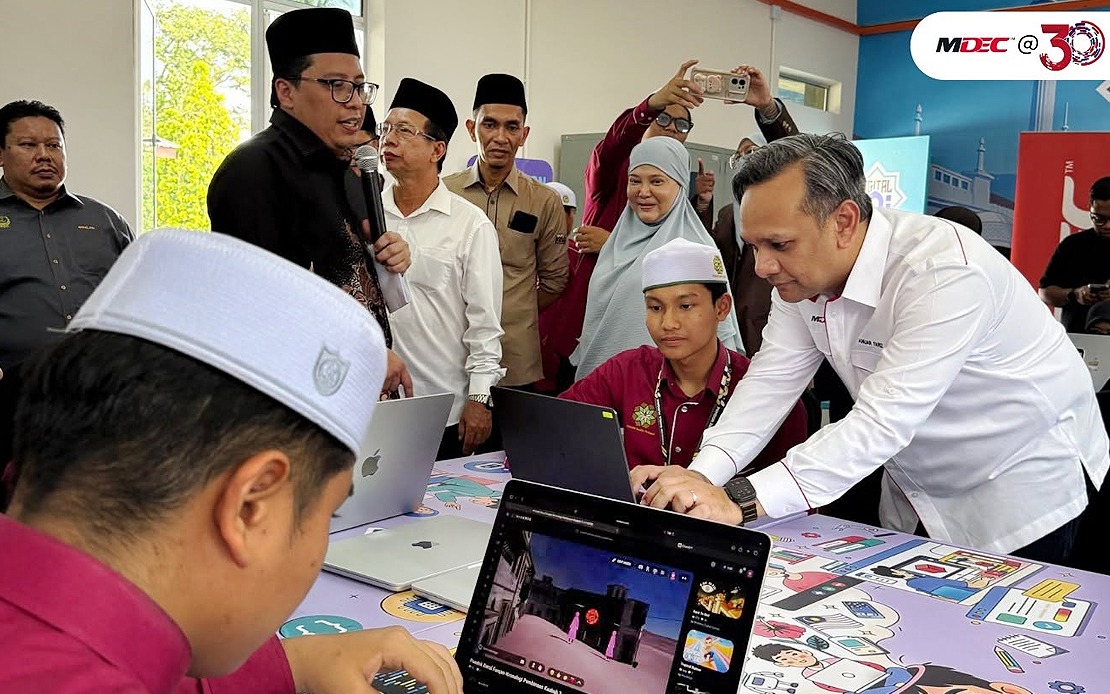
Malaysia's push to become a technology-enabled nation has reached a new frontier: Islamic education institutions. The Malaysia Digital Economy Corporation (MDEC) has handed over a Digital Maker Hub to Pondok Darul Furqan in Tambun, Ipoh, marking a significant expansion of digital skills training beyond conventional schools and universities. The initiative reflects a growing recognition that digital transformation cannot exclude any segment of Malaysian society if the nation is to realise its ambitions of becoming an AI Nation by 2030.
The facility represents far more than a simple tech refresh for a single institution. The Digital Maker Hub is a purpose-built interactive learning environment stocked with laptops, high-speed internet connectivity, smartboards, robotics kits, and microcontroller equipment designed to make technology tangible and accessible to both students and teachers. This hands-on approach to learning allows trainees to move beyond theoretical knowledge and engage directly with emerging tools that are reshaping industries across the region. For teachers at Islamic institutions, who may have limited exposure to such technologies, the hub offers a rare opportunity to upskill themselves and then cascade that knowledge to their students.
The programme driving this initiative is called Digital IPI—the Islamic Education Institution Digital Transformation Programme—developed through collaboration between MDEC and the Department of Islamic Development Malaysia (JAKIM). According to MDEC chief executive officer Anuar Fariz Fadzil, the underlying philosophy acknowledges that comprehensive digital talent development requires broad societal participation. This is not merely about individual advancement; it is about ensuring that future Malaysian innovators and digital creators emerge from all educational backgrounds, including Islamic schools. The National Digital Action Plan 2030 explicitly envisions technology workers and digital entrepreneurs drawn from every corner of Malaysian society.
The question of why Islamic education institutions warrant special attention speaks to a practical reality in Malaysia's education ecosystem. These institutions educate a substantial portion of the Malaysian student population and have historically operated with fewer technological resources than their secular counterparts. By targeting them for digital transformation, MDEC is addressing both an equity issue and a talent pipeline challenge. Students who graduate from these institutions need the same digital competencies as any other Malaysian youth seeking employment in technology sectors, yet they often lack similar opportunities to build those skills during their schooling.
Immediate results from the Ipoh programme are already visible. Thirty students and five teachers from Pondok Darul Furqan recently completed a two-day MetaSkool Metaverse Programme, an experiential learning initiative that introduced participants to metaverse technology through interactive, creative exercises. The programme is designed to spark curiosity and encourage critical thinking about immersive digital environments—technologies that are increasingly central to gaming, education, commerce, and social interaction. By exposing Islamic school students and teachers to metaverse concepts early, the programme positions them to engage meaningfully with technologies that will likely define their professional futures.
The rollout of Digital Maker Hubs is being conducted in phases rather than as a one-time deployment. Under the current pilot phase, five additional Islamic education institutions across Kedah, Kelantan, Negeri Sembilan, Pahang, and Penang have been selected to receive their own hubs. This measured approach allows MDEC and JAKIM to refine the programme, assess what works best across different regional contexts, and build sustainable capacity before broader expansion. The phased strategy also creates opportunities for institutions already equipped with hubs to mentor newer participants and share best practices.
Prime Minister Datuk Seri Anwar Ibrahim launched Digital IPI in March, signalling government commitment to this sector. The programme targets direct benefits to more than 3,000 students and 50 teachers through structured training modules spanning digital literacy, artificial intelligence, digital creativity, immersive learning technologies, metaverse applications, and digital content creation. These training areas have been carefully selected to address skills gaps identified across Malaysia's evolving digital economy. Digital literacy provides foundational knowledge; AI training prepares participants for algorithmic thinking; creative modules encourage original content generation; and metaverse training offers exposure to next-generation interaction platforms.
What distinguishes Digital IPI from simpler tech training initiatives is its attempt to integrate religious education values with technological competency development. The programme explicitly seeks to embed principles such as trustworthiness into technology learning, recognising that digital tools are not value-neutral instruments but rather tools that should reflect and reinforce ethical principles. For Islamic education institutions, this alignment between spiritual values and technological application has particular resonance, allowing students to see technology not as something imposed from outside their religious framework but as something that can strengthen it.
For Malaysia and Southeast Asia more broadly, this initiative carries regional implications. The region's digital economy requires talent at every level of the technology stack, from hardware technicians to AI researchers. Yet talent pipelines have been historically concentrated in urban centres and secular institutions. By systematically bringing digital infrastructure and training to Islamic schools in towns like Ipoh and smaller states like Kelantan and Negeri Sembilan, Malaysia is broadening its talent development footprint. This geographic and institutional diversification strengthens the entire ecosystem, reducing vulnerability to brain drain and ensuring that innovation happens across multiple settings.
The implicit message from MDEC and JAKIM is clear: Malaysia's digital future will be determined not only by what happens in Kuala Lumpur's tech parks but also by what students in Tambun, Kota Bharu, and Seremban are learning in their classrooms. By equipping Islamic education institutions with maker hubs and metaverse training, the nation is signalling that technological competency is a fundamental right, not a privilege. The success of this pilot phase will likely shape how Malaysia approaches digital inclusion across other underserved educational segments in the years ahead.

