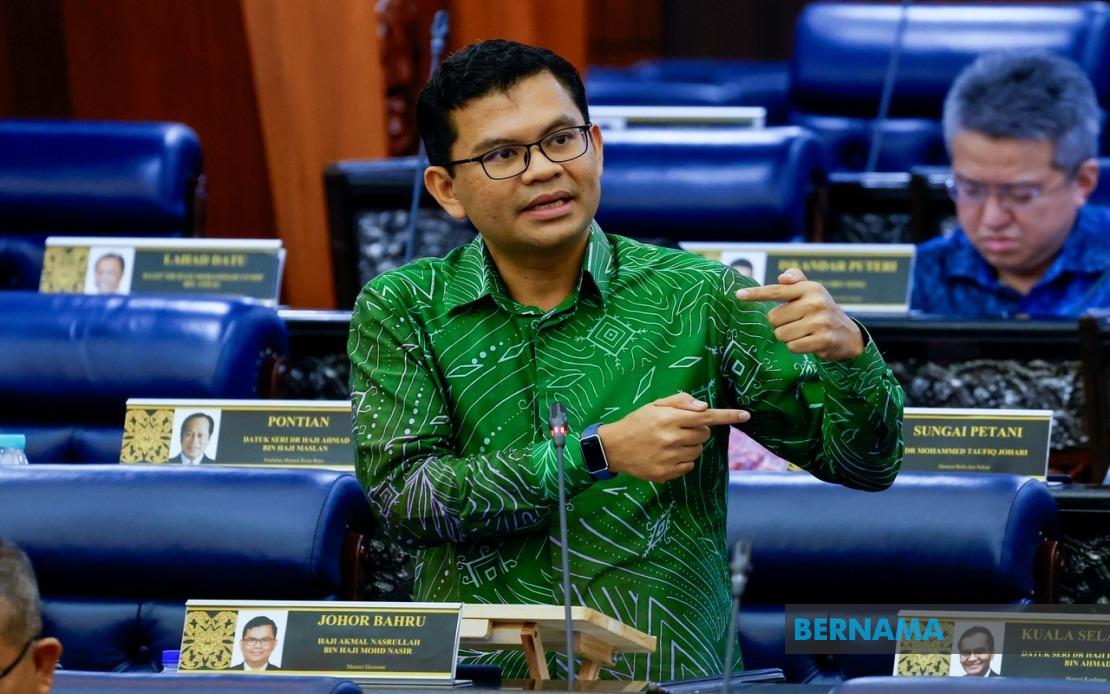
Malaysia's labour market has proven resilient through the first half of 2026, with job losses remaining under control despite global economic headwinds and energy sector pressures, according to Economy Minister Akmal Nasrullah Mohd Nasir. Speaking during ministerial question time in Parliament on June 25, he presented figures suggesting that immediate threats to employment stability have stabilised, even as businesses and policymakers navigate broader macroeconomic uncertainties.
The headline employment figure paints an encouraging picture. As of June 22, the number of individuals without work stood at just 6,197 people, representing only 0.04 per cent of Malaysia's total working population. This represents a substantial improvement from the previous month, with May having recorded 7,766 job losses—meaning the latest count reflects a 20 per cent decline in separations. While the absolute numbers remain small relative to the overall workforce, the trend direction carries significance for confidence in economic stability heading into the second half of the year.
These employment figures must be understood within the broader context of Malaysia's labour force dynamics. As of April 2026, the country's total labour force had expanded to 17.33 million individuals, demonstrating continued participation in the formal economy. Among these, 16.82 million were actively employed, reflecting steady job creation despite acknowledged headwinds from the energy crisis and international economic uncertainty. The slight uptick in the unemployment rate from 2.9 per cent in March to 3.0 per cent in April, which translated to 511,800 people, nonetheless remained comfortably below the conventional 4 per cent threshold for full employment.
A particularly telling indicator of labour market stability is the constancy of workforce participation. The labour force participation rate remained fixed at 70.9 per cent between March and April, unchanged from the previous month. This stability suggests that workers are not withdrawing from the market in response to economic anxiety, nor are employers dramatically reducing hiring. For Southeast Asian economies navigating volatile commodity prices and shifting global supply chains, such consistency in participation signals underlying confidence despite surface-level concerns about layoffs and restructuring.
The response to Mohd Syahir Che Sulaiman's question about mitigation measures through the National Economic Action Council highlighted the multifaceted approach being pursued to address labour market disruptions. Rather than relying solely on passive income support, the government has emphasised active labour market policies designed to move displaced workers quickly back into productive employment. This distinction matters considerably, as evidence from advanced economies suggests that redeployment and skills-matching interventions produce faster economic recovery and better long-term outcomes for affected workers than temporary financial relief alone.
The performance of the MYFutureJobs portal exemplifies this strategic shift toward active intervention. Between April and mid-June, the platform recorded a remarkable 55 per cent surge in job placements, climbing from 12,119 to 18,756. These gains reflect both improved job-matching technology and an apparent willingness of Malaysian employers to recruit through government-supported channels. By June 12, the cumulative placement total for 2026 had reached 62,644 positions filled, incorporating both direct MYFutureJobs matches and beneficiaries assisted through the Employment Insurance System framework. This integration of multiple support mechanisms suggests a coordinated, comprehensive approach rather than fragmented crisis management.
For Malaysian workers facing displacement, these employment redeployment gains hold concrete implications. The data indicates that individuals losing positions in contracting sectors or companies have reasonably accessible pathways to alternative employment, at least through official channels. The speed of reabsorption—from joblessness to new placement within weeks or months rather than years—reduces both the financial stress on affected families and the risk of skill depreciation among displaced workers. This becomes particularly important for mid-career professionals in energy-dependent regions who might otherwise face prolonged unemployment.
The broader economic context underlying these labour market figures deserves careful consideration for regional observers. Malaysia's labour resilience occurs against a backdrop of energy sector pressures and acknowledged global economic uncertainty, conditions that have triggered significant workforce reductions in other commodity-dependent nations. The relative stability achieved here reflects both structural advantages—particularly the nation's diversified economic base spanning manufacturing, services, and technology sectors—and policy choices favouring active adjustment rather than passive contraction.
For Southeast Asian economies facing similar pressures, Malaysia's experience offers preliminary lessons about the effectiveness of coordinated labour market interventions. The combination of real-time employment platforms, skills-matching support, and insurance-based income protection appears to reduce both the duration and severity of unemployment spells. However, observers should note that these positive indicators emerge during an early phase of any potential broader downturn; sustained resilience over longer periods would constitute a more definitive test of policy effectiveness.
Looking forward, the sustainability of these labour market gains depends on several factors beyond the government's direct control. Global energy prices, international trade dynamics, and the pace of regional economic recovery will shape employer hiring decisions throughout the remainder of 2026. Nevertheless, the combination of controlled unemployment figures, stable workforce participation, and accelerating job placements suggests that Malaysia's labour market has entered this uncertain period with reasonable institutional and structural buffers in place, positioning workers and policymakers somewhat better than peer nations facing similar external pressures.

