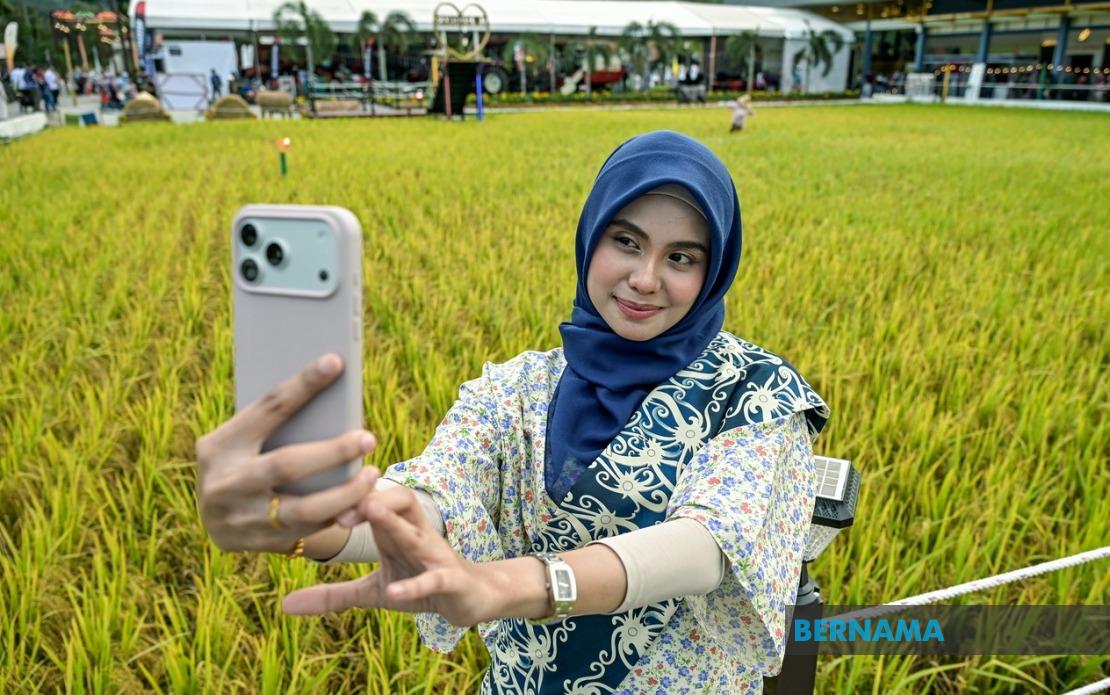
The inaugural Paddy Art exhibition at Laman Padi during Malaysia's Agriculture, Horticulture and Agrotourism Exhibition 2026 has secured a distinctive national accolade, earning recognition from the Malaysia Book of Records for creating the country's largest paddy art formation. The achievement underscores growing momentum in leveraging agricultural landscapes for tourism and cultural expression, marking a significant milestone in how Malaysia presents its farming heritage to both domestic and international audiences.
The record-breaking artwork showcases a patriotic tableau featuring the Jalur Gemilang interwoven with symbolic heart and hand motifs, alongside the word 'Jati'—reflecting national identity and agricultural pride. The creative piece was accomplished through sophisticated staged planting methodology, capitalising on the MR284 paddy variety and deploying varied crop maturity stages to produce distinct chromatic effects across the paddy field canvas. This technical achievement demonstrates how traditional agricultural practices can be reimagined as contemporary art forms, bridging the divide between commodity production and experiential cultural offerings.
Agriculture and Food Security Minister Datuk Seri Mohamad Sabu emphasised during the Laman Padi opening at Malaysia Agro Exposition Park Serdang that the recognition validates Malaysia's capacity for agricultural innovation beyond conventional production metrics. He highlighted the collaborative approach involving private-sector partnerships, noting that such ventures position paddy cultivation within broader economic and social value frameworks. The minister's remarks reflect a strategic repositioning of Malaysian agriculture as capable of generating not merely staple foods but also distinctive creative outputs and tourism experiences.
The broader significance of this initiative lies in its demonstration that agricultural lands need not serve singular commercial purposes. Mohamad articulated that paddy fields represent multi-functional landscapes with potential spanning technological advancement, knowledge dissemination, employment creation, and income generation through agrotourism pathways. This perspective aligns with global trends where farming communities increasingly diversify revenue streams by welcoming visitors, offering educational experiences, and creating branded agricultural destinations.
Laman Padi itself occupies a seven-hectare site within MAEPS, comprising seven distinct paddy cultivation zones supplemented by two visitor information centres and galleries. Each plotted area provides unique narratives exploring different facets of rice cultivation and paddy production, crafted to deliver varied educational and entertainment experiences. The spatial organisation encourages visitors to move progressively through the exhibition, absorbing information whilst engaging with the agricultural landscape directly—a pedagogical approach increasingly favoured in agrotourism development across Southeast Asia.
Agrotourism momentum is particularly pronounced among urban populations and younger demographics with limited exposure to farming activities, the minister noted. This demographic shift creates substantial opportunity for rural communities to generate supplementary income through visitor services, accommodation, meals, and merchandise linked to authentic agricultural experiences. Malaysian paddy farmers, confronted by pressures from urbanisation and labour shortages, may discover agrotourism as a viable income diversification strategy supporting agricultural viability long-term.
During the ten-day MAHA 2026 exhibition, Laman Padi targets approximately ten thousand daily visitors, having already welcomed four thousand visitors within the first operational day. This visitor projection, if achieved, would generate substantial foot traffic across associated facilities and commercial vendors, demonstrating practical market demand for agricultural tourism offerings. The rapid uptake suggests Malaysian audiences respond favourably to educational agricultural experiences presented through contemporary, visually engaging formats.
The curatorial approach at Laman Padi deliberately integrates historical and contemporary dimensions, narrating paddy and rice industry evolution from traditional methods toward modern production systems. This temporal framework contextualises agricultural development whilst validating existing farmer knowledge and practices. An infotainment methodology underpins visitor engagement, combining informational content with entertainment value, interactive demonstrations, product showcases, and immersive activities designed to sustain visitor interest across diverse age groups and educational backgrounds.
Educational programming particularly targets school-age visitors, with approximately ten participating schools organising paddy-related activities providing hands-on planting experience. Such structured educational programming builds agricultural literacy among younger generations whilst creating potential future stakeholder engagement with farming sectors. For educators and parents, Laman Padi offers experiential learning alternatives to classroom instruction, contextualising agricultural fundamentals within operational farming environments.
Laman Padi functions simultaneously as a strategic collaboration platform amongst government agencies, industry players, and private enterprises spanning the paddy and rice value chain. Participating companies including BERNAS and other sector representatives showcase products and services to concentrated visitor audiences, facilitating direct market engagement and brand visibility. This public-private partnership model distributes exhibition costs and expertise whilst creating commercial incentives for industry participation, enhancing content quality and commercial viability.
Culinary offerings throughout the exhibition reflect Malaysia's regional diversity, with food concepts and dishes representing various regions. This gastronomic dimension transforms Laman Padi beyond purely educational or recreational space into comprehensive experiential destination encompassing taste, cultural knowledge, and agricultural appreciation. Food directly linking paddy production to consumer consumption reinforces visitor understanding of agricultural-commercial relationships.
The Paddy Art achievement arrives amid growing recognition of agrotourism's economic and social potential across Southeast Asia. Malaysia's record-breaking initiative positions the nation competitively within regional agrotourism development, potentially attracting agricultural enthusiasts and cultural tourists seeking authentic farming experiences. As MAHA 2026 concludes, sustained performance data will provide valuable insights regarding agrotourism viability, visitor demographics, and commercial returns—intelligence informing policy decisions regarding future agricultural tourism investments and rural development strategies.
The Malaysia Book of Records recognition carries symbolic weight extending beyond artistic achievement, validating paddy cultivation's cultural significance and capacity to inspire national pride through creative expression. This validation may encourage other farming communities throughout Malaysia to explore similar initiatives, contributing toward broader agricultural sector diversification and rural economic resilience amidst evolving economic conditions and demographic pressures.

