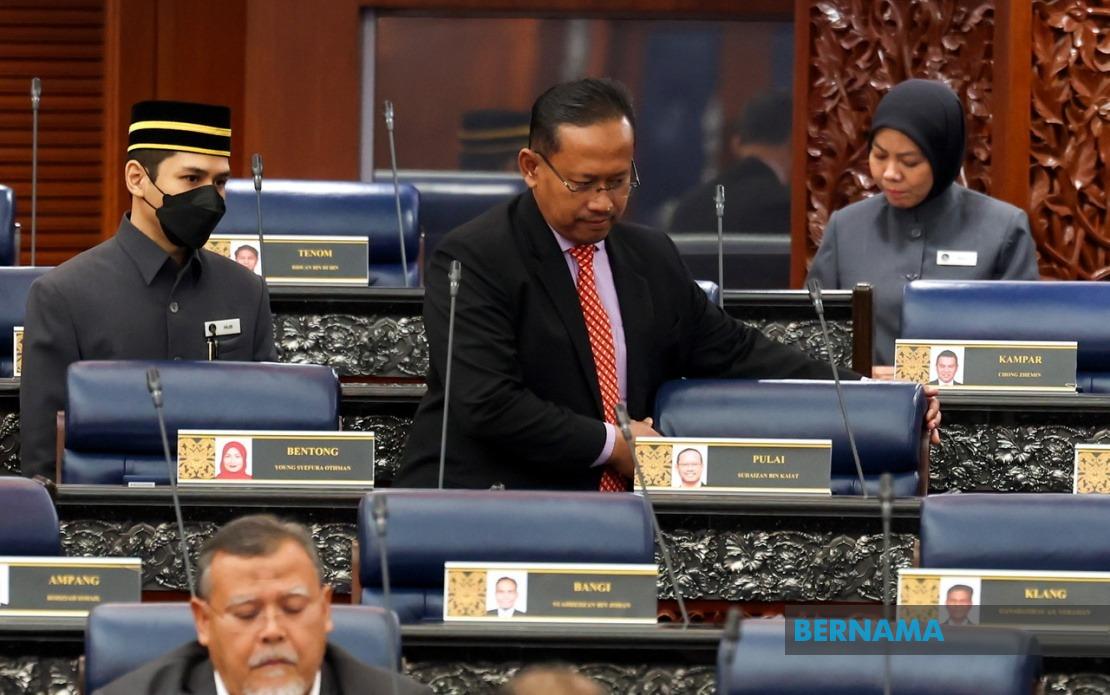
The projected economic impact of Malaysia's deepening mental health crisis has emerged as a critical concern for national policymakers, with estimates suggesting the financial burden could spiral to RM25.3 billion by 2030 unless comprehensive intervention strategies are implemented immediately. Suhaizan Kaiat, chairman of the Special Select Committee on Health, presented this sobering assessment during parliamentary proceedings, emphasizing that mental wellbeing has transcended clinical boundaries to become a fundamental economic and productivity issue directly threatening the nation's socio-economic trajectory.
The scale of Malaysia's mental health challenge becomes starkly apparent when examining epidemiological trends over the past five years. Depression among adults aged sixteen and above has doubled, surging from 2.3 percent in 2019 to 4.6 percent by 2023—a trajectory that translates into roughly one million Malaysians currently grappling with clinical depression. This acceleration signals not merely individual suffering but systemic pressures mounting across the workforce, families, and communities. For policymakers accustomed to measuring health metrics in clinical terms, the reframing of mental health as an economic multiplier carries profound implications for resource allocation and strategic planning.
Younger demographics present an even more alarming picture, suggesting that Malaysia faces a generational mental health crisis. Among children, the prevalence of mental health problems has more than doubled from 7.9 percent to 16.5 percent within the same five-year window. Adolescents aged thirteen to seventeen face particularly acute challenges, with one in every four young people reporting depression. These figures extend beyond statistical abstractions—they represent teenagers and children navigating academic pressures, social media-induced anxiety, economic uncertainty, and evolving family dynamics in an increasingly complex world. The concentration of mental health issues among youth raises urgent questions about long-term workforce resilience and social cohesion.
The Special Select Committee's response encompasses twelve strategic recommendations structured around three principal areas of systemic strengthening. Immediate interventions include expanding capacity within crisis helpline infrastructure, launching nationwide stigma-reduction campaigns, and implementing stricter ethical standards for media coverage of mental health topics. These measures target the crisis management layer, acknowledging that without functional emergency support systems, preventive and long-term strategies cannot succeed. The emphasis on reducing media-related stigmatization addresses a uniquely Southeast Asian dimension, where traditional attitudes and cultural narratives can deter help-seeking behavior and exacerbate isolation among sufferers.
Parliamentary debate revealed consensus that fragmented service delivery undermines Malaysia's existing mental health infrastructure. Datuk Dr Radzi Jidin proposed establishing an integrated one-stop centre designed to coordinate assistance across government agencies while accounting for individual circumstances and eligibility requirements. His observation that middle-income households—the M40 category—often fall through existing safety nets highlights a crucial policy blind spot. Many Malaysians earning above B40 thresholds but below comfortable middle-class incomes face mounting financial strain without accessing subsidized mental health services, creating a vulnerable population inadvertently excluded from protection despite genuine need.
Implementation capacity emerged as a secondary but equally critical concern during parliamentary exchanges. Lim Lip Eng advocated for comprehensive implementation roadmaps accompanied by measurable key performance indicators, arguing that strategic intentions remain hollow without concrete timelines and accountability mechanisms. He emphasized urgent recruitment of qualified mental health professionals and deployment according to district-specific demands rather than centralized resource allocation. The gap between policy announcement and ground-level service delivery has historically plagued Malaysian health initiatives, and mental health services—already characterized by severe workforce shortages—particularly risk becoming aspirational rather than actual.
Community-based interventions featured prominently in parliamentary recommendations, reflecting growing recognition that psychiatric hospitals cannot serve as sole service delivery mechanisms. Teresa Kok Suh Sim called for expanded intermediate care facilities, community care homes, and psychiatric rehabilitation centres that permit service users to maintain social connections and independence while receiving treatment. Community Mental Health Centres—locally branded as Mentari—require expansion and integration with homeless outreach teams and vulnerable population services. This decentralized approach acknowledges that many Malaysians, particularly those experiencing homelessness, informal employment, or migration, lack regular healthcare contact and require proactive community engagement.
School-based early detection programs represent another dimension receiving parliamentary attention, particularly given the documented surge among children and adolescents. Strengthening mental health screening within educational institutions enables identification of at-risk youth before deterioration necessitates crisis intervention. However, schools themselves often lack trained personnel and face curriculum pressures that marginalize wellness initiatives. Meaningful school-based mental health programs require dedicated funding, teacher training, and integration with community referral networks—factors currently insufficient across most Malaysian educational jurisdictions.
The broader economic implications of the RM25.3 billion projection warrant careful analysis for Malaysian stakeholders. This figure likely encompasses direct healthcare costs, lost productivity from absenteeism and presenteeism, disability benefits, and social services expenditure—yet may underestimate indirect costs including family disruption, reduced educational attainment, and foregone economic participation. For a nation targeting high-income status and regional economic competitiveness, untreated mental health conditions represent a drag on human capital development and workforce participation that accumulates across decades. The calculation implicitly argues that investing in mental health infrastructure generates positive economic returns through restored productivity and prevented social deterioration.
Sector-wide coordination challenges complicate mental health reform implementation. Mental health services span Ministry of Health facilities, private psychiatric providers, NGO-operated support services, and informal family-based care—each operating with different funding models, quality standards, and accessibility protocols. The parliamentary debate's emphasis on one-stop coordination mechanisms and unified implementation plans acknowledges that fragmentation perpetuates gaps and duplications. For Malaysian readers concerned with healthcare efficiency, the mental health system's disintegration mirrors broader primary health integration challenges and demands similarly comprehensive structural solutions.
Regional context strengthens the urgency narrative. Neighbouring Singapore, Thailand, and Indonesia have undertaken more aggressive mental health system reforms, creating competitive pressure for Malaysia to upgrade service capacity and quality. Rising awareness across Southeast Asia regarding mental health's economic and social significance positions laggard nations at disadvantage when competing for professional talent and investment. Malaysia's parliamentary engagement with this issue reflects belated but necessary recognition that mental health parity—long demanded by international health organizations—constitutes a pragmatic economic imperative rather than purely humanitarian aspiration.
Looking forward, the parliamentary recommendations outlined by Suhaizan Kaiat and debating colleagues establish a foundation for systemic reform, yet success ultimately depends on sustained political commitment and adequate resource allocation. The RM25.3 billion projection functions as both warning and opportunity—a concrete figure that justifies redirecting healthcare investments toward mental health while mobilizing cross-party support. Whether Malaysia can translate these parliamentary intentions into coordinated implementation across federal and state governments, private providers, and civil society organizations will determine whether the projected economic burden becomes an inevitable feature of national accounts or a crisis averted through timely systemic transformation.