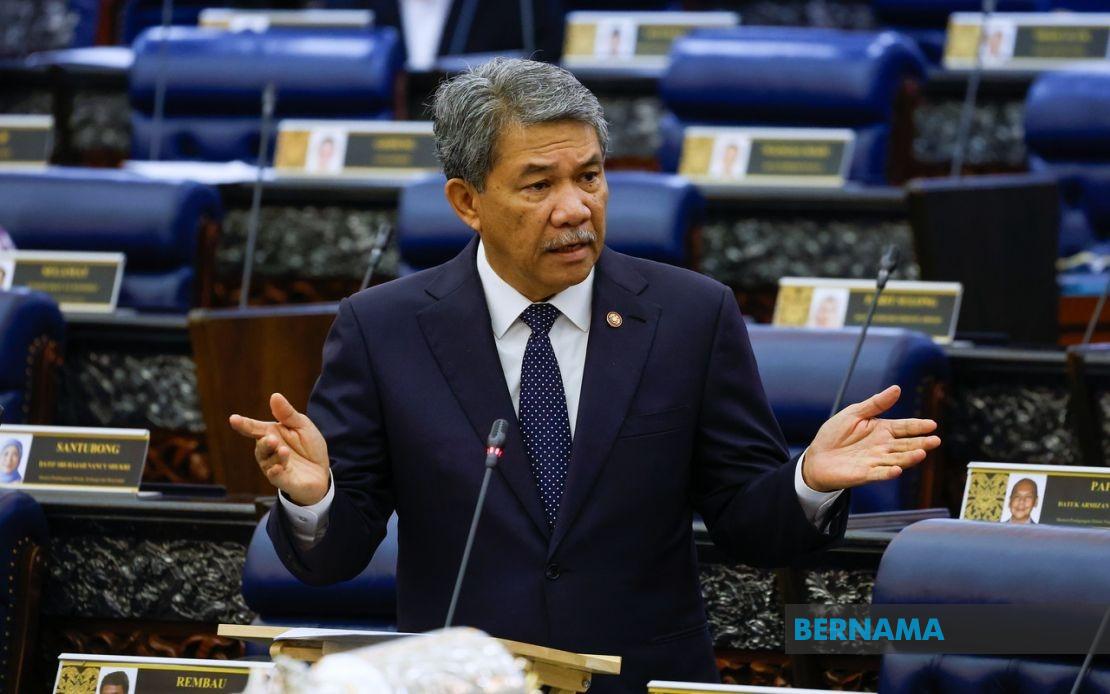
Foreign Minister Datuk Seri Mohamad Hasan has moved to clarify that Malaysia's diplomatic engagement with Myanmar does not imply acceptance of the country's military administration. Speaking in Parliament, Mohamad explained that the Malaysian delegation's May visit to Myanmar represented a continuation of ASEAN's broader commitment to keep lines of communication open with Naypyidaw, rather than any shift in Malaysia's longstanding refusal to acknowledge the junta as a legitimate government.
The clarification becomes particularly relevant given the sensitivity surrounding Myanmar's political situation within regional forums. Malaysia has maintained a consistent position alongside other ASEAN members in withholding formal recognition of the Myanmar military government, even as practical engagement continues. Mohamad's statements to the Dewan Rakyat sought to address concerns that Malaysia might be softening its stance through increased diplomatic contact, emphasizing instead that the visit aligned with decisions taken at the 48th ASEAN Summit.
During the May meeting with Myanmar Foreign Minister Tin Maung Swe, Mohamad highlighted the conditional nature of Malaysia's engagement with Naypyidaw. Rather than conducting the discussion in formal government settings, the two officials met at a hotel, a deliberate choice that underscored Malaysia's position. Mohamad used the opportunity to convey Malaysia and ASEAN's expectations for Myanmar, particularly regarding progress toward resolving the crisis that has gripped the nation since the military's consolidation of power.
A central theme of Mohamad's message to Myanmar's leadership concerned the balance between rights and responsibilities within the ASEAN framework. He reminded Myanmar officials that membership in the regional organization carries not merely privileges but also binding obligations. This framing is significant because it positions Malaysia's approach as conditional diplomacy—Malaysia remains willing to engage, but only within parameters that acknowledge Myanmar's commitments to ASEAN principles and procedures, particularly the Five-Point Consensus adopted by the bloc to address the Myanmar crisis.
The Five-Point Consensus, which forms the backbone of ASEAN's Myanmar strategy, calls for cessation of violence, dialogue among Myanmar's competing interests, humanitarian assistance, and mediated resolution efforts. Mohamad reiterated that Malaysia continues to champion these objectives and that the May visit was specifically designed to reinforce them with Myanmar's government. By maintaining this diplomatic channel, Malaysia argues, ASEAN preserves the possibility of influencing Myanmar's trajectory toward compliance with regional expectations.
Mohamad's explanation also addresses a broader strategic concern facing ASEAN: the risk of Myanmar's isolation. He warned that if the country becomes further sidelined from regional forums and dialogue, a dangerous vacuum could emerge that external powers might exploit. This concern reflects anxieties about great power competition in Southeast Asia, where isolation of any member state could create opportunities for non-regional actors to expand influence. Myanmar's geographic and geopolitical significance means that allowing it to drift outside ASEAN's orbit could have consequences across the entire region, including Malaysia.
The planned follow-up engagements between Malaysia and Myanmar stakeholders, expected in early or mid-July, suggest that diplomatic outreach will remain a cornerstone of Malaysia's Myanmar policy going forward. These discussions will reportedly involve not just government officials but a broader spectrum of Myanmar's political actors, reflecting ASEAN's emphasis on inclusive dialogue as a path toward resolution. Malaysia's willingness to host and facilitate such meetings positions the country as an active participant in regional crisis management rather than a passive observer.
The distinction Mohamad drew between recognition and engagement carries important implications for how Malaysia balances competing principles. Internationally, recognition traditionally carries significant weight, signifying acceptance of a government's legitimacy. By carefully maintaining that Malaysia does not recognize the Myanmar junta while simultaneously engaging with it, Malaysia attempts to preserve moral consistency with ASEAN statements about democratic principles while acknowledging the practical reality that Myanmar remains an ASEAN member whose cooperation is essential for regional stability.
Within the Malaysian domestic context, Mohamad's parliamentary clarification also serves to address potential political criticism from constituencies that prioritize democratic principles. By emphasizing that engagement does not equal recognition, and by continuing to frame Malaysia's approach as conditional upon Myanmar meeting specific benchmarks, Mohamad shields the government from accusations that it has abandoned principle for pragmatism. This messaging is particularly important in a region where civil society organizations and opposition parties scrutinize ASEAN's Myanmar policy closely.
The strategic patience reflected in Malaysia's approach also acknowledges the limits of external pressure on Myanmar's military leadership. Isolation has historically hardened authoritarian regimes' resolve rather than moderating their behavior. By maintaining diplomatic channels, Malaysia and ASEAN theoretically preserve avenues for persuasion and negotiation that complete severance would foreclose. However, this approach also courts criticism that it allows military governments to indefinitely ignore regional sentiment without facing meaningful consequences.
Moving forward, Malaysia's dual strategy of non-recognition combined with active engagement will likely remain the template for its Myanmar policy. The upcoming July meetings will test whether this balance can yield substantive progress toward the Five-Point Consensus objectives. For Malaysian observers and policymakers, the challenge lies in determining whether engagement without recognition can produce genuine behavioral change in Myanmar, or whether ASEAN's strategy amounts to diplomatic theater that masks the inability to significantly influence Myanmar's internal trajectory. The answer may depend on factors beyond Malaysia's control, including developments within Myanmar itself and responses from other regional and international actors.

