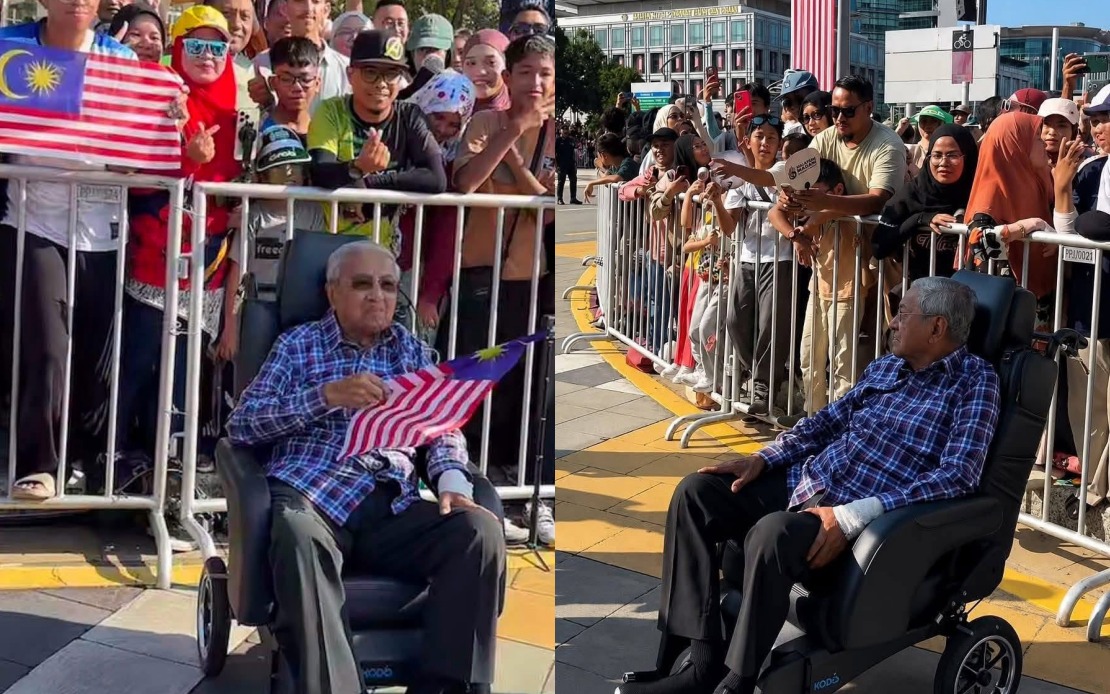
The Malaysian government has drawn a clear distinction between protocol and tradition in how it handles former prime ministers' attendance at major state occasions, clarifying that automatic invitations to these events ended eight years ago. The National Day Celebration 2026 Secretariat issued this statement following public questions about former Prime Minister Tun Dr Mahathir Mohamad's participation in this year's observance held at Dataran Putrajaya, underscoring that while former leaders remain welcome to attend such functions, the path to their inclusion now requires formal application rather than standing invitation.
The policy shift represents a departure from earlier practice and reflects evolving government thinking about state ceremonial affairs. According to Datuk Abdul Halim Hamzah, who chairs the 2026 National Day and Malaysia Day Celebration Working Committee and serves as secretary-general of the Communications Ministry, the Prime Minister's Department's Protocol and International Conference Secretariat Division (BIUPA) now manages all invitations to major federal government events through a standardized framework. This centralization ensures consistency across different administrations and creates clear guidelines for both organisers and prospective attendees, reducing ambiguity about who qualifies for participation in events of national importance.
The procedural change carries implications for Malaysia's approach to honouring former heads of state while maintaining contemporary governance standards. Rather than viewing former prime ministers as automatic participants in national celebrations, the current framework treats their attendance as a matter requiring explicit consideration and approval on a case-by-case basis. This approach acknowledges their historical significance while establishing that each attendance decision merits individual assessment according to prevailing circumstances and government priorities.
Dr Mahathir's specific case illustrates how the new system operates in practice. The former Prime Minister submitted an application to utilize the Overseas Rest Facility, indicating his intention to travel abroad from August 28 to 31, 2026—a period that would have coincided with National Day celebrations. Prime Minister Datuk Seri Anwar Ibrahim approved this application in accordance with provisions governing the Remuneration of Former Prime Ministers under the Members of Parliament (Remuneration) Act 1980. This arrangement demonstrates that the government continues to provide substantive benefits to former leaders while implementing more structured protocols for ceremonial participation.
The distinction between access to government benefits and ceremonial inclusion reflects broader questions about how modern democracies balance respect for predecessors with institutional prerogatives of sitting administrations. Southeast Asian nations grapple regularly with such questions, as the region's political trajectories have often involved multiple leadership transitions with varying degrees of harmony between successive administrations. Malaysia's formal approach here mirrors international best practice in many democracies, where ceremonial roles follow established procedures rather than ad hoc arrangements.
The 2018 establishment of this practice predates the current administration, suggesting cross-party adoption of the policy framework. This bipartisan continuity provides stability and predictability around what might otherwise become a contentious issue between competing political factions. When governance rules enjoy support across different administrations, they tend to gain legitimacy and durability, reducing the likelihood that future transitions in power will trigger wholesale reversal of protocols.
The formal notification that former prime ministers remain free to attend events through application channels preserves their dignity while clarifying the pathway forward. The government's explicit statement that attendance is not prevented—merely requiring application according to established procedures—leaves space for flexibility while maintaining institutional order. This measured approach avoids the appearance of exclusion while ensuring that participation decisions reflect current government judgment.
For Malaysian readers, this clarification matters because it illustrates how government operates behind the scenes, managing relationships between past and present leadership through formalized systems. The specificity of BIUPA's role and the reference to legislative authority (the Remuneration Act of 1980) demonstrate that these arrangements rest on legal foundations rather than informal custom. This legalization of protocol provides transparency about how such decisions are made and offers potential recourse if disputes arise.
The timing of the clarification—issued after questions arose about Dr Mahathir's attendance—suggests the government felt compelled to explain its reasoning publicly, possibly to address perceptions of exclusion or special treatment. By releasing a detailed statement, the government provided citizens insight into procedures they might otherwise never encounter directly, contributing to broader public understanding of how state functions operate and how former office-holders maintain their relationships with institutions of power.
For the region more broadly, Malaysia's experience reflects patterns seen across Southeast Asia as nations mature institutionally and develop more sophisticated approaches to governance transitions. As democracies in the region stabilize and political culture evolves, the formalization of protocols around ceremonial matters and former leader engagement becomes increasingly common. This trend typically strengthens institutional resilience by reducing dependence on personal relationships or informal understandings that can shift unpredictably.
The policy also addresses practical considerations around event planning and security that extend beyond ceremonial courtesy. Large state functions require careful coordination of attendance, space allocation, and security arrangements. By requiring advance applications rather than assuming automatic participation, organisers gain better visibility into expected attendance and can manage logistics more effectively. This operational dimension complements the governance rationale for the procedure.
Looking ahead, this clarified framework will likely influence how subsequent administrations manage relationships with their predecessors during major state occasions. As Malaysia continues its democratic journey and experiences further leadership transitions, having explicit procedures in place reduces the risk that such matters become flashpoints for partisan dispute. The emphasis on application through proper channels and approval by the sitting Prime Minister ensures that ceremonial participation decisions remain within executive discretion while operating through transparent, publicly-acknowledged processes.

