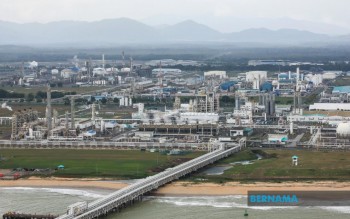
Malaysia's decision to study the creation of a national petroleum reserve reflects mounting concerns about energy security in an increasingly volatile global landscape, analysts say. The move comes as repeated disruptions to key maritime chokepoints have prompted regional governments to reassess their vulnerability to supply shocks, transforming what were once viewed as isolated incidents into predictable structural risks that demand strategic planning.
The Strait of Hormuz remains the critical focal point of these concerns. Roughly one-fifth of the world's petroleum liquids—approximately 20 million barrels daily—transit through this narrow passage, yet escalating geopolitical tensions mean the waterway can no longer be treated as a stable infrastructure asset. Instead, analysts characterize it as a persistent source of market uncertainty, where repeated threats against shipping, mounting insurance premiums, and constrained tanker availability have become normalised features rather than exceptional crises.
Stephen Innes, managing partner at SPI Asset Management, argues that the structural nature of these disruptions demands a fundamental shift in how governments approach energy planning. The underlying tensions that make the Strait of Hormuz vulnerable show no sign of resolution in the near term, and building alternative pipelines and export routes would require years to complete. This means policymakers must assume that volatility in this corridor will persist as a regular feature of global energy markets, requiring permanent institutional responses rather than temporary crisis management.
Recent incidents in the Red Sea underscore how geopolitical risks have expanded beyond the Persian Gulf. Iranian-backed Houthi forces in Yemen have targeted commercial shipping at the southern entrance to the Red Sea, and the group claimed responsibility for attacks on Saudi oil tankers following United States military strikes against Iranian installations. These developments highlight how multiple chokepoints now pose simultaneous risks to energy supplies, a scenario that particularly threatens Southeast Asian economies dependent on stable maritime trade.
For Malaysia specifically, the implications are substantial. The country produces approximately 570,000 barrels of oil daily but remains a net importer of refined petroleum products. More critically, nearly 70 per cent of Malaysia's crude oil imports originated from suppliers linked to Strait of Hormuz routes in 2025, creating direct exposure to any disruptions in that region. Simultaneous supply interruptions across the Persian Gulf and Red Sea corridors could rapidly drive oil prices upward, increase shipping costs, and delay cargo deliveries across Southeast Asia.
Prime Minister Datuk Seri Anwar Ibrahim has directed officials to examine both the necessity and operational framework for establishing a national petroleum reserve as part of a comprehensive energy security strategy. Such a reserve would function as emergency insurance, providing policymakers with crucial time to negotiate alternative supplies or redirect logistics during acute crises. However, analysts caution that reserves alone cannot address all vulnerabilities and should complement rather than substitute for commercial inventory systems and broader diversification initiatives.
Innes emphasises a critical distinction between energy security and energy resilience. The former focuses simply on maintaining access to supplies, while the latter encompasses the capacity of energy systems to continue functioning when normal supply channels or transport routes fail. Achieving genuine resilience demands multiple concurrent measures: backup fuel inventories, relationships with diverse suppliers, alternative shipping pathways, robust electricity infrastructure, and the flexibility to switch between different fuel sources before emergencies occur.
A comprehensive approach to Malaysia's energy resilience must extend beyond petroleum reserves. Analysts recommend reviewing existing fuel subsidy schemes, as blanket price supports become increasingly costly and unsustainable if crude oil prices remain elevated for extended periods. More targeted assistance directed toward lower-income households and essential industries would prove more fiscally responsible. Additionally, diversifying crude oil suppliers away from Strait of Hormuz-dependent sources, strengthening storage facilities, and establishing clear governance rules for releasing and replenishing strategic reserves would enhance the reserve's effectiveness.
Malaysia possesses significant advantages in diversifying its energy portfolio beyond crude oil imports. Domestic natural gas production continues expanding, with industry forecasts projecting output to reach 82.3 billion cubic metres by 2026. The government has already launched renewable energy initiatives including Solar@PETRA and the Corporate Renewable Energy Supply Scheme, programs that align with both energy security and climate transition objectives. Accelerating battery storage development, strengthening regional electricity interconnectors, and advancing commercially viable nuclear power would further reduce dependence on imported fossil fuels.
Tariro Chiweza, an oil and gas analyst with BMI, notes that Malaysia's study arrives at precisely the right moment. Commercial petroleum inventories serve operational continuity within normal market conditions but lack sufficient capacity to cushion prolonged external supply disruptions. A strategically designed national reserve, coupled with expanded domestic gas production, renewable energy development, and regional infrastructure cooperation, would substantially strengthen Malaysia's economic resilience against the recurring shocks now characterising global energy markets.
At current market prices, with Brent crude trading around US$96.86 per barrel and West Texas Intermediate near US$88.76, energy costs represent a significant economic consideration for Malaysia and its neighbours. Analysts warn that simultaneous disruptions to multiple shipping routes could push prices substantially higher, imposing substantial costs across manufacturing, transportation, and power generation sectors. Establishing robust strategic reserves and diversified supply arrangements today represents a rational investment in economic stability tomorrow, particularly as geopolitical tensions show few signs of abating.

