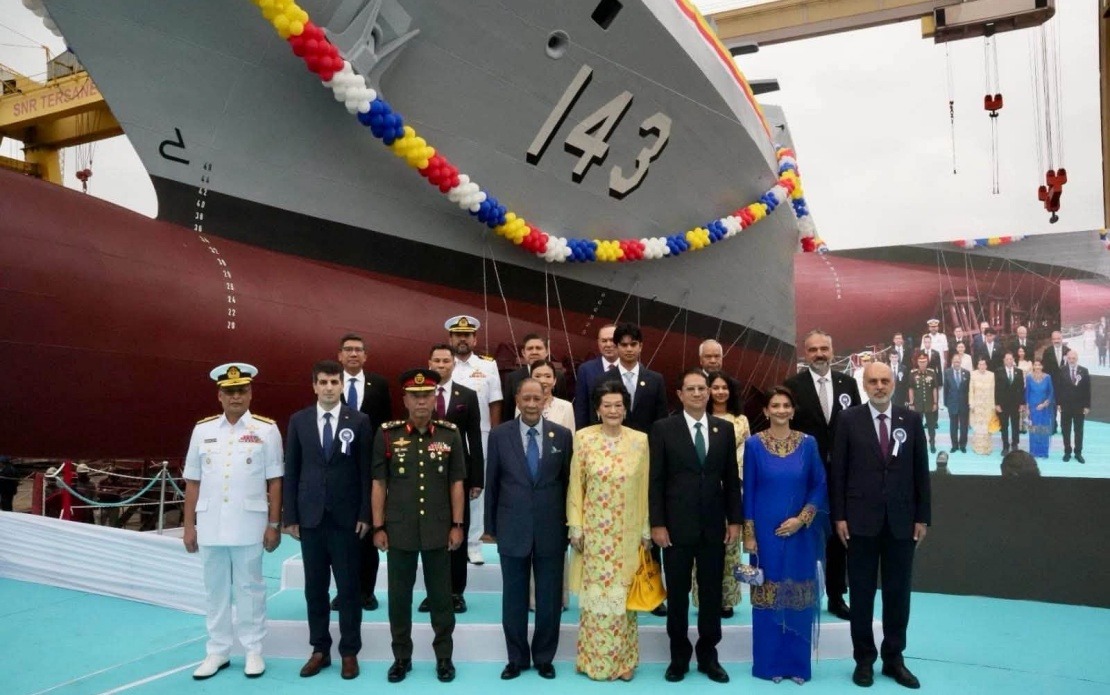
Malaysia has taken another significant step toward modernising its naval fleet with the launch of the Tunku Osman Jewa, the third Littoral Mission Ship Batch 2 (LMSB2) vessel built under a landmark partnership with Turkiye. Defence Minister Datuk Seri Mohamed Khaled Nordin emphasised that maintaining cutting-edge maritime assets has become essential as the region grapples with increasingly sophisticated security threats. The commissioning ceremony, attended by the Sultan of Kedah Al Aminul Karim Sultan Sallehuddin Sultan Badlishah and Sultanah Maliha Tengku Ariff, underscored both the strategic importance of the acquisition and its ceremonial significance for the Kedah royal family.
The naming of the warship honours the legacy of the late General Tan Sri Tunku Osman Tunku Mohammad Jewa, a former Armed Forces chief whose contributions shaped Malaysia's defence posture during a critical period. By immortalising his service through this vessel, the government acknowledges the continuing relevance of visionary military leadership as the nation navigates emerging maritime challenges. This gesture also reflects the deep connection between Malaysia's defence establishment and its royal institutions, demonstrating how naval modernisation intersects with institutional memory and national pride.
The LMSB2 programme represents a watershed moment for Malaysia's defence procurement strategy. This is the first time the Royal Malaysian Navy has acquired warships through a direct Government-to-Government collaboration with Turkiye, signalling a strategic diversification away from traditional Western and regional suppliers. Such partnerships broaden Malaysia's defence industrial base and create mutual strategic interests that extend beyond simple transactional relationships. The move reflects a pragmatic approach to acquiring modern capabilities while building closer ties with a NATO-aligned nation that has demonstrated significant naval innovation and industrial capacity.
The three LMSB2 vessels are expected to enter service by the end of 2027, providing the RMN with enhanced littoral and coastal defence capabilities. These ships represent a quantum leap in the navy's operational flexibility, equipped with modern systems designed for the complex maritime environment of Southeast Asia. Littoral mission ships are particularly valuable in regional contexts, offering greater manoeuvrability and persistence in contested waters compared to larger conventional frigates, making them ideal for safeguarding maritime boundaries, protecting exclusive economic zones, and conducting anti-piracy operations.
The acquisition of these vessels sits within Malaysia's broader 15-to-5 Transformation Plan, an ambitious roadmap aimed at fundamentally reshaping the RMN's composition and capabilities over the coming decade. Rather than simply replacing aging assets, this strategy emphasises achieving a leaner, more technologically advanced fleet capable of projecting power and responding to diverse maritime contingencies. In a region where naval balance is shifting rapidly, particularly with increasing activity by major powers and irregular maritime actors, such modernisation efforts are not merely procurement exercises but fundamental adjustments to national security architecture.
Malaysia faces a complex array of maritime security challenges that underscore the necessity for modern assets. The nation's extensive coastline, vast offshore exclusive economic zone, and critical shipping lanes passing through its territorial waters require constant surveillance and rapid response capabilities. Beyond traditional threats such as piracy and smuggling, Malaysia must contend with environmental enforcement, irregular migration, and the broader strategic competition unfolding across the Indo-Pacific. The LMSB2 ships, equipped with advanced sensors and communication systems, enhance the RMN's ability to integrate with other maritime agencies and respond effectively to these multifaceted challenges.
The Government-to-Government arrangement with Turkiye also carries geopolitical significance for Malaysia. It strengthens bilateral defence relations with a country that shares Malaysia's commitment to regional stability and rules-based maritime order. Turkish naval expertise, honed through operations in diverse maritime environments, offers valuable knowledge transfer opportunities for Malaysian naval personnel. Such collaborative arrangements often extend beyond hardware acquisition to include training, maintenance support, and logistical cooperation, creating enduring institutional relationships that benefit both nations.
From a broader Southeast Asian perspective, Malaysia's investment in modern naval capabilities contributes to regional stability. A well-equipped RMN enhances the collective maritime security architecture of ASEAN, supporting freedom of navigation and the peaceful resolution of maritime disputes. As tensions persist in contested waters and great power competition intensifies, Malaysia's demonstrated commitment to maintaining credible defence capabilities reassures partners and contributes to deterrence against coercion or adventurism.
The timing of this modernisation programme coincides with evolving global defence procurement patterns. Many nations are diversifying their suppliers and seeking partnerships that offer value for money without compromising strategic autonomy. Malaysia's engagement with Turkiye reflects this pragmatism, particularly as Turkish shipyards have gained international reputation for delivering quality platforms at competitive costs. This approach allows Malaysia to acquire capabilities it urgently needs while preserving diplomatic flexibility and avoiding excessive dependence on any single strategic partner.
The successful completion of the LMSB2 construction programme demonstrates Malaysia's capacity to execute major defence projects through international partnerships. From contract signing to delivery, managing such acquisitions involves complex logistics, technical coordination, and sustained political commitment. The fact that construction is proceeding on schedule suggests effective governance and cooperation between Malaysian and Turkish stakeholders, a positive signal for future collaborative defence initiatives.
Looking ahead, the arrival of these three modern vessels will materially enhance RMN's operational reach and endurance. The ships' advanced combat management systems, sensor suites, and weaponry will significantly improve the navy's ability to detect, track, and respond to threats across the maritime domain. This enhanced capability translates into greater ability to project Malaysian interests offshore and provide security assurance to commercial shipping and fishing fleets operating in national waters.
The Defence Minister's emphasis on continued modernisation signals that the government recognises the maritime security environment as fundamentally dynamic. Today's modern assets risk becoming tomorrow's obsolete platforms if investment in capability development falters. The 15-to-5 Transformation Plan and acquisitions like the LMSB2 represent institutional commitment to maintaining strategic relevance in an increasingly contested maritime arena. For Malaysian stakeholders monitoring defence policy, the message is clear: sustained investment in modern, capable naval forces remains central to national security strategy.

