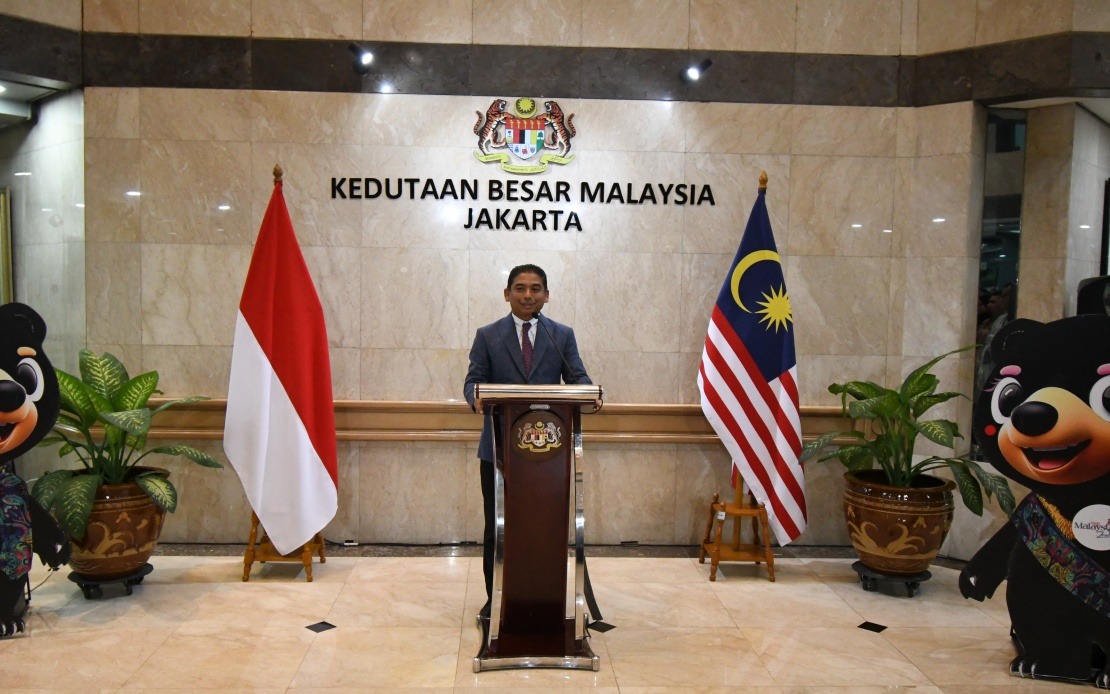
Malaysia's diplomatic presence in Jakarta has received fresh leadership with the arrival of Datuk Muzafar Shah Mustafa, the country's Ambassador-designate to Indonesia. Having touched down in the Indonesian capital on August 10, Muzafar officially commenced his ambassadorial responsibilities, marking an important transition in bilateral representation during a period of sustained regional engagement between the two nations.
Muzafar's appointment to this strategically significant post came last month, with formal accreditation proceedings completed when he received his letter of credence from Yang di-Pertuan Agong Sultan Ibrahim at Istana Negara on July 14. The transfer to Jakarta represents a natural progression in his diplomatic career, arriving just weeks after his departure from New Delhi on July 9 to conclude his nearly three-year assignment as High Commissioner to India, a role that itself underscored Malaysia's commitment to deepening ties across the Indian subcontinent.
The appointment carries particular weight given Indonesia's position as Malaysia's largest regional neighbour and a crucial partner within ASEAN. Indonesia's economic significance, shared maritime interests, and cross-border considerations make the ambassadorial role one of considerable importance. Muzafar's experience managing complex bilateral relationships across multiple continents suggests a carefully considered selection to navigate the multifaceted Malaysia-Indonesia partnership during an era of evolving regional dynamics.
With nearly three decades of foreign service experience, Muzafar brings a wealth of institutional knowledge to the position. His entry into Malaysia's Foreign Ministry in 1995 provided him with formative years during a transformative period in Southeast Asian diplomacy. Since then, his career trajectory has deliberately encompassed geographical diversity, demonstrating the ministry's emphasis on developing diplomats with broad exposure to varied political systems, economic models, and cultural contexts across multiple regions.
His previous ambassadorial assignment in Mexico from 2018 to 2023 extended beyond bilateral relations with Mexico itself, as he held concurrent accreditation to Belize, Costa Rica, El Salvador, Guatemala and Honduras. This portfolio covering Central America and the Caribbean positioned him as a senior representative managing Malaysia's interests across a region of increasing strategic importance due to its maritime routes and growing economic connections. The breadth of his responsibilities during this five-year period underscores his capacity to manage multiple stakeholder relationships and navigate complex regional diplomacy simultaneously.
Prior to Mexico, Muzafar served as Ambassador to Venezuela from 2016 to 2018, representing Malaysia during a period of considerable political and economic turbulence in that country. Such postings require exceptional diplomatic skills and judgment, as they often demand balancing national interests while maintaining constructive relationships amid challenging circumstances. His successful navigation of such demanding assignments suggests resilience and political acumen that will prove valuable in Jakarta.
Muzafar's earlier career postings reveal a systematic career development path. His time as counsellor at the Malaysian Embassy in Berlin spanning 2007 to 2011 positioned him within Europe's political heart during the post-financial crisis period, while his assignment as second secretary at the Malaysian Embassy in Baghdad from 1999 to 2003 placed him in one of the world's most challenging diplomatic environments during the immediate aftermath of the Iraq War's commencement. These experiences collectively demonstrate exposure to geopolitical complexity and the diplomatic demands of operating in fragile or unstable contexts.
Personally, Muzafar maintains strong family ties that often characterise Malaysia's diplomatic corps. Married to Datin Najwa Zainal, he is a father of four, suggesting a family life accustomed to the frequent relocations and adaptation challenges inherent in diplomatic service. Such personal circumstances often contribute to ambassadors' ability to engage in community-building and cultural exchange activities in their host countries, dimensions increasingly valued in modern diplomacy.
The timing of Muzafar's arrival in Jakarta assumes significance within the broader context of Malaysia-Indonesia relations. Both nations continue navigating longstanding maritime boundary discussions, managing transnational people movement, and coordinating on regional security matters. The economic relationship remains robust, with significant Malaysian investments in Indonesian infrastructure and business sectors. Muzafar's previous success in managing bilateral portfolios across disparate regions suggests capability in addressing such multifaceted relationships with nuance and strategic vision.
His appointment also reflects Malaysia's continued emphasis on professional diplomatic expertise rather than political patronage. The Foreign Ministry's trajectory of developing career diplomats through diverse international postings has produced a cadre of experienced representatives capable of advancing Malaysian interests effectively. Muzafar exemplifies this institutional approach, having served across Asia, Europe and Latin America, providing him with comparative understanding of diplomatic practices, negotiating styles, and bilateral engagement mechanisms across diverse contexts.
Indonesia represents both Malaysia's most immediate neighbour and a crucial ASEAN partner navigating contemporary regional challenges alongside Malaysia. These include coordinating regional responses to global economic shifts, managing maritime security concerns, addressing climate change impacts, and supporting ASEAN's centrality in regional architecture. An ambassador with Muzafar's extensive experience brings institutional memory and established relationships that facilitate smoother coordination during complex diplomatic endeavours.
Looking forward, Muzafar's tenure in Jakarta will likely focus on deepening people-to-people connections whilst strengthening high-level bilateral coordination. His previous success in managing ambassador roles across multiple countries suggests capability in both ceremonial diplomacy and substantive negotiations. His arrival marks continuity in Malaysia's diplomatic engagement with its most important regional neighbour, while simultaneously providing fresh impetus to bilateral initiatives that strengthen Southeast Asian stability and prosperity.

