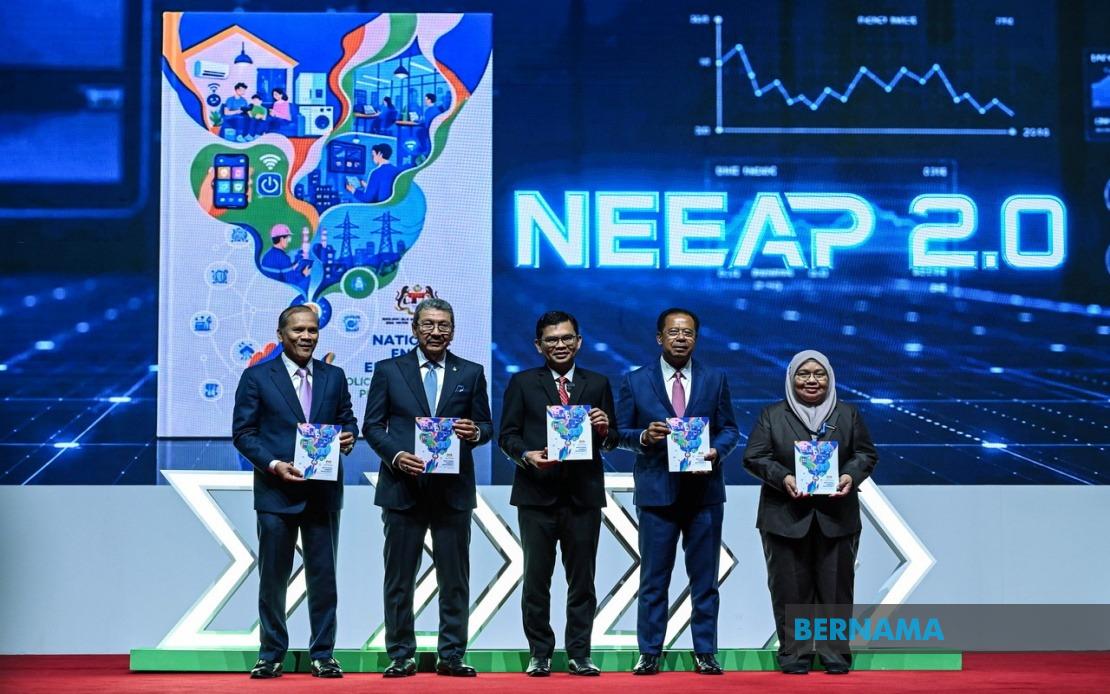
Malaysia has unveiled an ambitious energy efficiency blueprint designed to reshape the nation's consumption patterns across the next decade, with projections suggesting transformative economic and environmental benefits. The National Energy Efficiency Policy and Action Plan 2026-2035 (NEEAP 2.0), unveiled by the Ministry of Energy Transition and Water Transformation (PETRA), envisions accumulated savings of RM85 billion through enhanced efficiency measures while simultaneously channelling RM36 billion in private sector capital into green infrastructure development. The comprehensive strategy represents a significant escalation of Malaysia's commitment to sustainable energy management and positions the country as a serious contender in Southeast Asia's transition towards low-carbon economies.
The employment dimension of NEEAP 2.0 deserves particular attention for policymakers and workforce development specialists monitoring Malaysia's economic trajectory. The initiative is projected to spawn approximately 29,000 new job opportunities distributed across multiple sectors, from energy auditing and retrofit installation to smart building management and renewable integration. This employment growth extends beyond traditional construction and engineering roles, encompassing emerging green collar positions in data analytics, energy systems certification, and sustainability consulting. For a nation navigating post-pandemic labour market challenges and skills mismatches, such job creation aligns with broader diversification strategies and addresses demographic pressures in regional economies facing aging populations.
The environmental impact quantification provided by PETRA offers a concrete measure against which Malaysia can track progress towards its 2050 net-zero commitments. The plan targets reducing carbon emissions equivalent to 26 million tonnes of carbon dioxide by 2035, a reduction pathway that acknowledges Malaysia's role as a significant regional emitter while demonstrating measurable accountability mechanisms. This emissions reduction target becomes particularly meaningful when contextualised within the nation's industrial competitiveness; improved energy efficiency simultaneously reduces operational costs for manufacturers competing in global supply chains, potentially enhancing export competitiveness whilst meeting environmental standards increasingly demanded by developed market buyers.
The technical specifications embedded within NEEAP 2.0 reveal sophisticated understanding of Malaysia's energy infrastructure constraints and sectoral opportunities. The plan targets an 11.6 percent improvement in electricity and thermal energy efficiency relative to business-as-usual projections, translating into cumulative energy savings of 815,000 terajoules. To contextualise this volume for regional comparison, PETRA notes the accumulated savings equates to meeting Peninsular Malaysia's entire electricity requirements for nearly two years—a stark illustration of the magnitude of efficiency gains achievable through systematic intervention rather than reliance on expanding generation capacity alone.
Sectoral prioritisation within NEEAP 2.0 reflects nuanced policy thinking about where efficiency interventions generate disproportionate returns. The framework emphasises high-impact domains stimulating broader economic growth whilst maintaining inclusive participation across industrial, commercial, and residential user segments. This tiered approach acknowledges that large manufacturers and commercial property developers possess greater technical capacity and capital resources for efficiency investments than small-to-medium enterprises or household consumers, necessitating differentiated policy instruments and support mechanisms tailored to each constituency's constraints and incentive structures.
The industrial sector's positioning as a priority focus underscores PETRA's recognition that manufacturing efficiency improvements directly influence Malaysia's economic competitiveness in increasingly environmentally-conscious global markets. Supply chain transparency and carbon accounting now shape international purchasing decisions, particularly for Malaysian exports targeting European and North American markets where Environmental, Social, and Governance compliance increasingly determines market access. NEEAP 2.0 thus functions simultaneously as an environmental instrument and an economic protection mechanism, enabling domestic manufacturers to meet emerging regulatory requirements whilst reducing operational expenses that compress profit margins in intensively competitive sectors.
Private investment mobilisation constitutes a critical success factor often underestimated in energy policy discussions. The projected RM36 billion in private sector capital flows represents PETRA's confidence that policy frameworks and financial incentives sufficiently derisk efficiency investments to attract institutional investors. This capital requirement far exceeds government budgetary capacity, necessitating creative financing mechanisms—energy performance contracting, efficiency-linked bonds, and carbon credit monetisation—that transform intangible future energy savings into bankable assets. Malaysia's experience implementing such instruments at scale remains limited compared to mature markets, positioning NEEAP 2.0 as an opportunity for financial sector innovation and development.
Coordination with Malaysia MADANI aspiration statements demonstrates how NEEAP 2.0 integrates energy policy with broader governance narratives emphasising citizen well-being and resource sustainability. The framework explicitly links efficiency improvements to affordability dimensions, acknowledging that energy costs constitute significant household budget components particularly for lower-income demographics. Efficiency-driven price moderation combined with targeted subsidies for vulnerable populations provides more equitable outcomes than either indiscriminate energy subsidies or unmitigated market pricing, though implementing such nuanced approaches requires sophisticated targeting mechanisms and consumer education initiatives.
The continuation of momentum from predecessor action plans signals institutional policy consistency and learning accumulation within PETRA. Rather than pursuing wholesale strategic reorientation, NEEAP 2.0 builds incrementally upon demonstrated achievements whilst incorporating lesson learned from earlier implementation phases. This evolutionary approach, if sustained across political cycles and ministerial transitions, creates the multi-year implementation predictability that investors and technology providers require for committing substantial resources to market development.
Regional implications of Malaysia's energy efficiency focus extend beyond national borders into ASEAN energy cooperation frameworks and transnational supply chain dynamics. As Malaysia strengthens domestic energy security through demand-side management rather than generation-capacity expansion, regional energy trade patterns potentially shift, affecting power import dependencies and pricing in interconnected markets. Furthermore, Malaysian leadership on energy efficiency standards and building codes potentially influences regional harmonisation discussions, establishing competitive advantages for local technology suppliers and service providers positioned to serve neighbouring economies' eventual efficiency transitions.

