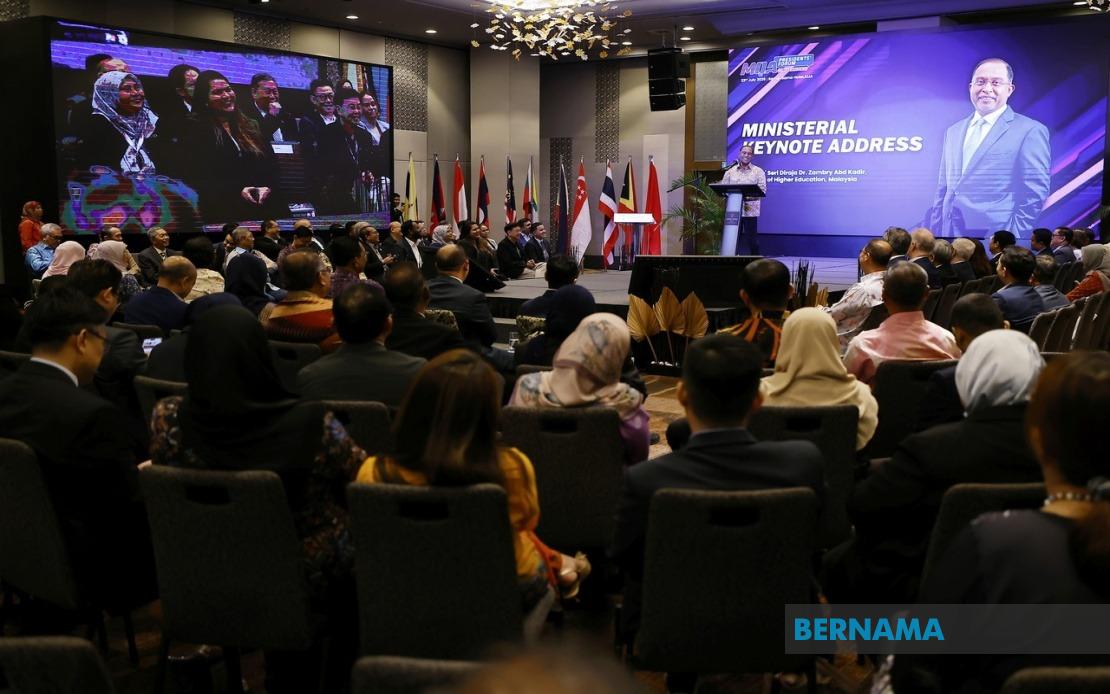
The surge in polytechnic enrolments has created an unexpected accommodation crisis across Malaysia's technical education institutions. Higher Education Minister Datuk Seri Dr Zambry Abd Kadir has confirmed that the government will implement a comprehensive repair programme targeting deteriorating hostel facilities, acknowledging that rapid growth in student numbers has strained existing infrastructure at several campuses. This development underscores both a policy success and an infrastructure challenge as Malaysia accelerates its transition towards skills-based workforce development.
The underlying driver of this accommodation squeeze is remarkable. For the first time, polytechnic applications exceeded 125 per cent of available capacity during the 2026/2027 intake cycle, with 30,488 new students registering in the June 2026 session alone. This exceptional surge reflects the deliberate government strategy to redirect more Sijil Pelajaran Malaysia (SPM) holders away from purely academic pathways and towards technical and vocational education and training (TVET) programmes. The policy represents a structural shift in how Malaysia channels secondary school graduates, recognising growing labour market demand for skilled technicians across manufacturing, construction, digital services, and emerging green industries.
Dr Zambry framed the accommodation shortage as an essentially positive problem, evidence that the government's messaging around TVET has resonated with families and students. He noted that whereas previous intakes typically fell short of targets, this cycle shattered expectations, forcing institutions to accommodate more students than initially planned. The ministry expanded admission offers to accommodate the surge, prioritising access over temporary facility constraints. However, this generosity exposed weaknesses in the hostel infrastructure, particularly at older polytechnic campuses where decades-old dormitory buildings require substantial rehabilitation.
The geographical and facility variations matter significantly. Not all polytechnics face identical challenges. Institutions with newer or well-maintained accommodation blocks have absorbed growth more smoothly, while older establishments with deteriorating hostel structures face acute pressure. Several polytechnics have flagged specific buildings as requiring urgent attention, with some facilities potentially posing health and safety concerns. The ministry's response involves systematic identification of problem hostels, prioritisation of repair works, and formal requests to the government for funding allocation to address maintenance backlogs.
From a broader Southeast Asian perspective, Malaysia's experience reflects a region-wide tension. Other nations pursuing TVET expansion—Thailand, Vietnam, and Indonesia among them—have encountered similar infrastructure mismatches. When policy success outpaces capital investment cycles, students often bear the consequences through compromised living conditions. Malaysia's willingness to acknowledge the problem publicly and commit resources to resolution sets a constructive example, though critics may argue that infrastructure planning should have anticipated this expansion.
The economic implications extend beyond dormitory comfort. Poor accommodation quality directly affects student retention and academic performance. TVET students often juggle studies with part-time work and family responsibilities; inadequate hostel facilities increase dropout risk and extend time-to-completion. When the government invests heavily in attracting students to polytechnics but fails to provide basic dignified living conditions, the policy's return on investment deteriorates. Quality of life during the formative learning period influences whether graduates feel adequately prepared and motivated for their subsequent careers.
Dr Zambry's instruction to Polytechnic and Community College Education Department director-general Dr Shamsuri Abdullah to implement immediate placement measures signals urgency. The ministry is not simply requesting budget allocations for future repairs; it is directing operational units to solve current placement challenges while repair works proceed. This dual approach—immediate accommodation shuffling coupled with medium-term infrastructure rehabilitation—reflects pragmatic crisis management. Universities and skills institutions often have underutilised facilities across multiple campuses; strategic redistribution of students may alleviate pressure at overcrowded locations.
The repair programme's scope remains partially undefined. Dr Zambry indicated that the ministry has identified specific hostels requiring work and requested government funding, but did not specify project timelines, repair costs, or which polytechnics would receive priority. This ambiguity creates uncertainty for students and institutional administrators. Polytechnic directors require clarity on when repairs will commence and how students will be accommodated during construction. Prospective students considering polytechnic applications need assurance that hostel conditions meet acceptable standards. Transparency about the repair schedule would strengthen public confidence in MOHE's commitment.
The broader policy context involves Malaysia's ambitious Reskilling and Upskilling Initiative, which explicitly targets increased TVET participation as essential for workforce competitiveness. As the economy shifts towards advanced manufacturing, renewable energy, and digital sectors, demand for technical diplomas far exceeds traditional academic degree pathways. Polytechnics occupy a crucial position in this ecosystem, bridging secondary education and employment. However, treating TVET as merely an alternative track risks underfunding relative to universities if policymakers perceive it as second-tier. The accommodation crisis inadvertently illustrates this perception gap—growth outpaced investment precisely because institutional prioritisation lagged policy ambition.
Regional competition for technical talent intensifies this dynamic. Singapore, South Korea, and increasingly Vietnam have positioned TVET as a prestigious pathway commanding premium facilities and teaching resources. When Malaysian students encounter deteriorating hostel conditions at polytechnics, comparative perceptions suffer. Some families may redirect children towards neighbouring countries' technical institutions, creating brain drain in skilled workforce formation. Conversely, rapid infrastructure investment signals that Malaysia takes TVET seriously, potentially attracting regional students and talent.
The institutional governance dimension also deserves attention. Individual polytechnics have limited budget autonomy; hostel maintenance depends on government allocation through MOHE. When enrolment surges faster than budget cycles accommodate, institutions absorb overcrowding rather than rejecting applicants. This structural constraint means that individual polytechnic leaders cannot unilaterally solve accommodation crises through internal reallocation; they must escalate to ministry and cabinet levels. Dr Zambry's public commitment to address the issue represents recognition that central government must intervene, acknowledging that decentralised institutional management alone proves insufficient.
Looking ahead, MOHE faces a strategic choice. Quick-fix repairs may restore basic functionality but miss an opportunity for transformative facility upgrades. Polytechnic accommodation often serves as the first independent living experience for students, shaping their educational satisfaction and career commitment. Investment in modern, well-designed hostel environments—with study facilities, recreational spaces, and digital infrastructure—would support not just overflow absorption but holistic student development. This moment of crisis presents an unexpected opportunity to reimagine polytechnic student life comprehensively rather than merely patch failing infrastructure.
The government's polymatric surge represents genuine policy success that generated an unanticipated implementation challenge. Dr Zambry's response demonstrates institutional accountability, though sustained follow-through remains essential. As Malaysia deepens its commitment to TVET-centred workforce development, aligning infrastructure investment with enrolment growth becomes non-negotiable. This hostel crisis, handled well, could catalyse broader recognition that technical education requires facilities and support equivalent to traditional universities. Handled poorly, it risks undermining the very policy gains that created the overflow in the first place.

