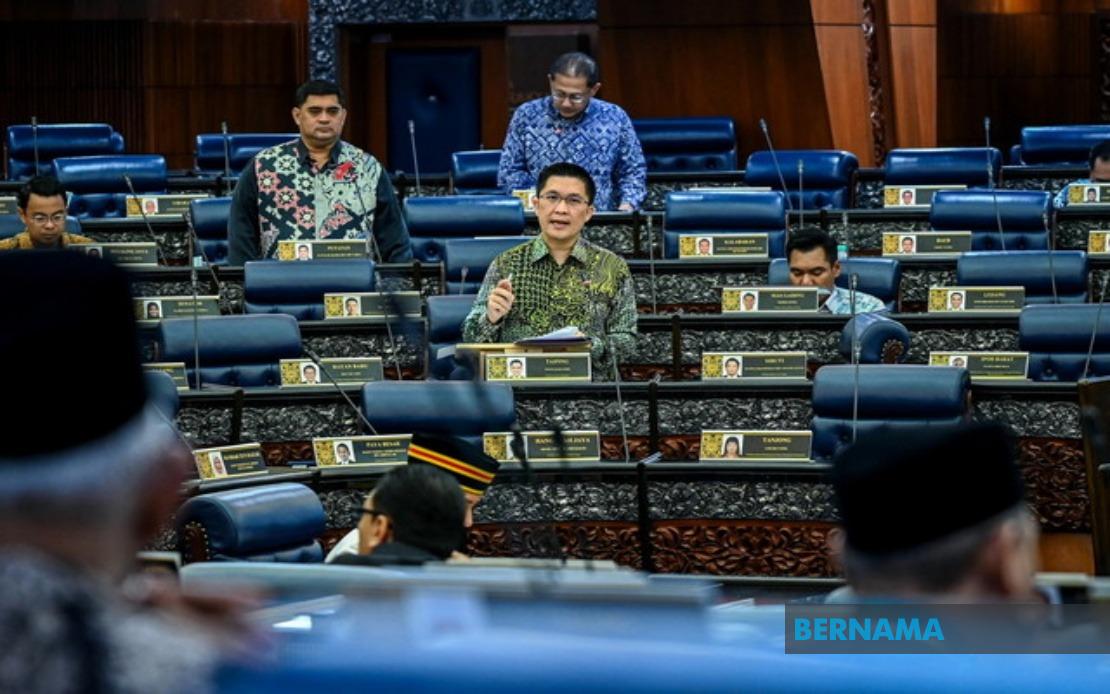
Malaysia's Education Ministry has achieved near-complete staffing of its preschool teaching workforce, with 99.8 per cent of positions now occupied by 10,478 qualified educators deployed across the country as of July 1. Deputy Minister Wong Kah Woh disclosed this substantial progress to parliament on July 9, highlighting the ministry's commitment to meeting rising demand for early childhood education infrastructure and quality instruction.
The recruitment drive reflects a deliberate expansion strategy spanning 2023 to 2025, during which the ministry onboarded 1,202 new preschool teachers to strengthen the existing workforce. This phased deployment approach signals the government's intent to balance rapid expansion with sustainable staffing practices, rather than attempting immediate saturation across all regions simultaneously. Wong indicated that further recruitment would proceed methodically, calibrated to enrollment projections in different areas and designed to avoid artificial oversupply in low-demand zones.
Behind these headline figures lies a significant operational achievement: as of May 31, the Education Ministry was running 10,491 preschool classes nationwide, collectively serving 217,026 pupils. This broad reach underscores how Malaysia's public preschool system has evolved from a modest pilot programme into a substantial component of the national education infrastructure. The scale of this operation requires not just adequate teacher numbers but also consistent quality standards and professional development to ensure classroom instruction meets internationally recognised early childhood benchmarks.
Recognising that staffing alone cannot guarantee educational quality, the ministry has invested parallel effort in strengthening professional development frameworks. Wong outlined how the Education Ministry has reinforced both pre-service and in-service training programmes to equip teachers with qualifications and competencies aligned with early childhood education standards. These initiatives are not peripheral ornaments but essential scaffolding for quality assurance, ensuring that classrooms across the country deliver consistent pedagogical standards rather than variable experiences depending on teacher expertise.
The ministry's expansion roadmap is notably ambitious yet measured. Wong confirmed that 300 new preschool classes would open in the following year, with a five-year target of 1,040 additional classes. This trajectory would significantly increase capacity and access, though it also raises questions about whether infrastructure development—including classroom facilities, learning materials, and ancillary staff—can keep pace with teacher recruitment. For Malaysian policymakers concerned with educational equity, the target suggests a commitment to extending government preschool access beyond urban and developed areas.
When pressed on whether the ministry could establish binding timelines ensuring every eligible child gains access to government preschool, Wong's response illustrated both ambition and constraint. The ministry's stated objective of opening 300 classes annually represents a concrete commitment, yet the five-year projection to add 1,040 classes suggests that universal access for all eligible children remains a medium-term goal rather than an imminent reality. This timeframe reflects budget constraints, infrastructure availability, and the logistical complexity of rolling out services across Malaysia's geographically diverse landscape.
The criteria guiding decisions about where to establish or expand preschool facilities reveal a rational, needs-based approach. Wong specified that site selection is grounded in comprehensive assessment of local demographics, including the size of the eligible age cohort and community demand patterns. This methodology avoids wasteful over-provision in areas with already-strong private preschool sectors while prioritising disadvantaged zones where government services may be the only realistic pathway to early childhood education access.
For the substantial cohort of six-year-old children who have not yet attended preschool—whether due to geographic isolation, economic barriers, or delayed enrollment—the ministry's strategy acknowledges systemic limitations. Rather than assuming that government facilities alone can achieve universal coverage, Wong signalled partnership with State Education Departments, the Community Development Department (KEMAS), and other relevant agencies. This collaborative model recognises that expanding public preschool requires coordination across multiple tiers of government and community organisations.
The broader significance of Malaysia's preschool expansion transcends administrative metrics. Early childhood education carries well-documented long-term benefits for cognitive development, social-emotional competencies, and educational outcomes in primary and secondary schooling. By substantially expanding public preschool access, Malaysia is investing in foundational human capital formation, with particular potential to benefit lower-income families for whom private preschool fees represent unaffordable barriers. This progression aligns with regional trends in Southeast Asia, where countries increasingly recognise early childhood education as a critical public good rather than a luxury service.
Yet challenges persist beneath the surface of these encouraging statistics. Teacher recruitment figures alone do not guarantee that all educators possess consistent subject knowledge or pedagogical skills, particularly in languages, numeracy, or developmental psychology. Turnover rates, though not disclosed in parliamentary remarks, could significantly affect the effective teaching force over time. Additionally, questions linger about whether the infrastructure of 10,491 classes currently operates with adequate learning materials, safe facilities, and appropriate class sizes to deliver optimal developmental outcomes.
Regional disparities in preschool access also warrant scrutiny. While national averages mask uneven distribution, the ministry's emphasis on targeted needs assessment suggests an awareness that urban centres and developed states likely have more robust preschool presence than rural or economically marginalised areas. Sustained political and budgetary commitment will prove essential to realising the ambitious five-year expansion target.
The Education Ministry's preschool staffing achievement and expansion roadmap position Malaysia as actively investing in early childhood infrastructure. With 99.8 per cent teacher post saturation, 10,491 operating classes, and plans to add 1,040 new classes over five years, the system is moving toward broader access and equity. However, realising these objectives will demand continued attention to teacher quality, infrastructure adequacy, and geographic distribution to ensure that Malaysian children, particularly those in underserved regions, genuinely benefit from expanded public preschool opportunity.

