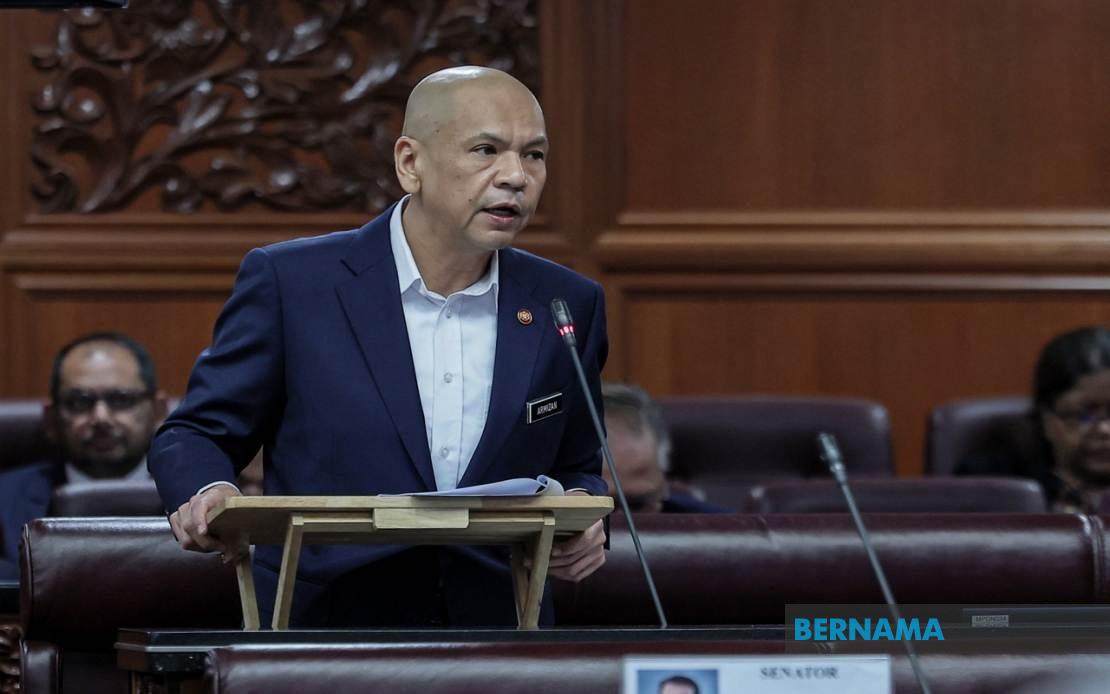
The Malaysian government's flagship Rahmah MADANI Sales Programme has achieved unprecedented scale in its rollout, with the Ministry of Domestic Trade and Cost of Living confirming that 15,881 sales events were held between January and June 2024. This represents the most comprehensive distribution of subsidised goods and discounted products ever attempted at the constituency level in Malaysia, with coverage extending to all 600 state constituencies and all 40 Federal Territory zones across Putrajaya, Kuala Lumpur, and Labuan. Domestic Trade Minister Datuk Armizan Mohd Ali disclosed the figures during a parliamentary question-and-answer session, underscoring the government's commitment to making the programme a permanent fixture in the nation's economic relief strategy.
The expansion trajectory of the sales initiative reveals the government's determination to scale up the programme significantly faster than initially projected. Statistics presented in parliament show that the number of events has grown exponentially from 6,870 sessions in 2023 to 12,419 in 2024, then surging to 25,708 by 2025. This accelerating growth pattern reflects not only increased logistical capacity but also heightened political priority placed on managing household expenses for ordinary Malaysians. The initial annual target of 23,040 sessions for 2025 was revised upward to 30,000 events following Prime Minister Datuk Seri Anwar Ibrahim's announcement in May, which framed the programme as an emergency intervention mechanism responding to global energy price volatility and supply chain disruptions stemming from the West Asia conflict.
The strategic architecture underpinning the Rahmah MADANI Sales Programme demonstrates a fundamental shift in how the government approaches cost-of-living interventions, moving from episodic bargain sales to systematic, predictable economic relief. The first institutional change involved establishing the programme as a permanent budgetary fixture starting in 2024, with its own dedicated activity code and allocated funding stream. This transformation from ad-hoc initiatives to institutionalised practice signals that policymakers view managing consumer costs as a structural necessity rather than a temporary measure, particularly significant given Malaysia's exposure to global commodity price movements and inflation pressures.
The second pillar of the programme's design framework involves establishing fixed annual targets and scheduling frequencies for every constituency and zone nationwide. This structured scheduling represents a departure from previous government bargain sales that operated without predictable patterns or systematic geographic coverage. By implementing scheduled events aligned to local calendars, the government attempts to create a sense of reliability and accessibility that previous uncoordinated efforts could not provide, allowing residents to plan household shopping around known discount opportunities. The data showing coverage of all 600 state constituencies suggests that no community is excluded from the programme's benefits, addressing potential criticisms about unequal geographic distribution of government support.
Private sector engagement has emerged as a crucial pillar, with the ministry securing 2,695 strategic retail partners from the commercial sector as of late June 2024. This partnership approach leverages existing retail infrastructure, supply chains, and commercial expertise to deliver the programme's objectives efficiently rather than relying solely on government resources. The participation of major companies, independent businesses, and cooperative organisations creates a diverse delivery ecosystem that can serve varied consumer demographics and shopping preferences. This collaboration also distributes the operational burden and financial commitments across the private sector, potentially making the programme more sustainable and cost-effective than purely government-executed initiatives.
The programme's delivery mechanisms have been deliberately diversified to maximise accessibility across Malaysia's varied urban and rural landscape. Three distinct sales formats—traditional in-store events, open-air markets, and mobile vans—ensure that consumers in remote areas and those without convenient access to shopping centres can participate in the discounts. Furthermore, the integration of themed events aligned to cultural celebrations, salary cycles, and educational seasons demonstrates sophisticated scheduling that anticipates predictable household expenditure spikes. This approach acknowledges that cost-of-living pressure intensifies during specific periods, such as back-to-school seasons when families face substantial educational expenses, or during festive holidays when consumption traditionally increases.
A significant innovation implemented starting in 2025 involves the introduction of a national Rahmah MADANI Sales calendar providing advance notice of event dates, times, and locations for all state constituencies and zones. This transparency mechanism fundamentally changes the consumer's relationship with the programme by enabling household planning rather than opportunistic shopping. Families can now align purchasing of staple goods with scheduled discount events, potentially achieving meaningful savings on bulk purchases of essential items. The calendar availability also serves an accountability function, allowing citizens to monitor whether promised events are actually delivered in their localities, creating implicit pressure on programme administrators to maintain consistency and follow through on commitments.
For Malaysian consumers, particularly those in middle-income and lower-income households, the expansion of the Rahmah MADANI Sales Programme addresses a tangible dimension of economic security. While critics might argue that subsidised sales events represent a temporary patch rather than structural solutions to inflation and cost pressures, the programme's systematic expansion and institutional embedding suggest policymakers view it as a medium-term management tool. The frequency increase—with 30,000 events planned for 2025 compared to roughly 25,000 in 2024—indicates the government's assessment that household financial pressure remains significant and warrants sustained, expanded intervention.
The programme's evolution also reflects broader regional trends in Southeast Asian governance, where governments increasingly employ direct consumer assistance programmes to manage cost-of-living concerns without implementing price controls that might create market distortions. Malaysia's approach through subsidised sales events differs from alternatives like direct cash transfers or rationing systems, offering a middle path that engages market mechanisms while channelling government support toward consumers. The reliance on private sector partnership distinguishes this model from purely state-controlled approaches, potentially making it more flexible and responsive to local market conditions.
Looking forward, the sustainability and effectiveness of the Rahmah MADANI Sales Programme will depend on maintaining private sector participation levels and ensuring that discounts offered genuinely reflect savings rather than artificially inflated baseline prices. The programme's success metrics will increasingly focus not just on event frequency but on the actual value delivered to consumers and the programme's reach among vulnerable populations most affected by cost-of-living pressures. As the initiative matures and moves toward 30,000 annual events, questions will inevitably arise about whether such scale can be maintained without compromising the quality of discounts or the integrity of participating retailers.
The parliamentary confirmation of comprehensive constituency coverage and the detailed articulation of the programme's strategic framework indicate that the government views cost-of-living management as a permanent governance responsibility rather than a temporary crisis response. This positioning suggests that Malaysian policymakers anticipate sustained pressure on household budgets from external factors, including volatile energy prices and global supply chain dynamics, making periodic consumer relief programmes a fixture of economic management. The Rahmah MADANI Sales Programme, with its expanding frequency and improved structural architecture, represents the government's chosen instrument for addressing this challenge at the grassroots level.

