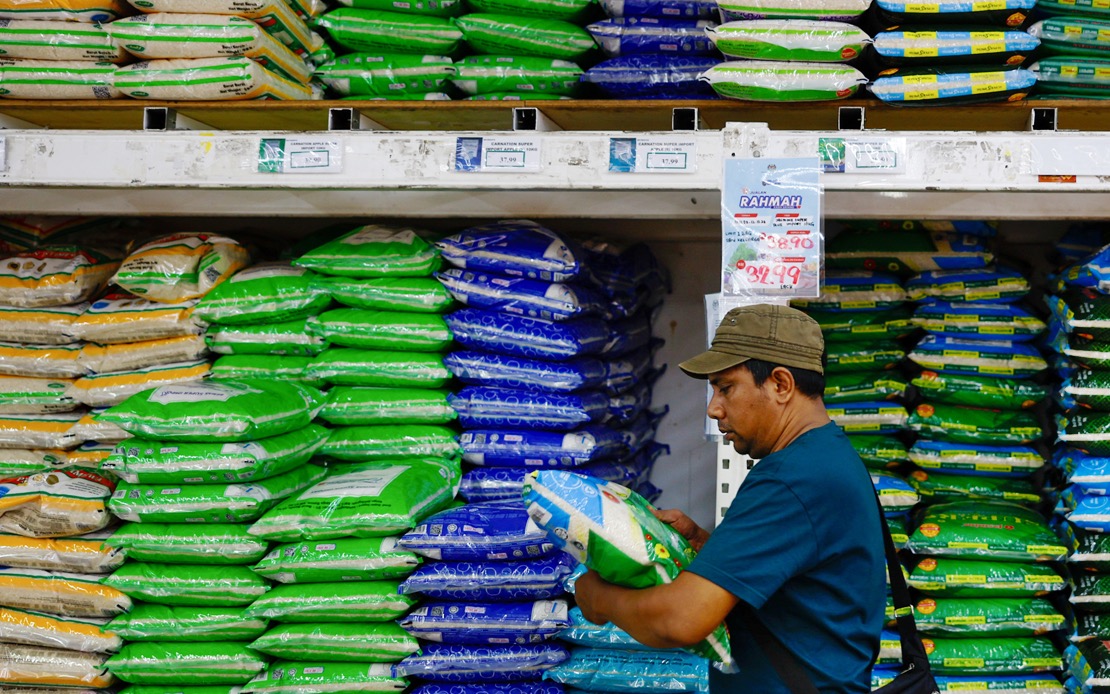
Malaysia's rice security remains intact despite heightened geopolitical tensions in West Asia, with the government holding sufficient reserves to meet domestic demand for at least half a year, according to reassurances provided by Deputy Agriculture and Food Security Minister Datuk Chan Foong Hin in the Dewan Negara. The country's combined physical rice stocks total 1.237 million tonnes, comprising 200,000 tonnes held as the national strategic buffer managed by Padiberas Nasional Berhad (BERNAS) alongside 1.037 million tonnes of commercial inventories. This dual-tiered storage system reflects Malaysia's approach to food security, balancing immediate market needs with protective reserves designed to absorb external shocks from international crises.
The minister's statement directly addressed concerns raised by Senator Datuk Dr Mohd Hatta Md Ramli regarding Malaysia's readiness to maintain staple food supplies should the West Asian situation escalate and disrupt global commodity flows. Such assurances carry weight in a region where rice constitutes a fundamental dietary staple, and where supply chain disruptions in neighbouring countries have historically triggered regional food price inflation. By publicly confirming reserve levels and management structures, the government seeks to prevent panic buying and market speculation that could undermine price stability domestically.
Beyond mere stockpiling, Malaysia's food security architecture incorporates price regulation mechanisms designed to insulate consumers from international market volatility. Government subsidies on local white rice create what officials term a stable price buffer, allowing domestic consumers to benefit from relatively predictable rice costs even when global prices spike due to supply constraints or geopolitical turmoil. This strategy proved particularly valuable during pandemic-induced supply chain disruptions and demonstrates how targeted fiscal intervention can protect household food budgets, a consideration especially important for lower-income Malaysians for whom rice represents a significant portion of food expenditure.
However, current reserves alone do not constitute Malaysia's complete food security response. The government has articulated an ambitious target to achieve 80 per cent self-sufficiency in rice production by 2030, a goal that would substantially reduce dependence on imports and associated vulnerability to external shocks. Deputy Minister Chan acknowledged that recent production trends have moved in the wrong direction, with declining output driven partly by natural challenges including the El Niño phenomenon, which intensifies drought stress on rice paddies. Addressing this structural vulnerability requires moving beyond inventory management toward enhancing domestic production capacity through technological and agricultural innovation.
The Ministry of Agriculture and Food Security is pursuing this objective through expanded deployment of climate-resilient padi varieties, specifically MR 380, MR 381, and MR 382, which demonstrate improved drought tolerance compared with conventional cultivars. These varieties represent outputs of Malaysia's agricultural research infrastructure and their wider adoption across farming communities would reduce yield losses during moisture-stressed seasons. Complementing varietal improvements, the ministry is promoting advanced water management techniques including Alternate Wetting and Drying (AWD) and the System of Rice Intensification (SRI). Both approaches optimise irrigation efficiency and can substantially lower water consumption while maintaining or improving yields, an increasingly critical consideration as climate variability intensifies across Southeast Asia.
Implementation of these productivity-enhancing measures concentrates initially on areas under the Muda Agricultural Development Authority (MADA), Malaysia's largest rice-growing region. MADA's institutional capacity, irrigation infrastructure, and farmer networks position it as the logical proving ground for new techniques before wider rollout. The ministry is simultaneously upgrading agricultural irrigation systems more broadly, tackling a persistent constraint where outdated water delivery infrastructure limits farmers' ability to employ modern water management practices. These capital investments require sustained funding but promise medium-term returns through increased production and enhanced environmental sustainability.
Recognising that long-term production improvements take years to materialise, the government has introduced near-term measures to reduce input cost pressures currently squeezing padi farmer profitability. A temporary exemption from the Sales and Service Tax on agricultural fertilisers, including rock phosphate and magnesium sulphate, extends from January 2026 through December 2027. This targeted tax relief acknowledges that rising fertiliser costs constitute a major component of increasing agricultural input expenses, and temporary relief provides farmers breathing room while structural improvements in productivity accumulate. The exemption applies specifically to fertiliser categories critical for rice cultivation, indicating a focused rather than blanket approach.
Additionally, the government has substantially expanded direct support to rice farmers through enhanced ploughing incentives for the 2026 planting season, raising payments from RM160 to RM300 per hectare. This increase, allocating approximately RM40 million in additional funding, will reach nearly 200,000 farmers, representing the core rice-producing population. Doubling the per-hectare rate acknowledges both the economic pressure facing farming communities and the policy imperative of maintaining domestic production capacity even during international commodity booms, when export markets might otherwise tempt local producers to redirect output. Maintaining domestic production commitment requires compensating farmers adequately for opportunity costs.
The multi-layered approach to rice security—combining immediate reserves, price regulation, production diversification, technological upgrading, and direct income support—reflects Malaysian policymakers' recognition that food security encompasses multiple dimensions. No single intervention suffices; strategic reserves provide temporal buffers but finite resources, subsidies stabilise prices but require continuous fiscal commitment, and production improvements take years to yield full benefits. The West Asian tensions that prompted parliamentary questioning on this topic have highlighted how distant geopolitical disruptions increasingly affect staple food availability and affordability in Malaysia and across Southeast Asia.
For Malaysian consumers, these policy measures translate to relative insulation from rice price shocks that periodically disrupt food systems elsewhere in the region. Vietnam, Thailand, and other major rice-producing nations have periodically imposed export restrictions during supply crunches, sometimes creating regional scarcity and price spikes. Malaysia's combination of reserves, import relationships, and domestic production targets aims to avoid such scenarios. However, the 80 per cent self-sufficiency target acknowledges that complete import independence remains unrealistic given climate constraints and land availability, requiring continued reliance on international markets managed through strategic rather than opportunistic purchasing.
The efficiency and sustainability of Malaysia's rice security approach will face testing as climate patterns grow more erratic and international tensions potentially disrupt shipping routes and supply relationships. The drought-resistant varieties and water management techniques now being promoted represent adaptive responses recognising that historical production patterns cannot be assumed in coming decades. Success ultimately depends on farmer adoption rates, infrastructure investment timing, and whether global conditions remain stable enough to allow gradual implementation of longer-term improvements rather than forcing abrupt adaptations to acute crises. Malaysia's current preparedness, while reassuring in the near term, represents a platform from which more fundamental food system resilience must be constructed.

