As Malaysia experiences growing prosperity, a paradoxical problem has emerged: households are wasting more food precisely because they can afford to. Datuk Seri Dr Mohd Uzir Mahidin, the outgoing Chief Statistician, has highlighted the intimate connection between income growth and food wastage, revealing that wealthier urban communities and states with higher per capita incomes exhibit markedly greater tendencies to discard edible food compared with their less affluent counterparts. This observation comes as he concludes nearly nine years transforming the Department of Statistics Malaysia into the nation's primary strategic data institution, following 36 years of public service.
The underlying driver of this phenomenon reflects a fundamental economic transition. When households move beyond subsistence living and secure their basic nutritional requirements, consumption behaviour undergoes profound change. Malaysian families are now purchasing goods that exceed their actual needs, a shift that would have been unthinkable in earlier periods of more constrained economic circumstances. The convenience of abundance has eroded the careful household management practices that previous generations necessarily cultivated. This transformation, while indicative of national development, has created new inefficiencies in resource allocation at the domestic level.
Mohd Uzir pointed to specific behavioural patterns that exemplify this wastage culture. Parents frequently make bulk purchases during promotional campaigns without coordinating with household members, leading to unwitting duplicate purchases from other family members. When these surplus items languish in refrigerators beyond their shelf life, they inevitably end up discarded. The phenomenon reflects not malice or deliberate profligacy, but rather the consequence of decision-making fragmentation within households where individual purchasing autonomy outpaces internal communication about consumption needs. This pattern, while seemingly innocuous at the household level, aggregates into substantial national waste when multiplied across millions of Malaysian homes.
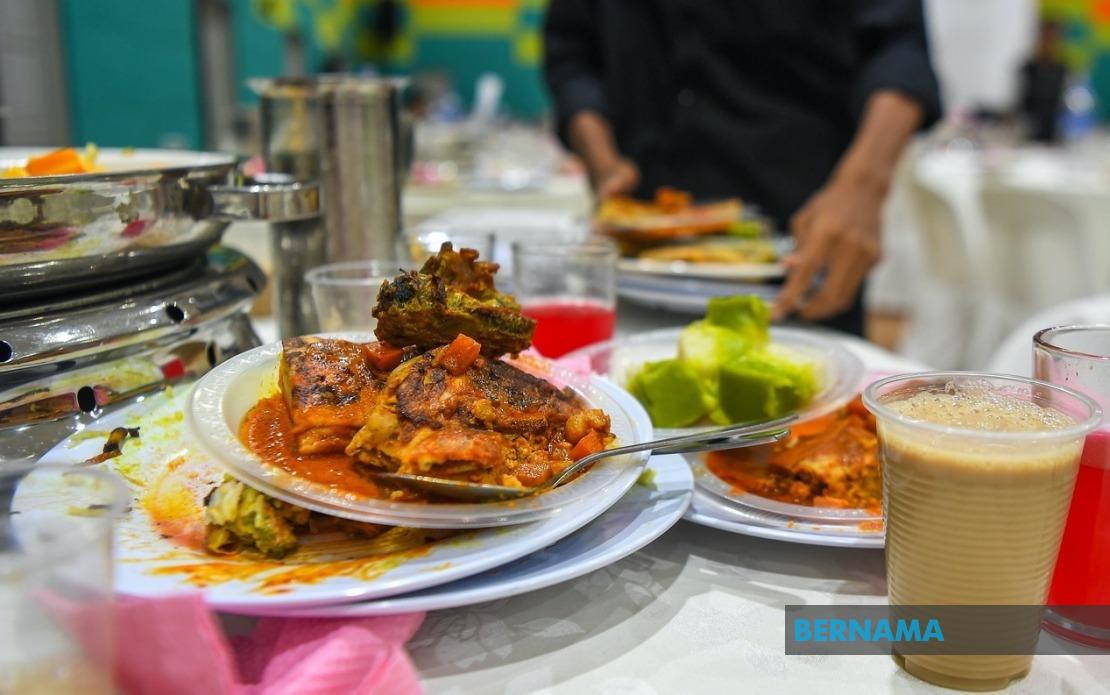
The spatial dimension of food wastage reveals telling disparities between Malaysia's urban and rural communities. Urban areas consistently generate higher per capita food waste, though alarming trends are increasingly apparent in rural regions as well. Notably, the proliferation of catering services for traditional celebrations like kenduri in rural areas has fundamentally altered local wastage patterns. Previously, extended family members prepared meals collaboratively at home, with portion control naturally emerging from the labour-intensive preparation process. Commercial catering services, while offering convenience and consistency, have decoupled the relationship between preparation effort and consumption discipline, facilitating greater wastage in traditionally frugal communities.
States with elevated per capita incomes, particularly Selangor, demonstrate even more pronounced wastage patterns. This phenomenon partly reflects the sheer density of social functions in prosperous areas. Weekend celebrations across urban neighbourhoods can occur five or six times daily, often with nearly identical menus. Guests, receiving multiple invitations, attend primarily for social obligation rather than hunger, resulting in substantial quantities of leftover prepared food that spoils without consumption. This social arithmetic of excess stands in sharp contrast to lower-income regions where celebrations occur less frequently and attendance carries genuine dietary significance.
Understanding food wastage requires grappling with fundamental economic psychology. Commodities lose their perceived value when they become abundant or heavily discounted. In economic theory, price reflects scarcity, and humans naturally conserve scarce resources while treating abundant items dismissively. When food is readily available or offered at promotional prices, households cease viewing waste as problematic. This principle extends beyond food into other consumption categories: similarly discounted clothing purchased through online retail platforms generates equivalent waste, suggesting a broader pattern of price-driven overconsumption rather than food-specific behaviour. The psychological mechanism remains constant across product categories.
The National Household Indicators Survey 2025 provides quantitative evidence of this escalating problem. Annual household food waste in Malaysia ranges from 31.9 kilogrammes to 97.3 kilogrammes per capita, a considerable variation reflecting the income and lifestyle disparities evident across the nation's diverse communities. Of greater concern, the survey identified that processed and cooked foods contribute disproportionately to waste: 94.1 per cent of households reported discarding prepared foods compared with 88.7 per cent for raw ingredients. This distinction carries important implications, as wasting cooked food represents losses at the end of the supply chain and squanders the energy and resources already invested in preparation and cooking.
Among raw foods, vegetables emerge as the most frequently wasted category at 29.1 per cent, followed by fruits at 22.4 per cent and fish or seafood at 15 per cent. These specific food groups present particular challenges because they are perishable, demand specific storage conditions, and deteriorate visibly in ways that discourage consumption of items approaching expiration. Within processed foods, rice paradoxically records the highest wastage rate at 16.7 per cent despite being storable, suggesting that wastage patterns reflect purchasing decisions rather than spoilage alone. Vegetables comprise 15.8 per cent of prepared food waste, while items purchased from outside sources account for 13.8 per cent, indicating that commercially prepared foods experience elevated wastage compared with home-cooked alternatives.
A critical finding concerns food waste management practices within Malaysian households. The survey revealed that 79.3 per cent of households dispose of food waste together with general household rubbish, while merely 20.7 per cent practice food waste separation. This disparity indicates that separating organic waste from other refuse remains uncommon behaviour among Malaysian families, despite growing global awareness of environmental benefits. The lack of separation not only prevents opportunities for composting and organic waste reduction but also complicates municipal waste management efforts, as mixed organic and inorganic waste creates processing challenges for disposal facilities. Establishing food waste separation as standard household practice would require simultaneous shifts in consumer awareness, municipal infrastructure, and waste management regulations.
The implications of this food wastage crisis extend beyond individual household economics into national resource policy and environmental sustainability. Malaysia, as a developing nation still investing heavily in agricultural production and food security, cannot indefinitely absorb the inefficiencies created by affluent consumption patterns. The divergence between wealthier and lower-income communities suggests that food waste reduction requires targeted, community-specific interventions rather than generic awareness campaigns. Urban programmes must address the psychology of abundance and promotional pricing, while rural initiatives should consider the social functions driving adoption of commercial catering services.
Mohd Uzir's departure marks a transition in statistical leadership precisely as these data reveal uncomfortable truths about Malaysian consumption behaviour. The next phase of addressing food wastage requires coordinated action across multiple domains: community education programs must rebuild appreciation for food in an age of plenty; urban planning should reconsider how social calendars generate cascading celebrations; policy-makers might contemplate pricing strategies that discourage bulk purchasing of perishables; and municipal waste systems require investment to enable and encourage household food waste separation. Without such interventions, Malaysia's rising affluence will increasingly translate into mounting environmental burden alongside persistent questions about equitable resource distribution.

