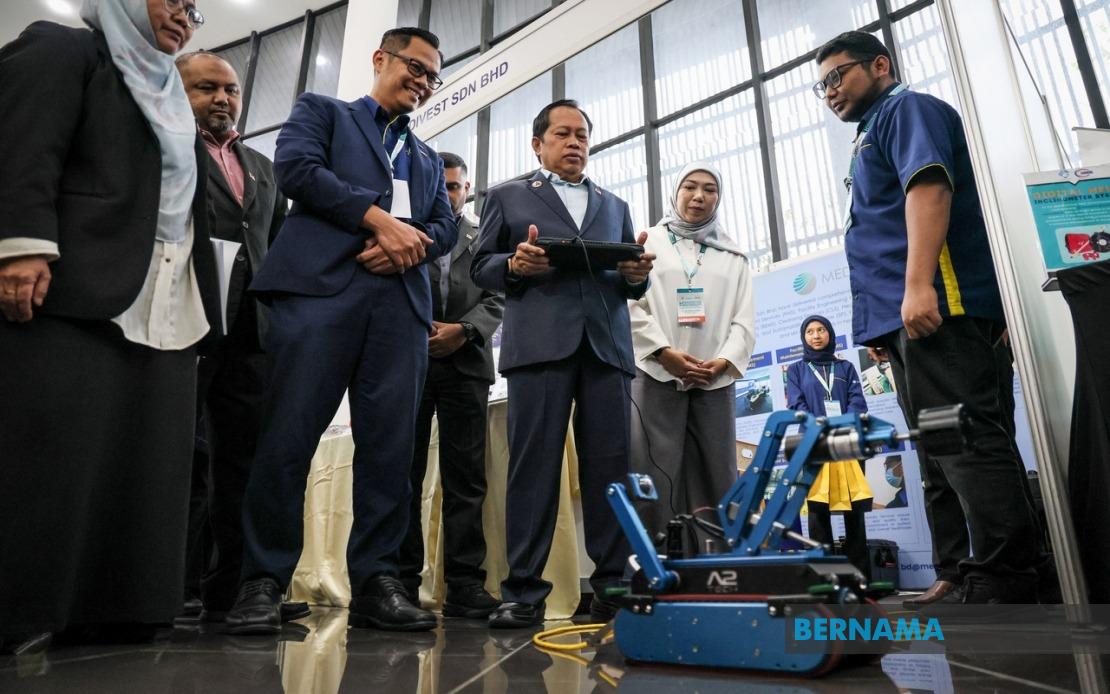
Malaysia's construction industry faces an unexpected paradox: a booming maintenance and facility management market remains significantly undersupplied, presenting a lucrative yet largely untapped opportunity for ambitious contractors. Deputy Works Minister Datuk Seri Dr Ahmad Maslan unveiled this strategic opportunity at the Contractors Convention 2026 in Butterworth, emphasizing that the facility management and maintenance sector generated RM39.59 billion worth of projects across the three-year period from 2023 to 2025, according to records maintained by the Construction Industry Development Board (CIDB).
The numbers paint a striking picture of market disequilibrium. While CIDB documentation tracked 1,541 distinct facility management and maintenance projects during this timeframe, the contractor base registered to undertake such work remains remarkably small. Only 468 companies currently hold FM contractor credentials under the F01 and F02 specialisation categories, creating a supply-demand mismatch that Ahmad characterized as an overlooked business frontier. For Malaysian contractors seeking to expand beyond traditional construction work, this sector represents a pathway to diversification and sustained revenue generation that extends throughout an asset's operational lifespan rather than concluding at project handover.
The Works Ministry's advocacy reflects a deliberate policy shift toward preventative asset management. Ahmad articulated a fundamental reorientation of construction industry priorities, noting that past practice concentrated resources almost exclusively on the construction phase itself. Once buildings, roads, and bridges were completed and handed over, systemic attention to maintenance declined, despite these assets requiring continuous upkeep to preserve functionality and extend useful life. This historical approach, while completing impressive physical infrastructure, inadvertently created a maintenance backlog that now compromises public asset performance and ultimately proves more costly than proactive facility stewardship.
The economic implications extend beyond individual contractor portfolios. Public assets—roads, government buildings, bridges, and municipal infrastructure—deteriorate rapidly without consistent maintenance programs. When degradation accelerates, emergency repairs become necessary at significantly higher expense than scheduled preventative work would have incurred. By encouraging contractor participation in systematic facility management, the Works Ministry aims to arrest this cycle and ensure taxpayer investments in infrastructure deliver sustained value throughout asset lifecycles. This shift represents sophisticated asset management thinking that prioritizes long-term efficiency over short-term construction metrics.
To formalize and standardize this emerging sector, CIDB has developed CIS 33:2026, a comprehensive Facility Management Good Practice Guide introduced at the convention. This framework establishes systematic protocols, sustainable practices, and industry-wide standards applicable across the construction ecosystem. Rather than relying on ad-hoc maintenance approaches, the guide provides asset owners, facilities managers, contractors, and other stakeholders with unified reference standards. Implementation of these protocols should improve asset longevity, reduce lifecycle costs, and ensure consistent service quality across diverse infrastructure categories and ownership structures.
Ahmad's messaging fundamentally redefines facility management's strategic importance within the construction sector. Historically treated as ancillary support work performed after project completion, FM and maintenance are now positioned as legitimate business subsectors offering comparable financial returns and professional development opportunities to traditional construction contracting. This recategorization opens possibilities for contractors to build specialized expertise, develop proprietary service methodologies, and establish recurring revenue relationships with public and private asset owners seeking long-term maintenance partnerships.
For Malaysian contractors contemplating strategic direction, the sector presents several attractive characteristics. First, facility management work provides steady employment extending across multiple years, contrasting with project-based construction that terminates upon completion. Second, established relationships with asset owners create competitive barriers and customer retention advantages. Third, the sector encompasses diverse specializations—structural maintenance, mechanical systems, grounds management, security operations, and asset monitoring—enabling contractors to focus on areas matching existing capabilities or develop new expertise areas. Fourth, as urbanization accelerates and Malaysia's infrastructure stock expands, maintenance demands will intensify accordingly.
The registration gap between available projects and qualified contractors suggests immediate market entry advantages for qualified firms. Early movers establishing professional credentials under F01 and F02 classifications can build track records and client relationships before market saturation occurs. However, successful entry requires different operational approaches than traditional construction work. Facility management demands systematic planning, reliability metrics, quality consistency, and long-term relationship management rather than project-focused mobilization and demobilization cycles. Contractors must develop service delivery disciplines, scheduling capabilities, and preventative maintenance expertise to distinguish themselves in an evolving market.
Regional implications merit consideration as well. Southeast Asia's rapid economic development has generated substantial infrastructure expansion across member nations, yet maintenance capacity frequently lags construction capacity. Malaysia's emphasis on facility management professionalization and contractor development could establish benchmarks and best practices applicable throughout the region. Malaysian contractors gaining competitive expertise in this sector might eventually export facility management services to neighboring countries where infrastructure maintenance remains underdeveloped. This represents an opportunity for Malaysian firms to develop international competitive advantage in a sector where regional expertise remains nascent.
The Works Ministry's initiative addresses a genuine market failure requiring industry intervention. Without active encouragement and standardization frameworks, contractors may rationally focus on traditional construction work where established practices and payment structures exist. By providing regulatory clarity through F01/F02 classifications, standardized practice guidelines through CIS 33:2026, and explicit ministerial endorsement, the government removes barriers to sector entry and legitimizes facility management as a professional discipline. This policy approach recognizes that infrastructure performance depends equally on construction execution and maintenance excellence, requiring contractor capability development in both domains.
Looking forward, the RM39.59 billion market valuation likely represents conservative measurement capturing only formally recorded projects. Substantial informal maintenance work and asset preservation activities conducted by various government agencies, municipal corporations, and private enterprises probably exceed documented project values. As formal project tracking improves and industry professionalization accelerates, documented market size will likely expand, reinforcing the sector's attractiveness to ambitious contractors seeking diversification opportunities and sustained competitive advantage through specialized service delivery capabilities.

