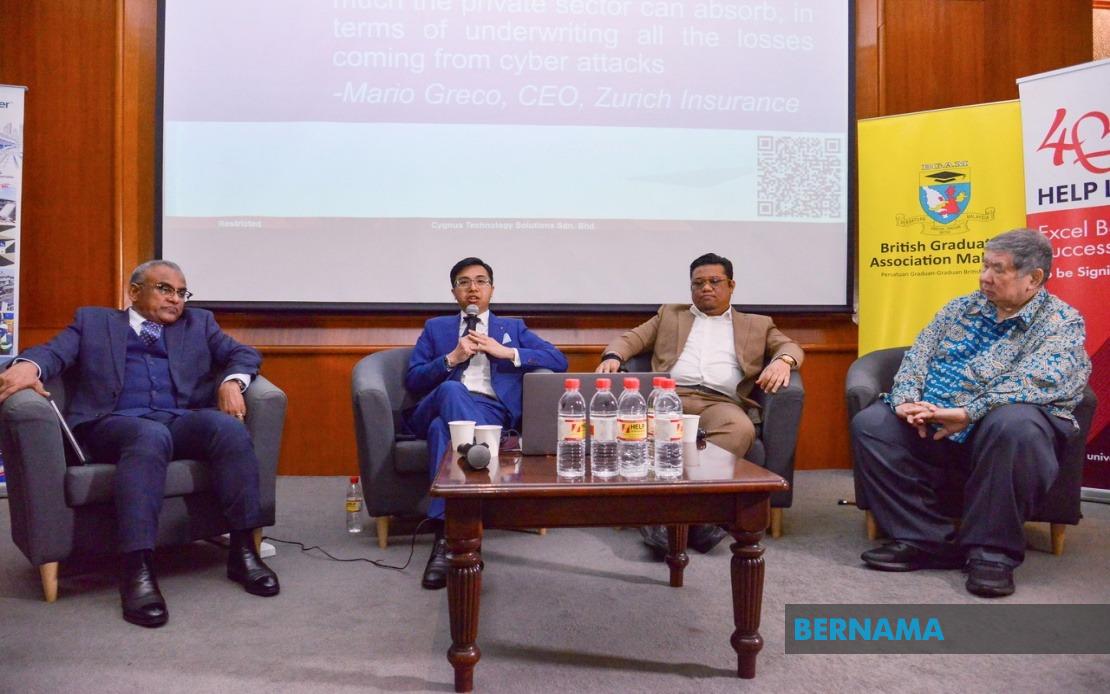
Malaysia confronts a deepening scam crisis as criminal syndicates harness artificial intelligence and psychological manipulation to defraud victims at an unprecedented scale. Last year alone, the nation recorded more than 66,000 online scam cases resulting in combined losses of approximately RM2.97 billion, according to crime prevention specialists addressing the growing menace at an industry forum in Kuala Lumpur. The scale of the problem underscores how organised fraud has transformed from sporadic criminal activity into a structural threat facing individuals, households and enterprises across the country.
Datuk Kamarudin Md Ali, an executive member of the Malaysia Crime Prevention Foundation and president of the British Graduates Association Malaysia, characterised the modern scam landscape as fundamentally different from previous decades. Rather than isolated cases, contemporary scam operations represent a coordinated national challenge requiring coordinated action from multiple sectors of society. Speaking at the BGAM Lecture Series on scam awareness and prevention, held at HELP University, he emphasised that building resilience against fraud demands that ordinary citizens develop sufficient knowledge to identify and avoid deceptive schemes. This shift from reactive law enforcement to proactive public engagement reflects growing recognition that prevention depends heavily on educating potential victims.
The forum, officiated by Asia e University chancellor and former Home Minister Tan Sri Dr Syed Hamid Albar, convened government officials, police specialists, information security experts, corporate representatives, university academics and community members to examine the interconnected causes of Malaysia's scam epidemic. The breadth of participation reflected acknowledgment among policymakers that addressing the problem requires coordination across government agencies, financial institutions, technology companies, schools and community organisations. Syed Hamid, who previously chaired the Malaysia Crime Prevention Foundation, articulated a framework for understanding scams that extends beyond conventional criminal justice categories.
According to Syed Hamid, scams have evolved into a threat to public confidence and social cohesion rather than remaining confined to financial crime alone. The erosion of trust in digital systems and financial institutions carries implications for Malaysia's economic development and digital transformation agenda. He contended that enforcement responses alone prove insufficient, arguing instead that education offers more durable protection than punishment applied after crimes have already occurred. A population equipped with critical thinking skills and awareness of common scam tactics creates a more resilient barrier to fraud than police investigations conducted after victims have already suffered losses. This preventative approach aligns with broader evidence suggesting that informed societies show greater resistance to manipulation.
Professor Datuk Seri Dr Akhbar Satar, director of HELP University's Institute of Criminology and Criminal Justice, offered a psychological perspective on fraud that illuminates why technological defences alone prove inadequate. Scammers, he argued, do not exploit computer vulnerabilities so much as manipulate human cognition and emotion. Whether examining corruption or scams, he suggested, the criminal act initiates at the point where integrity disintegrates. This framing positions fraud prevention as fundamentally a matter of character development and ethical reasoning rather than solely cybersecurity technology. Universities, he noted, bear responsibility for cultivating digital literacy alongside moral reasoning in graduates who will shape policy, lead organisations and contribute to crime prevention efforts across society.
The geographic and technological dimensions of Southeast Asia's scam problem have expanded dramatically in recent years. Datuk Seri Ramli Mohamed Yoosuf, former head of the Bukit Aman Commercial Crime Investigation Department, characterised the region as the world's primary centre for commercial crime operations. Regional scam losses during 2025 are estimated to fall between USD88 billion and USD114 billion, representing a catastrophic drain on wealth and economic vitality. Beyond Malaysia's borders, organised scam compounds operating in Myanmar, Cambodia, Laos and the Philippines generate approximately USD40 billion annually, exploiting trafficked workers from more than 80 countries to conduct fraud campaigns. These operations increasingly employ artificial intelligence systems capable of generating convincing deepfake videos, alongside cryptocurrency technologies that obscure money trails and complicate law enforcement's ability to trace stolen funds.
Malaysia has enacted legislative and institutional responses intended to address the scam infrastructure. The Cybersecurity Act 2024 provides updated legal tools for prosecuting cyber-enabled fraud. Enhanced compliance with Financial Action Task Force standards strengthens Malaysia's position within global anti-money laundering frameworks. The establishment of the National Scam Response Centre creates a dedicated institutional mechanism for coordinating inter-agency efforts against organised fraud. Despite these administrative measures, Ramli cautioned that scam syndicates continue adapting tactics and technology faster than regulatory systems can respond. This asymmetry between institutional capacity and criminal innovation underscores why purely enforcement-based strategies require supplementation with public awareness campaigns and educational initiatives.
The sophistication of contemporary scam operations reflects technological capabilities that previously belonged exclusively to state actors. AI-generated deepfakes enable scammers to impersonate trusted authority figures or known associates with remarkable fidelity, creating psychological conditions where targets abandon normal scepticism. Cryptocurrency systems facilitate instantaneous transfer of stolen funds across borders, frustrating traditional banking investigation methods. Labour trafficking compounds create operational capacity to conduct thousands of simultaneous fraud campaigns, overwhelming victim reporting systems and law enforcement resources. The combination of these elements—psychological manipulation, cutting-edge technology and distributed criminal infrastructure—explains why Malaysia's scam losses have reached such magnitude.
The forum discussion, moderated by Malaysian Press Institute president Datuk Yong Soo Heong, examined emerging scam patterns and practical defence measures available to individuals and organisations. Panellists including Malaysia Anti-Scam Community Organisation consultant Rahmat Fitri Abdullah addressed how commercial crime investigations proceed, what cybersecurity measures offer realistic protection, and how media literacy contributes to public resilience against deception. The conversation emphasised that no single sector—government, business, education or civil society—possesses sufficient capacity to combat scams independently. Rather, addressing the threat requires sustained collaboration sustained across institutional boundaries, technological innovation that keeps pace with criminal adaptation, and continuous public awareness campaigns that reach vulnerable populations.
Organisers highlighted that progress against Malaysia's scam epidemic depends fundamentally on building institutional linkages and coordinated responses among government agencies, law enforcement bodies, financial services providers, technology companies, educational institutions and community-based organisations. This systemic approach recognises that scams succeed not because individual victims lack intelligence, but because they face psychological and technological pressure deliberately engineered to overcome normal caution. Creating a scam-resistant Malaysia requires matching criminal sophistication with equally sophisticated preventative systems that combine technological defences, legal enforcement, public education and community watchfulness into an integrated whole.

