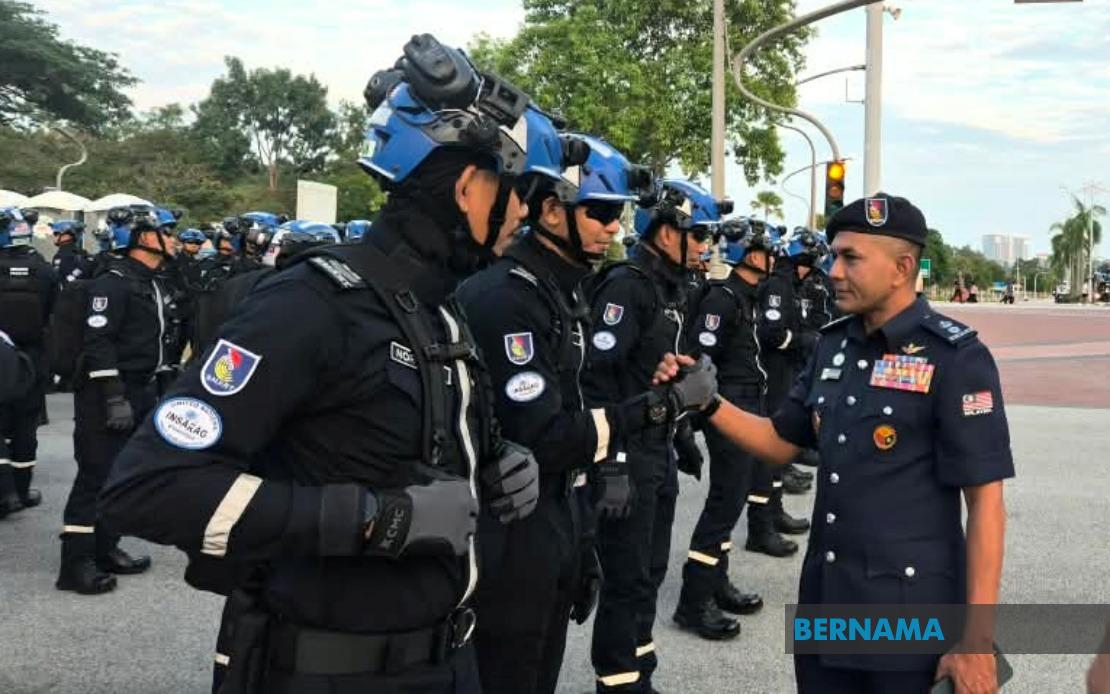
Malaysia's Special Malaysia Disaster Assistance and Rescue Team (SMART) is primed and ready to launch operations in Nepal, pending final approval from the Nepalese government. The unit, composed of 112 highly trained personnel, has completed all operational preparations and awaits clearance to deploy following the devastating floods and landslides that swept through the Himalayan nation on August 26, claiming hundreds of lives and leaving thousands missing.
Senior Fire and Rescue Officer 1 (PgKB 1) Abdul Manaf Che Isa, who commands SMART, confirmed the team's operational readiness while speaking at Dataran Putrajaya during National Day 2026 celebrations. He emphasised that all logistical and tactical preparations have been finalised, with personnel standing by for immediate dispatch once the Nepalese authorities signal their acceptance. The delay reflects standard international protocols—Nepal must formally request and confirm its capacity to accommodate a foreign rescue contingent before operations commence.
The Malaysian government's intervention represents a significant commitment to regional disaster relief. Prime Minister Datuk Seri Anwar Ibrahim announced the deployment decision in a formal statement, framing the mission as part of Malaysia's broader humanitarian obligations to neighbouring nations. Beyond search and rescue operations, the SMART contingent has been assigned two additional critical tasks: locating and repatriating Malaysian nationals affected by the disaster, and supporting the Malaysian Embassy in Nepal's coordination of aid distribution and welfare support for Malaysian citizens in the country.
Financial assistance accompanies the rescue deployment. Malaysia will contribute USD1 million to Nepal's immediate disaster response and longer-term recovery initiatives. This financial pledge acknowledges the scale of reconstruction needed as communities across Nepal and China's Tibet region reckon with the catastrophe's aftermath. For a middle-income nation like Nepal, where annual government budgets remain constrained, such external support proves instrumental in jump-starting relief operations and preventing secondary humanitarian crises stemming from inadequate initial response capacity.
Coordination between Malaysia's governmental agencies demonstrates the whole-of-government approach mobilised for the operation. The Foreign Ministry (KLN), National Security Council (MKN), and National Disaster Management Agency (NADMA) are collaborating to manage deployment logistics, diplomatic protocols, and operational oversight. This inter-agency coordination reflects lessons learned from previous Malaysian disaster assistance missions, where fragmented communication channels have occasionally compromised effectiveness. The integrated approach ensures that rescue operations proceed in alignment with Malaysia's foreign policy objectives and security considerations.
The human toll remains staggering. As of late August, the Anadolu Agency reported 804 confirmed deaths across Nepal and Tibet, with nearly 3,300 individuals still unaccounted for. These figures underscore the mission's urgency and complexity. Landslides, triggered by torrential rainfall, have obliterated entire communities and severed transport links, hindering rescue efforts and humanitarian access. Malaysia's contribution of skilled personnel becomes particularly valuable in such challenging terrain where international expertise and equipment can substantially improve search outcomes and survivor recovery rates.
Malaysian citizens caught in the disaster represent another dimension of the crisis. As of August 29, the Ministry of Foreign Affairs (Wisma Putra) reported 36 Malaysians remaining uncontactable in China and 55 in Nepal following the disaster. These figures highlight how regional catastrophes directly threaten Malaysian nationals living or travelling throughout Asia. The SMART deployment addresses not only humanitarian obligations toward Nepal but also Malaysia's duty of care toward its own citizens. Family members in Malaysia have been anxiously awaiting news, making the rescue mission deeply personal for many households.
SMART's reputation preceded this deployment. The unit, established specifically to provide Malaysian disaster response capabilities within and beyond Southeast Asia, has participated in multiple regional emergency operations. Team members undergo rigorous training in urban search and rescue, structural engineering, medical triage, and cross-cultural communication. Captain Plaveanus Bernard leads this contingent, commanding personnel selected for their technical competence and psychological resilience. Such specialised capabilities prove invaluable in post-disaster environments where structural collapse, contaminated water sources, and epidemiological hazards compound rescue difficulties.
The deployment timeline remains uncertain pending Nepalese approval, but Malaysia's preparedness stance sends a clear diplomatic signal. Demonstrating capability and willingness to assist during humanitarian emergencies strengthens bilateral relationships and reinforces Malaysia's position as a responsible regional partner. Within ASEAN, such initiatives also reinforce the bloc's collective commitment to mutual support during crises, subtly encouraging reciprocal assistance should Malaysia face comparable disasters.
Beyond immediate rescue operations, this mission carries longer-term implications. As climate change intensifies precipitation patterns across the Hindu Kush and allied mountain ranges, flood and landslide disasters may become more frequent. Malaysia's engagement with Nepal's disaster management infrastructure could establish frameworks for enhanced preparedness and capacity building. Knowledge transfer between Malaysian disaster professionals and Nepalese counterparts often extends beyond immediate crisis response, contributing to institutional resilience in receiving countries.
The geopolitical context warrants consideration as well. Nepal's relationships with India and China shape how international assistance is negotiated and implemented. Malaysia's non-aligned position and ASEAN membership provide diplomatic advantage in such situations. The rescue mission, stripped of strategic competition, represents the humanitarian principles that Southeast Asian nations theoretically prioritise in regional affairs—though practical limitations and competing interests frequently compromise such ideals.
For Malaysian policymakers, this crisis offers lessons about regional vulnerability to transnational disasters. Monsoon systems affect multiple nations simultaneously, meaning that comprehensive disaster preparedness requires cross-border coordination and investment. The SMART deployment demonstrates Malaysia's capacity but also highlights resource constraints that limit how many concurrent operations the nation can manage. As extreme weather events proliferate regionally, questions arise about whether current rescue infrastructure will prove adequate.
Malaysia's response, ultimately, reflects a nation attempting to balance humanitarian impulses with practical constraints. The SMART team's readiness, governmental coordination, financial contribution, and personnel deployment demonstrate serious commitment. Yet the operation's success hinges partly on external factors beyond Malaysian control—Nepalese bureaucratic processes, ground conditions, survivor accessibility, and evolving weather patterns. Once approval arrives and operations commence, the true measure of Malaysia's contribution will become apparent.

