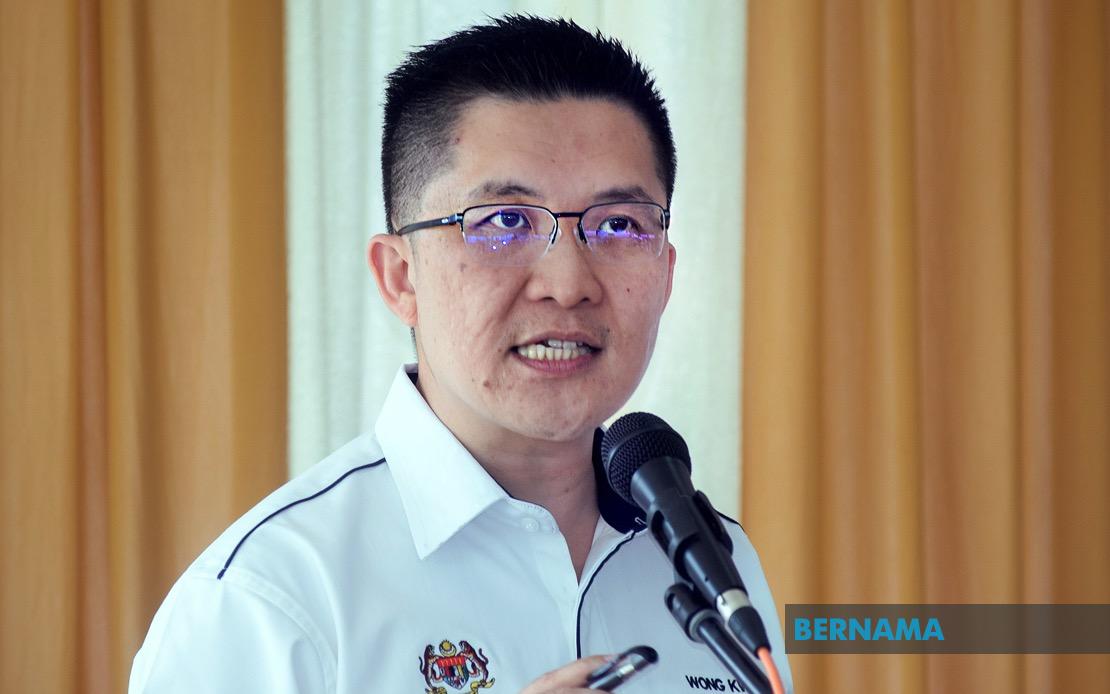
Malaysia's network of Tamil national-type schools remains a significant component of the country's multilingual education ecosystem, with 528 institutions currently operating across the nation and serving a combined enrolment of 78,501 pupils as of late May 2026. Deputy Education Minister Wong Kah Woh disclosed these figures during a parliamentary session, responding to queries about the status and future of Tamil-medium education in Malaysia's school system. The data underscores the ongoing commitment to maintaining ethnic-language schooling options within the broader national education framework, a feature that has distinguished Malaysia's approach to pluralist education for decades.
One of the most telling indicators of institutional health in the SJKT sector lies in examination participation trends. Registration figures for the Sijil Pelajaran Malaysia, Malaysia's principal secondary examination, reveal a gradual decline in candidate numbers: 8,023 registered in 2023, followed by 7,925 in 2024, 7,693 in 2025, and 7,494 this year. This downward trajectory, while modest in percentage terms, reflects demographic shifts and changing parental educational choices across Malaysia's Tamil-speaking communities. Nevertheless, Deputy Minister Wong affirmed that the Tamil language subject will persist as an examination option, maintained among the suite of languages offered by the Examinations Syndicate. The commitment extends beyond examination provision; students enrolled in schools that do not formally offer Tamil instruction remain eligible to sit for the SPM Tamil examination, subject to standard registration protocols, thereby preserving access for those in Tamil-language minority regions.
Johor exemplifies the regional concentration and infrastructure investment within the SJKT system. The southern state hosts 71 Tamil national-type schools with a total pupil population of 12,906, demonstrating significant community reliance on this educational channel. Within Johor Bahru district alone, fifteen institutions operate, collectively enrolling 7,840 students. Four schools in the district have achieved notably high capacity, with SJKT Taman Tun Aminah leading at 1,529 pupils, followed by SJKT Ladang Rini with 1,055, SJKT Jalan Yahya Awal with 890, and SJKT Masai accommodating 768 students. These schools represent the system's success stories—well-populated, presumably well-resourced, and able to maintain vibrant educational communities. Conversely, the existence of two under-enrolled institutions in the same district, SJKT Ladang Sungai Plentong and SJKT Ladang Mados, both operating with fewer than thirty pupils, illustrates the uneven distribution of demand and the operational challenges some schools face.
To address the structural problem of under-enrolment that threatens educational quality and resource efficiency, the Ministry of Education has deployed a multifaceted strategy. As of late May 2026, 135 under-enrolled SJKT schools nationwide have transitioned to multi-grade teaching arrangements, pooling students across adjacent year levels to sustain pedagogical continuity and peer interaction. Additionally, thirty-six schools have received approval for relocation to areas with stronger demographic demand. These measures reflect pragmatic recognition that blanket school closures would damage cultural and linguistic institutions without addressing underlying community needs. Rather, the ministry's roadmap permits flexible responses calibrated to local circumstances, allowing some schools to persist through pedagogical innovation while others relocate to where Tamil-language education demand remains robust.
Teacher recruitment and qualification represent persistent implementation challenges within the SJKT sector. The system requires 1,334 option teachers of Tamil language across primary and secondary levels, yet the current workforce stands at 1,733—a surplus suggesting either overcounting, dual-qualification personnel, or deployment flexibility. At secondary level specifically, the requirement is 584 teachers against a current staffing level of 648, indicating that most secondary schools meet or exceed authorized establishment. This apparent surplus masks potential complications: qualified teachers may be concentrated in high-demand urban areas, leaving rural schools with recruitment difficulties, or staff may include teachers on fixed-term contracts awaiting permanent placement. The Ministry's commitment to continuous teacher training and infrastructure development, therefore, extends beyond mere headcount to encompassing professional capacity-building that improves instructional quality.
Capital investment in SJKT infrastructure signals medium-term institutional confidence. Two major construction projects in Johor exemplify this commitment: new building complexes for SJKT Ladang Rini and SJKT Kulai Besar, each allocated RM4.3 million and designed to accommodate an additional 200 to 300 pupils. Such investments respond to capacity pressures in growth corridors and provide tangible modernization of physical learning environments. Taken together with the curriculum enhancement initiatives outlined by the Deputy Minister, including implementation of the 2027 School Curriculum framework and strengthened Tamil literature content, these measures suggest a ministry approach that treats SJKT development as an evolving, investment-worthy component of national education rather than a legacy system in managed decline.
The broader educational policy context frames Tamil-language schooling within Malaysia's commitment to multilingual competence and cultural pluralism. The government's continued support reflects recognition that preserving minority-language education strengthens social cohesion and cultural heritage while contributing to national educational diversity. Within Southeast Asia, where several countries have reduced minority-language schooling, Malaysia's sustained SJKT network, though experiencing demographic pressures, represents a deliberate policy choice favoring pluralism. This positioning carries implications for national identity narratives and interfaith understanding; educational systems that actively maintain minority-language options signal institutional respect for ethnic-cultural communities and may reduce perceptions of marginalisation among Tamil-speaking families.
Examination fairness and grading integrity emerged as secondary themes in Deputy Minister Wong's parliamentary remarks, addressing public concerns about standardization in national assessments. He clarified that SPM grades are not determined through quota systems or pre-set percentage targets but rather through systematic comparison of candidate performance against curriculum standards and competency benchmarks. Expert panels comprising subject specialists, curriculum developers, and measurement professionals review candidate responses, examination characteristics, and established standards before finalizing grade boundaries. Wong noted that international examination systems employ similar methodologies, embedding Malaysian practice within globally recognized assessment frameworks. Grade boundaries necessarily fluctuate annually based on cohort performance and examination difficulty characteristics, a reality that distinguishes criterion-referenced assessment from norm-referenced approaches and reflects international best practice.
Looking forward, the SJKT sector's trajectory will depend partly on demographic trends and parental educational choices within Tamil-speaking communities, which lie substantially outside ministry control. However, government initiatives targeting curriculum modernization, infrastructure upgrading, and flexible institutional arrangements appear designed to maintain educational quality and institutional viability despite potential enrolment pressures. The 2027 curriculum implementation represents an opportunity to refresh Tamil-language pedagogy and strengthen literary content, potentially enhancing perceived relevance and attractiveness to new student cohorts. Furthermore, the relocation and multi-grade class strategies indicate willingness to adapt institutional structures to match demand patterns, avoiding the false choice between preserving every existing school and allowing wholesale institutional contraction.
For Malaysian policymakers and education stakeholders, the SJKT system exemplifies the practical complexities of sustaining minority-language education within a centralised national framework. With 78,501 pupils currently served and examination participation demonstrating gradual decline, the challenge lies in stabilizing enrolment while improving pedagogical outcomes—objectives that require sustained investment, strategic flexibility, and sensitivity to community preferences. The ministry's multifaceted approach, combining infrastructure development, teacher recruitment, curriculum modernization, and institutional restructuring, suggests recognition that minority-language education requires active, differentiated support rather than passive maintenance. For Southeast Asian comparisons, Malaysia's commitment to SJKT preservation, despite demographic pressures, distinguishes it from regional peers and reflects historical educational policy choices that prioritize communal pluralism over assimilationist models. The coming years will reveal whether these interventions successfully stabilize the system and maintain Tamil-language education as a viable option within Malaysia's multilingual educational landscape.