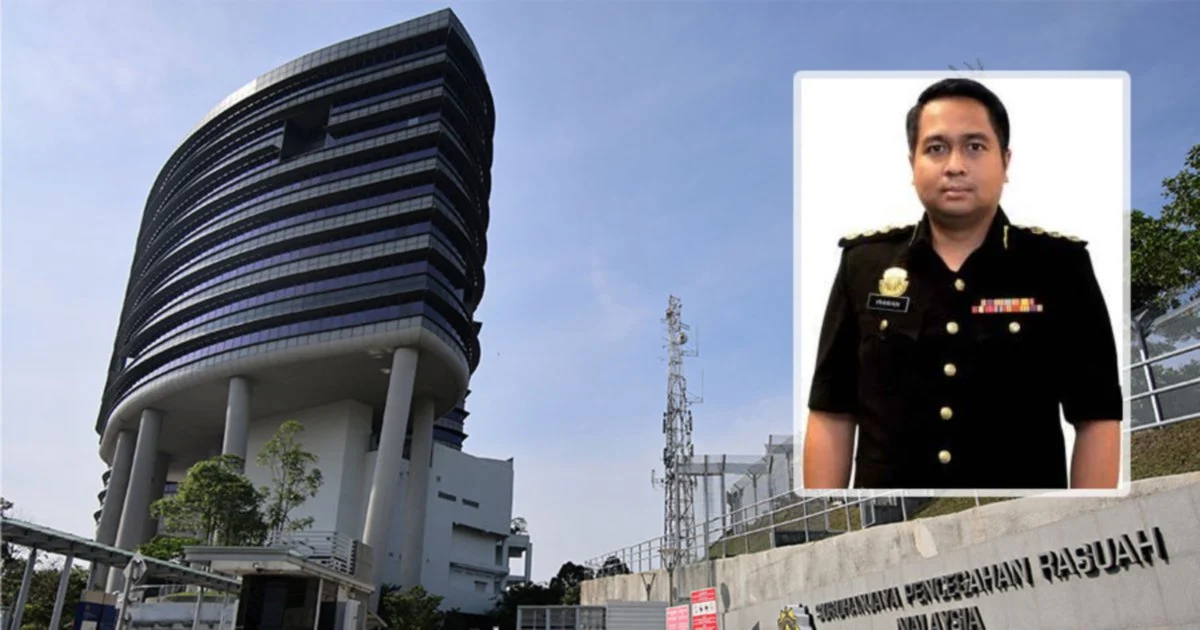
A prominent officer from the Malaysian Anti-Corruption Commission has earned recognition on the global stage by securing a place in one of the world's most competitive law enforcement training initiatives. The official will attend the 299th session of the FBI National Academy programme in the United States, a development that underscores Malaysia's commitment to bolstering institutional capacity in anti-corruption enforcement and international policing standards.
The FBI National Academy represents a significant mark of distinction within global law enforcement circles. Operating since 1935, the programme has trained thousands of senior police and law enforcement personnel from across the globe, establishing it as an elite forum for knowledge exchange and capability building. Selection for the academy typically involves rigorous vetting processes and reflects both individual merit and the nominating country's standing within international law enforcement networks. The choice to send a MACC representative signals confidence in Malaysia's anti-corruption infrastructure and the individual's expertise in this critical field.
For Malaysia specifically, this opportunity carries broader institutional implications. The MACC has undergone significant evolution since its establishment, transforming into a key agency responsible for investigating financial crimes, government procurement irregularities, and high-level corruption cases. The commission operates within a complex political and administrative landscape where independence and professional capability remain paramount concerns. International training and exposure help reinforce professional standards and contemporary investigative methodologies that strengthen institutional credibility domestically and internationally.
The FBI Academy curriculum typically encompasses advanced investigative techniques, forensic analysis, financial crime detection, and leadership development tailored for senior law enforcement officials. Participants engage with peers from diverse countries and law enforcement traditions, creating opportunities for cross-cultural learning and the establishment of international professional networks. These connections often prove invaluable as agencies increasingly tackle transnational corruption involving money laundering, bribery schemes spanning multiple jurisdictions, and asset concealment across borders—challenges that demand coordinated international responses.
Southeast Asia has witnessed escalating concerns regarding corruption's economic and social impacts. The region experiences substantial losses through illicit financial flows, with studies suggesting billions in annual outflows through corruption-related channels. Malaysia, as a major regional economy with significant government spending and foreign investment inflows, remains vulnerable to sophisticated corruption schemes. Strengthening the technical and investigative capabilities of institutions like the MACC through international exposure becomes crucial for addressing these challenges and enhancing the country's competitiveness as a stable investment destination.
The broader context of Malaysia-United States law enforcement cooperation has expanded considerably over the past decade. Information sharing arrangements, mutual legal assistance treaties, and joint task forces have become more robust, particularly in combating financial crimes and transnational corruption. American law enforcement agencies, especially the FBI, have deployed extensive resources to global corruption investigations, frequently intersecting with Malaysian entities and officials. Enhanced bilateral coordination through initiatives like the National Academy programme strengthens these working relationships and ensures Malaysian law enforcement maintains contemporary skills in complex investigation management.
International training opportunities also carry strategic significance for developing nations seeking to strengthen institutional governance. When senior officials acquire exposure to global best practices and advanced investigative methodologies, they return with enhanced problem-solving capabilities and networks that elevate institutional performance. The knowledge transfer often extends beyond the individual participant, influencing organisational protocols, training curricula for junior officers, and strategic approaches to emerging corruption threats. These cascading effects multiply the value of individual training investments.
The selection process itself warrants attention as an indicator of meritocratic advancement within Malaysia's law enforcement hierarchy. In institutions sometimes buffeted by political pressures, international recognition based on professional excellence can reinforce evidence-based advancement and strengthen the principle that capability and integrity remain the primary criteria for advancement. This dynamic becomes particularly important in anti-corruption agencies where the credibility of leadership directly influences public confidence and investigative effectiveness.
Regionally, Malaysia's participation in such programmes positions the country as an active contributor to Southeast Asian law enforcement cooperation networks. Neighbouring countries increasingly look toward peers with demonstrated technical capacity and international engagement as reference points for institutional development. A MACC official trained at the FBI National Academy returns with credibility that extends beyond Malaysia's borders, potentially influencing regional approaches to anti-corruption strategy and facilitating more effective cooperation on cross-border investigations.
Looking forward, this assignment reflects investment in human capital as a cornerstone of institutional effectiveness. Anti-corruption work increasingly demands sophistication in navigating digital financial systems, cryptocurrency transactions, and concealment methods that criminals deploy to obscure illicit gains. The FBI Academy's curriculum incorporates these contemporary challenges, ensuring participants leave equipped with tools relevant to present-day corruption investigation realities. For Malaysia's anti-corruption framework, such capability enhancement becomes particularly valuable as the country positions itself within competitive regional and global markets demanding transparent governance and reliable institutional mechanisms.

