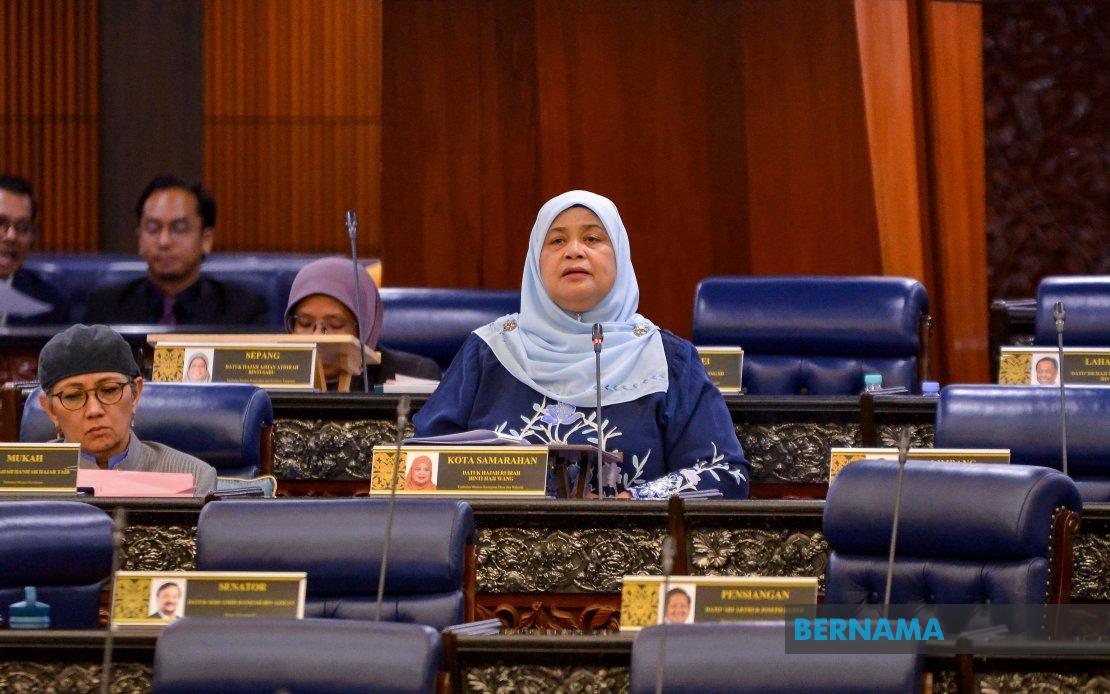
Malaysia's technical and vocational education sector is undergoing significant transformation to bridge the persistent gap between classroom learning and workplace requirements. Speaking in Parliament on July 14, Deputy Minister of Rural and Regional Development Datuk Rubiah Wang outlined how the TVET 2.0 framework will rely heavily on direct accreditation from major industrial players, a shift designed to ensure that graduates emerge job-ready rather than requiring extensive retraining once employed. This strategic pivot addresses one of Southeast Asia's most troubling labour market inefficiencies: the widespread mismatch between the skills students acquire and those employers actually need.
The credibility of Malaysia's TVET programmes has long suffered from questions about relevance. Employers frequently report difficulty finding qualified candidates for technical roles, despite growing enrolment in vocational courses, suggesting a fundamental disconnect in curriculum design and delivery. By embedding industry recognition directly into the accreditation process, rather than treating it as an afterthought, the Ministry of Rural and Regional Development aims to flip this dynamic. This approach acknowledges that employers are ultimately the arbiters of competency, and their input should shape curriculum from the outset rather than serving merely as external validation. For Malaysian students, this means their qualifications will carry tangible labour market weight, improving their prospects for stable employment and career progression.
A central pillar of the TVET 2.0 vision involves developing techno-entrepreneurs and job creators capable of anchoring economic growth in rural regions. Rather than simply producing workers for existing employers, the framework seeks to cultivate graduates who can identify opportunities and establish their own enterprises. This distinction carries particular significance for Malaysia's regional development agenda, where rural areas struggle with limited employment opportunities and brain drain as young people migrate to urban centres. By equipping TVET students with entrepreneurial capability alongside technical mastery, the ministry hopes to catalyse grassroots economic dynamism and reduce urban-rural economic disparities. The approach reflects international best practice, particularly in countries like Germany and Switzerland, where vocational education explicitly cultivates independent economic actors rather than mere wage earners.
The TVET Tahfiz programme represents an innovative fusion of spiritual education with technical skills development. This initiative produces graduates who combine mastery of Islamic principles and Quranic memorisation with proficiency in digital and advanced technologies. The concept addresses a growing recognition that technical competence alone is insufficient for sustainable economic participation; character development and ethical grounding are equally essential. For Muslim-majority Malaysia, this programme represents culturally sensitive skills development that resonates with family values and religious commitment while simultaneously positioning graduates competitively in global digital markets. The dual emphasis reflects Malaysia's positioning as a Muslim nation aspiring to high-technology excellence, avoiding the false dichotomy between spiritual values and technological advancement.
The technological focus areas embedded within Malaysia's TVET institutions underscore the sector's commitment to preparing students for a radically transformed workplace. Artificial intelligence, the Internet of Things, cloud computing, cybersecurity, automation, robotics, and smart manufacturing represent not aspirational future technologies but pressing current industry needs. Malaysian employers across construction, manufacturing, services, and agriculture increasingly demand workers literate in these domains. By weaving these competencies throughout TVET curricula rather than offering them as optional specialisations, the system acknowledges that technological fluency is no longer a luxury but a baseline requirement. This shift helps explain why TVET institutions are investing heavily in instructor development and equipment upgrades, recognising that traditional teaching methods cannot convey practical competency in emerging technologies.
Specialisation centres scattered across Malaysia's TVET network represent a deliberate strategy to develop world-class expertise in targeted domains rather than spreading resources thinly across generalised programmes. TVETMARA Petaling Jaya's focus on Internet of Things technology, TVETMARA Besut's cloud computing concentration, and TVETMARA Pasir MAS's emergence as a Building Information Modelling centre create regional hubs of excellence. This model allows institutions to invest substantially in specialist equipment, attract expert instructors, and build industry partnerships around narrowly defined competencies. For students, it means access to genuinely world-standard training rather than diluted versions of multiple disciplines. Regionally, this approach positions Malaysia as a TVET destination for serious technical education, potentially attracting students from neighbouring Southeast Asian countries seeking rigorous vocational preparation.
The German-Malaysian Institute's focus on Industrial Revolution 4.0 manufacturing technology reflects Malaysia's strategic alignment with advanced economies rather than pursuing labour-cost competition. Rather than attempting to compete with lower-wage nations in basic manufacturing, Malaysia increasingly recognises that its future competitive advantage lies in operating sophisticated, technology-intensive production systems. German industrial expertise in this domain is globally acknowledged, and the partnership facilitates technology transfer that might take Malaysia decades to develop independently. For Malaysian manufacturers, this means access to a pipeline of workers trained in modern production methodologies, enhancing productivity and quality. The arrangement also signals to multinational enterprises considering Malaysian operations that the country can supply workers capable of managing advanced manufacturing environments.
Universiti Kuala Lumpur's positioning as Malaysia's leading institution for High TVET represents a crucial institutional development. Programmes such as the Bachelor of Artificial Intelligence Technology blur traditional boundaries between vocational and academic education, creating pathways for progression from technical diplomas toward degree-level qualifications. This credential stacking approach benefits students by enabling incremental advancement without sharp transitions between educational levels. A student might begin with a TVET diploma in AI fundamentals, progress to technician certification, and eventually complete a bachelor's degree, accumulating practical experience and employment opportunities throughout. For employers, this creates a talent pipeline stretching from entry-level technical support through to senior technical leadership roles, all rooted in rigorous, practice-based preparation.
The implementation of TVET 2.0 carries significant implications for Malaysia's broader economic strategy. As manufacturing increasingly moves toward advanced production, as services become more technology-dependent, and as agricultural productivity requires digital tools, the availability of skilled technical workers becomes a critical constraint on growth. The TVET 2.0 framework represents governmental recognition that shortages in this domain are not inevitable consequences of globalisation but addressable problems requiring institutional innovation. By aligning educational standards with industry needs, embedding entrepreneurial capacity, and building specialisation centres, Malaysia is attempting to create a TVET ecosystem genuinely responsive to labour market dynamics. Success in this effort would yield not only improved employment prospects for individual students but also enhanced competitiveness for Malaysian enterprises and faster economic progress across rural regions currently marginalised from high-value economic activity.

