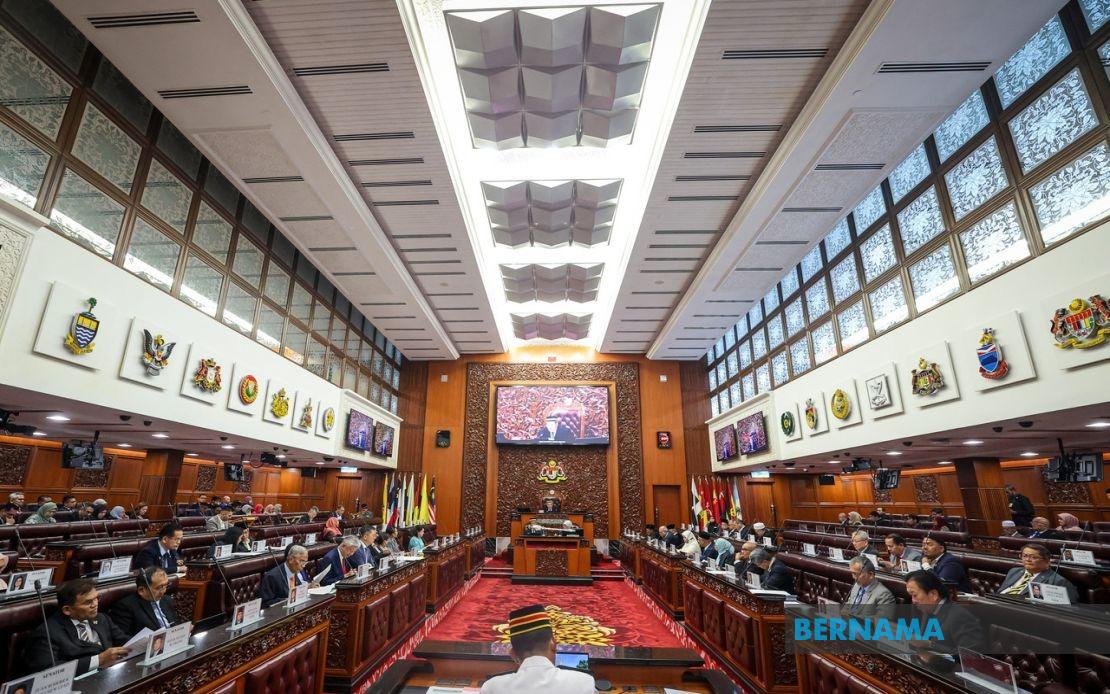
Malaysia's upper house of parliament concluded its Second Meeting on August 4 following a 10-day sitting that resulted in the passage of twelve pieces of legislation covering critical areas from cybersecurity to agricultural governance. The Dewan Negara's session, which commenced on July 20, demonstrated the chamber's expanded role in legislative oversight and policy refinement, with the adjournment debate mechanism deployed for the first time since 2022 to air emerging governance concerns.
Among the most significant measures cleared was the Cybercrimes Bill 2026, which represents a comprehensive update to Malaysia's digital security framework as the nation grapples with evolving online threats. The Road Transport (Amendment) Bill 2026 and Witness Protection (Amendment) Bill 2026 also secured passage, alongside sexual offences legislation targeting child victims. These laws underscore parliament's attention to protecting vulnerable populations and modernising enforcement mechanisms in an increasingly complex legal landscape.
The legislative agenda further encompassed the Competition (Amendment) Bill 2026 and its companion Competition Commission (Amendment) Bill 2026, reflecting government efforts to strengthen market regulation and consumer protection. The National Trust Fund Bill 2026 promises new mechanisms for financial oversight, while the Padi and Rice Control (Amendment) Bill 2026 signals continuing attention to agricultural stability—a sector of enduring importance for Malaysian food security and rural livelihoods. The Social Work Profession Bill 2026 establishes professional standards for social workers, addressing long-standing gaps in the regulation of this essential field.
Additional communications-related legislation passed included amendments to the Communications and Multimedia Act and structural changes to the Malaysian Communications and Multimedia Commission (MCMC), reflecting the government's broader digital transformation agenda. The Statistics Bill 2026 modernises data-collection and statistical governance, essential infrastructure for evidence-based policymaking in an increasingly data-driven economy.
Beyond the formal legislative programme, the Dewan Negara utilised its adjournment debate platform—reinstated under Standing Order 16 after a four-year hiatus—to address two pressing policy concerns. The first motion centred on the mounting threat posed by extreme cross-border e-commerce platforms such as Pinduoduo and Temu to Malaysia's micro, small and medium enterprise (MSME) ecosystem and traditional retail sector. These platforms' aggressive pricing and rapid market penetration have raised alarm among local business associations and policymakers alike, as they operate in regulatory grey zones and redirect consumer spending overseas.
The second motion addressed voting access for auxiliary police members, proposing the introduction of early voting or postal voting facilities for this uniformed service contingent. This debate reflects broader conversations about electoral accessibility for workers in demanding professions and the logistics of ensuring participation rights for all citizens, particularly those in essential services who may face scheduling constraints during polling.
Dewan Negara Speaker Datuk Awang Bemee Awang Ali Basah emphasised that the diversity of perspectives contributed by senators representing various professional and demographic backgrounds had substantially enriched the chamber's check-and-balance function and the legislative drafting process. This characterisation underscores the upper house's theoretical value as a repository of specialist knowledge and considered deliberation, distinct from the more partisan dynamics of the lower house. The speaker's remarks highlighted the role of diverse expertise in producing better law, a principle increasingly important as legislation addresses complex, intersecting policy domains from digital security to e-commerce regulation.
In his closing address, Awang Bemee linked the parliamentary session to the upcoming dual observance of National Day and Malaysia Day in 2026, urging all political actors and stakeholders to recommit to national sovereignty, constitutional supremacy, the rule of law, and national unity. This framing positioned parliament's legislative work within the broader narrative of institutional integrity and national cohesion, particularly pertinent given Malaysia's multi-ethnic composition and the ongoing importance of constitutional safeguards in maintaining inter-community trust.
The passage of twelve bills in a single session reflects the government's legislative ambition and the coordination required between executive and legislative branches to move such a volume of business. Yet the emphasis on adjournment debates and policy discussions around e-commerce and service worker voting rights indicates that the Dewan Negara increasingly functions not merely as a rubber-stamp chamber but as a venue where emerging concerns can be aired and deliberated, even if formal legislative remedies may lag behind.
For Malaysian businesses, particularly small enterprises grappling with cross-border competition, the adjournment debate on platforms like Temu and Pinduooduo signals that policymakers are alert to their concerns. However, translating concern into coordinated regulatory action—whether through consumer protection law, competition policy, or platform governance—remains a longer-term challenge. Similarly, the discussion of voting access for auxiliary police raises questions about how electoral systems accommodate the practical realities of uniformed service members, an issue likely to resurface in parliamentary discourse as operational pressures on security forces continue to intensify.

