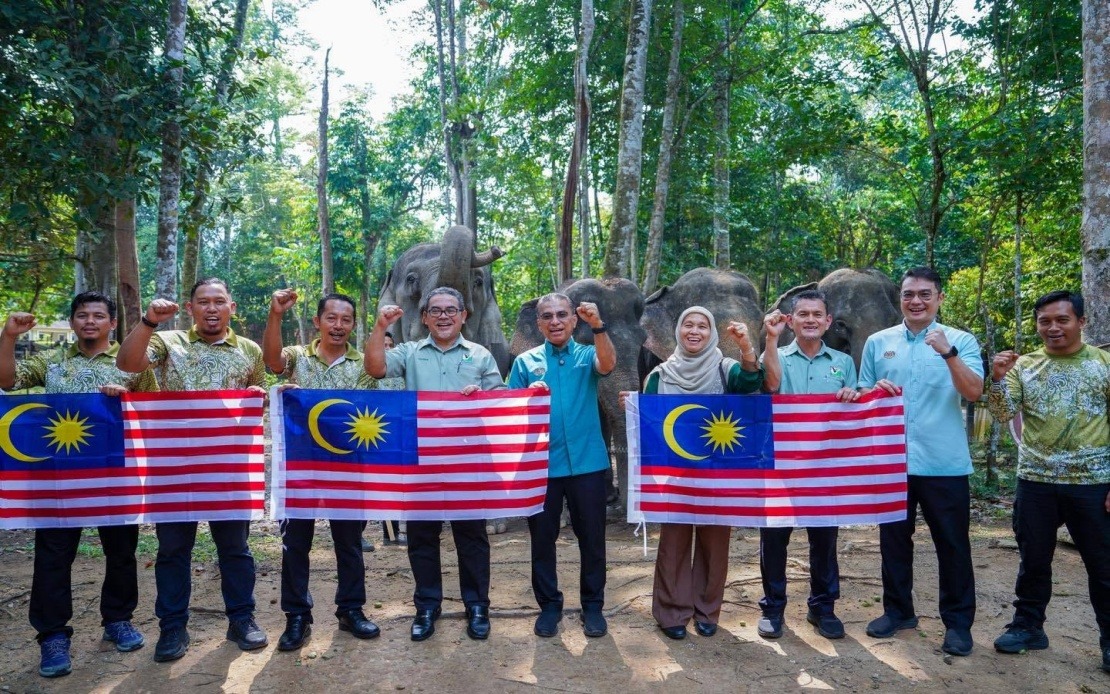
The Ministry of Natural Resources and Environmental Sustainability has committed to formulating innovative approaches to mitigate the rising frequency of human-wildlife conflicts across the country. Speaking in Tangkak on August 28, Deputy Minister Syed Ibrahim Syed Noh underscored that addressing these incidents represents a pressing challenge for the Department of Wildlife and National Parks (Perhilitan), especially as incidents involving wild elephants continue to mount.
The escalation of such encounters reflects broader environmental tensions facing Malaysia. As human settlements expand and agricultural activities intensify across forested regions, wildlife habitats shrink correspondingly. Elephants and other large mammals, deprived of adequate space within their traditional ranges, increasingly venture into populated areas in search of food and suitable terrain. This collision between human development and animal survival has become one of Perhilitan's most demanding operational challenges, requiring careful coordination between conservation goals and public safety imperatives.
The ministry's approach emphasises sustained monitoring rather than reactive culling or permanent relocation. Syed Ibrahim explained that authorities prefer to allow wild animals, particularly elephants, to inhabit their natural ecosystems while maintaining vigilant oversight. This philosophy reflects growing recognition that forced confinement or aggressive removal often proves counterproductive, as displaced animals demonstrate remarkable behavioural persistence in attempting to return to familiar territories. The strategy represents a shift toward understanding elephant cognition and respecting their inherent need for territorial continuity.
A notable illustration of this approach emerged through the case of Sulong Chalil, a bull elephant that travelled hundreds of kilometres across challenging terrain despite sustaining a severe leg injury. After relocation to a forested reserve in Gerik, Perak, the animal undertook an arduous journey back toward its original habitat in Gua Musang, Kelantan, where it ultimately sought refuge. Rather than attempting forcible recapture, Perhilitan personnel tracked the elephant's movements continuously, intervening only when necessary to ensure its survival and prevent potentially dangerous interactions with human populations.
This case illuminates fundamental constraints facing wildlife management agencies across Southeast Asia. Elephants possess complex spatial memory and emotional attachments to specific landscapes where they have lived for years or even decades. Traditional relocation models, which assume animals will eventually accept new environments, frequently fail because they discount these psychological and behavioural dimensions. Malaysian authorities increasingly recognise that managing human-wildlife conflict requires sophisticated understanding of animal behaviour rather than simplistic removal protocols.
The formulation of fresh methodologies involves collaboration among multiple stakeholders beyond Perhilitan's direct purview. Government agencies, conservation organisations, and local communities are jointly examining practical solutions that address both animal welfare and human security concerns. These collaborative efforts signal recognition that sustainable conflict reduction cannot rely solely on government action but requires coordinated engagement across sectors. The scope of this collaborative framework remains substantial, encompassing habitat restoration, community education, early warning systems, and compensation mechanisms for affected farmers and residents.
Contextually, Malaysia's wildlife challenges reflect patterns evident throughout Southeast Asia, where rapid economic development has compressed animal habitats within increasingly fragmented landscapes. Countries including Thailand, Indonesia, and India confront similar pressures as expanding human populations encroach upon remaining wilderness zones. Solutions developed by Malaysian authorities may offer valuable insights for regional neighbours grappling with equivalent challenges, potentially fostering cross-border knowledge exchange and harmonised conservation strategies.
The Deputy Minister's remarks also highlight the tension between conservation and development that characterises contemporary Malaysian policy-making. The government pursues economic expansion through land conversion while simultaneously attempting to protect endangered species and maintain ecological balance. This inherent contradiction demands careful calibration; new methodologies must accommodate legitimate human aspirations for development while preserving viable populations of flagship species like elephants that serve important ecological and cultural functions.
Perhilitan's demonstrated commitment to the Sulong Chalil case, despite the animal's apparent determination to leave a designated sanctuary, reflects evolving professional standards within Malaysia's conservation sector. Rather than viewing the elephant's behaviour as defiance requiring punishment or forced restraint, agency personnel adapted their approach to support the animal's welfare while maintaining safety protocols. This adaptive management philosophy, if systematised across Perhilitan's operations, could substantially improve outcomes for both wildlife and human communities.
The ministry's emphasis on developing new solutions rather than relying upon conventional approaches suggests recognition that current strategies prove insufficient for addressing accelerating conflict frequency. Traditional methods, including fencing, tranquilisation and translocation, address symptoms rather than underlying causes rooted in habitat loss and resource scarcity. Comprehensive new approaches must necessarily address land-use planning, agricultural practices that either deter or attract wildlife, and infrastructure design that minimises dangerous human-animal encounters.
Implementation of these emerging methodologies will require sustained funding and political commitment. Wildlife management demands expensive ongoing monitoring, skilled personnel, and investment in preventative infrastructure. Malaysian policymakers must balance these expenses against competing budget priorities, particularly given economic pressures facing developing nations. The credibility of Perhilitan's new approach will ultimately depend upon consistent resource allocation and performance outcomes measurable through declining conflict frequency and improved survival rates for relocated animals.
Regional implications extend beyond Malaysia's borders, as transboundary elephant populations migrate between Malaysian and Thai territories. Coordinated approaches involving both nations could enhance effectiveness by addressing landscape-scale habitat connectivity and animal movement patterns. Such regional cooperation represents an emerging frontier in Asian wildlife management, requiring diplomatic coordination alongside scientific expertise.
The articulation of fresh methodologies for human-wildlife conflict management signals Malaysia's growing maturity in environmental governance. Rather than treating wildlife primarily as obstacles to development or resources for extraction, the government increasingly recognises them as components of integrated ecological systems requiring sophisticated, science-based management. Success in reducing conflicts while preserving viable animal populations could establish Malaysia as a regional model for balancing conservation and development imperatives in densely populated Southeast Asia.

