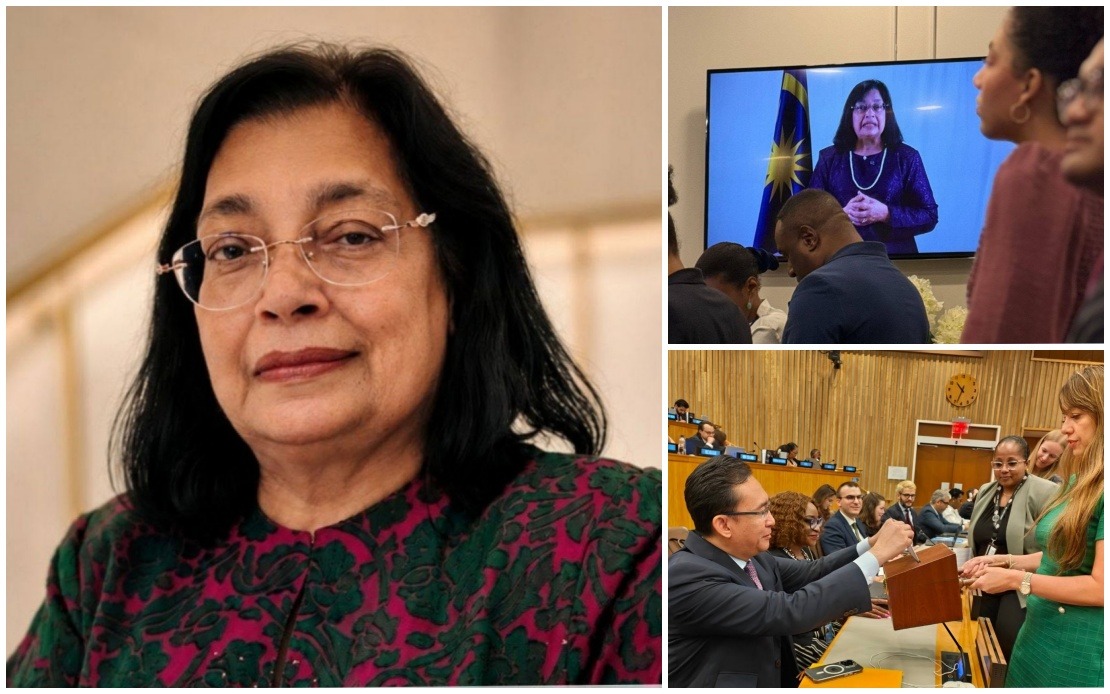
Datuk Yasmeen Muhamad Shariff has secured a place on the United Nations Committee on the Rights of the Child for the 2027–2031 term, following her election at the UN Headquarters in New York on Tuesday. The Malaysian candidate demonstrated strong international support, garnering 136 votes from the 189 States Parties present and voting during the 21st Meeting of States Parties to the Convention on the Rights of the Child. Her decisive victory, which saw her poll the highest number of votes among candidates, underscores recognition of her professional standing and commitment to child welfare advocacy on the global stage.
This marks the second occasion that Shariff has been elected to the committee, following her previous tenure during the 2013–2017 term. Her reappointment reflects sustained confidence in her ability to champion children's rights and navigate the complex international framework governing child protection. The Foreign Ministry, in a statement released on Wednesday, characterised the election outcome as a validation of her expertise and unwavering dedication to enhancing the rights and welfare of children worldwide. The successful nomination represents a significant achievement for Malaysia's diplomatic efforts and reinforces the nation's standing within the multilateral human rights architecture.
As a committee member, Shariff will function as an independent expert operating in her personal capacity rather than as a government representative. This distinction is significant in the UN system, as it allows experts to provide impartial analysis and recommendations divorced from national interests or political pressure. Her role will encompass monitoring how member states implement the Convention on the Rights of the Child, engaging in substantive discussions with governments about their compliance obligations, and promoting an approach centred on children's fundamental rights when addressing global challenges affecting young people. Through these mechanisms, committee members like Shariff contribute to shaping international child protection standards and best practices.
The committee's mandate has grown increasingly demanding in recent years as transnational challenges—from climate change and digital safety to migration and armed conflict—increasingly impact children across borders. Shariff's expertise will be needed to help the committee navigate these evolving issues and ensure that children's voices and interests remain central to international policy discussions. Her appointment comes at a time when the protection of children's rights faces mounting pressures from economic inequality, pandemic aftereffects, and geopolitical instability. The committee serves as a critical oversight body, reviewing periodic reports from States Parties and issuing recommendations designed to strengthen domestic frameworks for child protection.
Malaysia's Foreign Ministry characterised the election as validation of the nation's broader commitment to advancing children's rights through comprehensive policy and legislative measures. The ministry emphasised that Malaysia has pursued inclusive approaches to child welfare, implementing legal reforms and initiating programmes aimed at enabling every child to develop to their full potential. This framing positions the country's nomination success within a narrative of progressive governance and international responsibility. The emphasis on inclusivity reflects growing global recognition that child protection cannot be achieved through isolated measures but requires coordinated action addressing education, health, nutrition, protection from exploitation, and social inclusion.
The appointment also reflects cooperation between Malaysia's Foreign Ministry and the Ministry of Women, Family and Community Development. The latter agency played an instrumental role in developing the nomination and supporting Shariff's candidacy, demonstrating how different government portfolios must coordinate on international human rights commitments. This interagency collaboration underscores that child protection is not solely the purview of foreign policy specialists but demands input from agencies responsible for domestic social programmes, education policy, and family welfare. Such coordination is increasingly necessary as international human rights bodies scrutinise how well domestic policies align with treaty obligations.
For Southeast Asian readers, Shariff's reappointment carries particular significance given the region's diverse developmental contexts and child welfare challenges. Many ASEAN nations grapple with issues including child labour in certain industries, trafficking across borders, educational disparities, and protection of vulnerable populations. Having a respected expert from the region serving on the UN committee provides a valuable channel for raising Southeast Asian perspectives within global child rights deliberations. It also creates opportunities for knowledge-sharing among ASEAN states regarding effective child protection strategies and policy innovations that have proven successful in comparable contexts.
The UN Committee on the Rights of the Child derives its authority from the 1989 Convention on the Rights of the Child, which has achieved near-universal ratification and represents the most widely accepted human rights treaty globally. The committee's annual examination of state performance and issuance of concluding observations carry significant weight in diplomatic circles and among civil society organisations monitoring government compliance. Although the committee's recommendations are not legally binding, they establish international standards that governments must justify departing from and create benchmarks against which activists and international bodies can assess national performance. Shariff's presence on the committee will enable her to contribute to these authoritative assessments and help shape the trajectory of international child rights advocacy.
The 2027–2031 term will present particular challenges as the committee addresses emerging issues poorly anticipated when the original convention was drafted. Digital technology's impact on children—spanning issues like online exploitation, data privacy, and screen time effects on development—requires urgent attention. Climate change and environmental degradation increasingly threaten child welfare, particularly in vulnerable nations. Forced migration and displacement affect millions of children globally. The committee must develop analytical frameworks and policy recommendations addressing these contemporary challenges while remaining grounded in the convention's foundational principles. Shariff's appointment provides Malaysia and Southeast Asia with a direct voice in these critical deliberations.
Malaysia's sustained engagement with UN human rights mechanisms demonstrates the country's commitment to participating constructively in multilateral governance despite occasionally contentious relationships with international human rights bodies. By supporting Shariff's candidacy and ensuring her nomination reached the election, Malaysia positioned itself as a responsible stakeholder in the international human rights system. This approach helps balance Malaysia's sovereignty concerns with recognition that global challenges—particularly those affecting vulnerable populations like children—benefit from international cooperation and accountability frameworks. The successful election affirms that nations can pursue both national interests and broader commitments to universal human rights principles.