Hanging in Suzanne Lim's room is a cherished black and white photograph of her late grandparents, captured mid-waltz in a 1950s dance hall. Impeccably dressed and frozen in motion, the image represents more than a single moment—it marks the genesis of a lifelong passion for vintage clothing and cultural preservation. At 33, the graphic designer credits this singular photograph as the spark that would eventually lead her to amass a substantial collection of traditional Malaysian garments and document her relationship with them across social media platforms. Her grandparents' enthusiasm for dancing and contemporary fashion of their era established a foundation that would guide her personal aesthetic and cultural curiosity for decades to come.
The influence of her grandparents extended far beyond sentimental value. Her grandfather's devotion to rock and roll and her grandmother's career as a taxi dancer exposed the younger Lim to the intersection of movement, culture, and personal expression through dress. Beginning formal dance training at age four, she progressed through Latin and ballroom competitions, experiences that brought her into direct contact with elaborate costumes and accessory work. This early immersion proved transformative, shaping her understanding of how garments function as cultural markers and vessels of historical meaning. The investment of time and energy in mastering these physical disciplines created a tangible connection to the past that transcended academic learning.
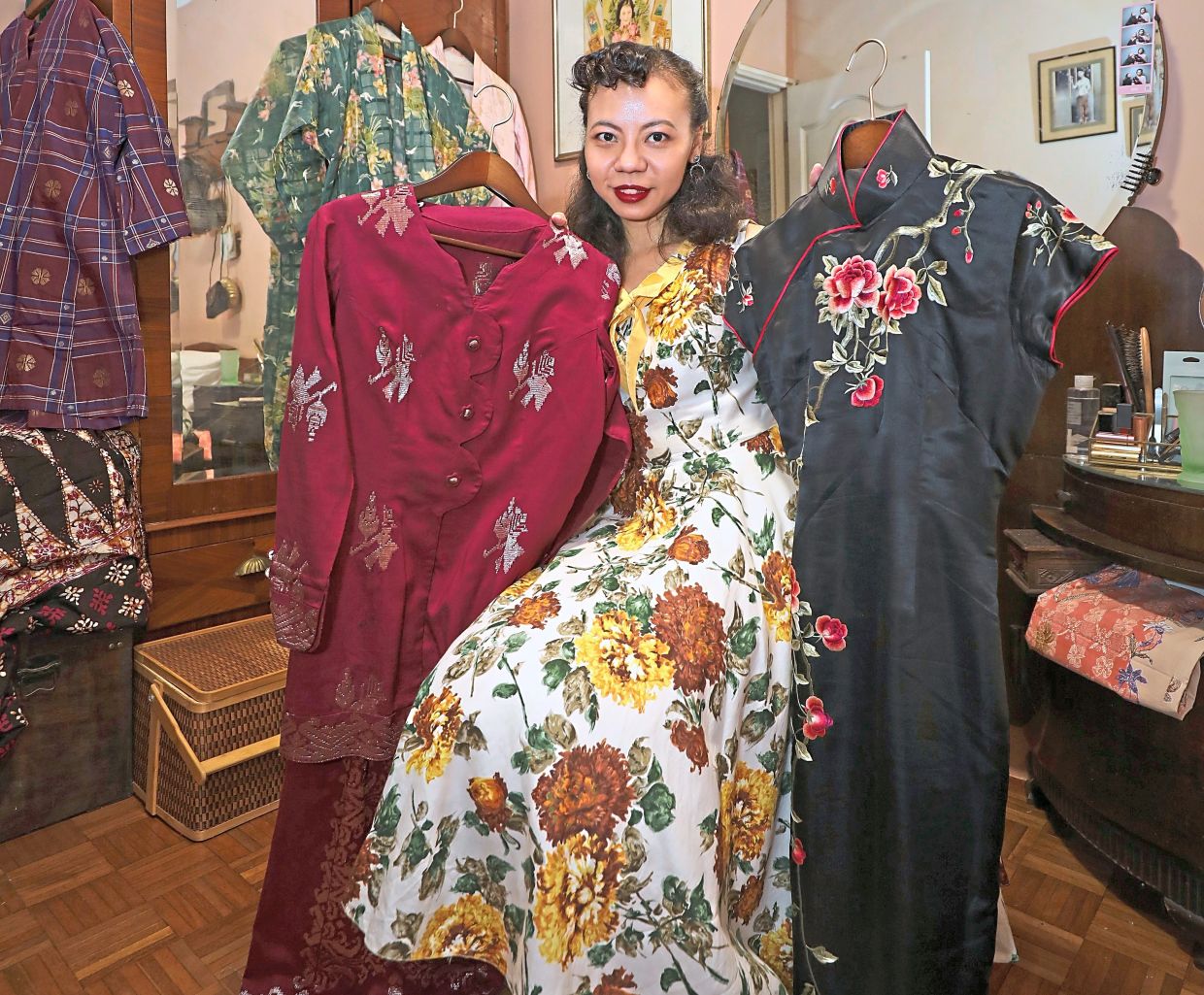
Lim's involvement with her secondary school cultural club solidified her trajectory toward studying traditional garments with greater intentionality. During performances of traditional dances at school events, she encountered the intricate world of ceremonial dress—the layered significance of each component, from primary garments to finishing accessories. These experiences planted seeds of curiosity about the stories embedded within specific textiles and silhouettes. Years of accumulation eventually crystallised into something more purposeful: a curated collection of kebaya, cheongsam, batik, and songket pieces that serve as both personal wardrobe and historical archive. What began as acquisitive enthusiasm transformed into scholarly passion when Lim realised that garments function as primary documents, offering insights into economic conditions, social hierarchies, and aesthetic values of their respective periods.
Lim's approach distinguishes itself through her conscious use of heritage locations as backdrops for her photographs. Rather than merely possessing vintage pieces, she creates visual narratives that contextualise clothing within Malaysian architectural and landscape history. This methodology acknowledges a fundamental gap in contemporary engagement with cultural preservation: museum visits and academic resources no longer represent the primary channels through which people access historical information. By leveraging social media platforms, Lim positions herself as an alternative educator, someone who can render heritage accessible to younger audiences who may feel alienated by traditional institutional approaches. Her visual documentation argues implicitly that fashion history deserves the same critical attention as political or military history.
Mohamad Alif Daniel Mohammad Nor, at 25, approaches historical clothing through a different lens, though his conclusions parallel Lim's regarding the educational capacity of authentic garments. His grandfather's narratives about Malaysia's past cultivated an early interest that branched into multiple related fields—music, cinema, and military uniforms. Beginning his collecting efforts in his mid-teens with Japanese occupation currency notes, he gradually expanded his scope to encompass broader categories of historical material culture. This methodical progression demonstrates how initial curiosity can deepen into genuine expertise when pursued with intellectual rigour and authentic interest.
Mohamad Alif Daniel's membership in Persatuan Reka Ulang Sejarah (PRUS) elevated his engagement beyond passive collecting into active historical re-enactment. Within this community, participants reconstruct historical scenarios with attention to period accuracy, attempting to inhabit and understand the lived experiences of previous generations. This immersive approach offers advantages over textbook learning, providing embodied knowledge of how clothing functioned within specific historical contexts. The act of wearing, moving in, and maintaining historical garments creates muscle memory and intuitive understanding of practical constraints and possibilities that written descriptions cannot convey. Mohamad Alif Daniel frequently articulates that this hands-on methodology has taught him far more about culture, identity, and historical consciousness than conventional academic study could achieve.
While Lim's practice differs from historical re-enactment, she embraces similar philosophical premises about clothing's capacity to illuminate the past. She views her collection as tangible evidence of a historical moment that would otherwise remain abstract and difficult to visualise. By wearing these pieces and documenting them with attention to historical context, she attempts to make heritage feel concrete and immediate rather than distant and theoretical. Her acknowledgment that contemporary audiences have largely abandoned museums and scholarly sources reflects a broader shift in how information circulates and gains credibility. She positions her platform as a counterbalance to these trends, accepting responsibility for accurate representation while recognising her position's inherent limitations.
Lim's practice necessarily involves negotiation between strict historical accuracy and contemporary creative expression. She candidly admits that not every outfit achieves perfect period authenticity, particularly when she deliberately applies modern aesthetic sensibilities to vintage pieces. However, when working with genuinely historical textiles and garments, she consciously strives for fidelity to original construction and styling. This calibrated approach acknowledges that contemporary audiences possess limited exposure to authentic historical dress—simply demonstrating that particular Malaysian textiles existed can generate genuine educational value. The act of rendering heritage tangible through physical presence in social media feeds creates access points for viewers who might otherwise never encounter these materials.
Lim has observed a measurable increase in younger Malaysians engaging in vintage collecting and historical garment appreciation, a trend she partially attributes to the psychological consequences of contemporary digital life. The tactile, material nature of vintage garments provides relief from the abstract, screen-mediated existence that characterises modern existence. There exists genuine yearning among younger generations for connection to something physically present and historically rooted, a form of escape from the accelerated temporality of digital platforms. This nostalgic impulse need not entail literal replication of the past; instead, young people demonstrate considerable creative agency in how they incorporate historical inspiration into contemporary presentation. This balance between reverence and innovation energises contemporary vintage fashion culture.
Yet Lim insists that creative freedom requires principled boundaries. Authenticity matters, not merely as an aesthetic commitment but as a cultural responsibility. When garments become divorced from their original meanings through excessive reinterpretation, heritage risks becoming kitsch or hollow simulation. The fundamental architecture of traditional clothing must remain recognisable and respectfully rendered; otherwise, the relationship between wearer, object, and historical past deteriorates into superficial appropriation. This ethical framework prevents heritage from dissolving into mere aesthetic resource, maintaining the distinction between genuine cultural engagement and commodified nostalgia.
Mohamad Alif Daniel has noted a similar phenomenon in his own social media practice: his documentation of traditional attire has inspired others, particularly individuals who previously felt self-conscious wearing such garments in public spaces. By demonstrating confident, knowledgeable presentation of historical dress, both Lim and Mohamad Alif Daniel actively normalise and celebrate Malaysian cultural expression. They function as cultural ambassadors who implicitly argue that heritage represents not embarrassment or irrelevance but rather a legitimate foundation for contemporary identity formation. This psychological reclamation of cultural pride through material practice extends far beyond personal aesthetic choice; it constitutes a subtle form of cultural activism that resists homogenising forces and reasserts the value of localised historical knowledge.
The convergence of these two practitioners—one emphasising photographic documentation and social media engagement, the other privileging immersive historical re-enactment—suggests that Malaysia's younger generation is developing increasingly sophisticated relationships with the past. Rather than viewing history as fixed and inaccessible, they engage heritage as something dynamic, tangible, and personally meaningful. Through vintage clothing collection, historical documentation, and public performance of traditional dress, they negotiate between preservation and innovation, authenticity and creativity. Their work implicitly challenges institutional narratives about cultural preservation, arguing that heritage remains vital and relevant precisely when it connects meaningfully with contemporary life. As Malaysia continues rapid modernisation and cultural globalisation, these grassroots efforts to maintain connection with material and embodied history may represent essential counterbalances to forces threatening cultural erosion.

