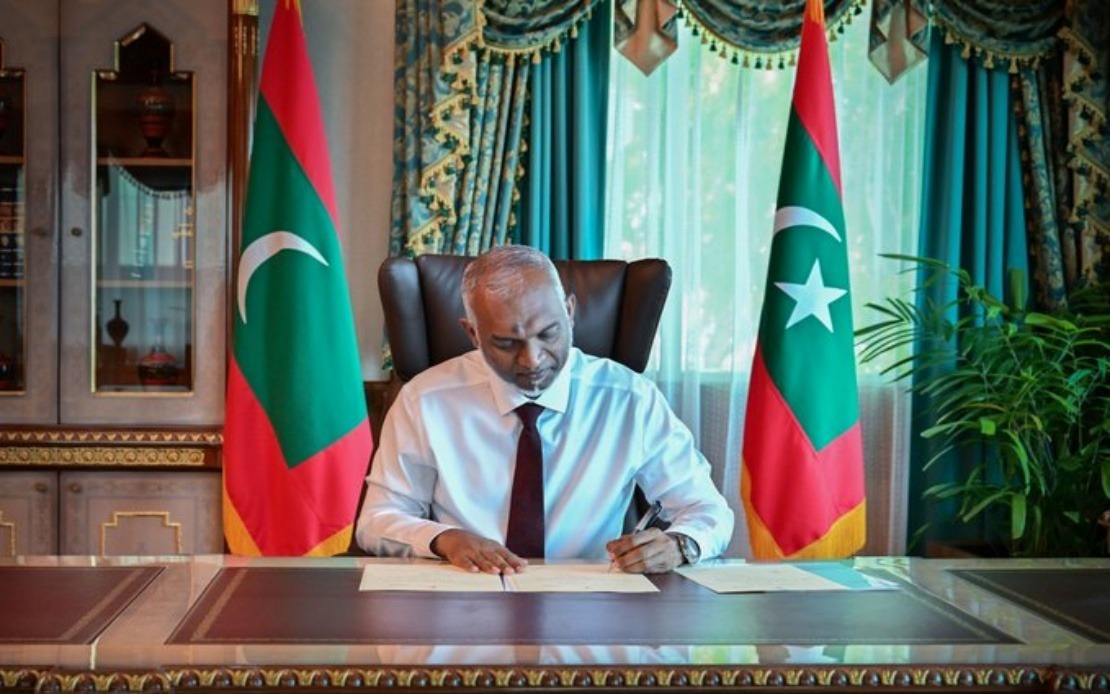
Maldives President Mohamed Muizzu has conveyed warm National Day greetings to Malaysia, underscoring the deep historical bonds that have characterised relations between the two Indian Ocean nations. In messages sent to His Majesty Sultan Ibrahim, King of Malaysia, and Prime Minister Datuk Seri Anwar Ibrahim on Monday, Muizzu expressed his commitment to strengthening the bilateral partnership and advancing shared interests across multiple sectors.
In his communication to Sultan Ibrahim, the Maldivian leader reflected on the trajectory of diplomatic relations, noting that Malaysia and the Maldives have maintained consistently cordial ties spanning more than five decades. According to the Maldives presidency statement, this long-standing relationship rests upon a foundation of genuine friendship, reciprocal respect, and genuine commitment to practical cooperation. Muizzu seized the occasion to reaffirm his determination to elevate bilateral engagement and expand the scope of collaboration between the two nations across diplomatic, economic, and cultural dimensions.
The president's separate correspondence with Anwar painted a picture of relations characterised by regular interaction at the highest levels of government. Muizzu highlighted how the two nations have nurtured their partnership through consistent engagement among political leadership and robust cultural exchanges between their populations. Such people-to-people contact represents a crucial element in cementing diplomatic relationships, particularly among predominantly Muslim nations in the Asia-Pacific region where shared religious and cultural heritage provides additional binding elements.
Muizzu's statement conveyed optimism regarding the trajectory of Malaysia-Maldives relations, expressing confidence that the friendship between the two countries would continue flourishing in the years ahead. The presidency characterised this enduring bond as a pathway toward expanded economic cooperation and the creation of fresh opportunities benefiting both Malaysian and Maldivian citizens. This framing suggests potential areas for deepening engagement, possibly encompassing trade, tourism, maritime cooperation, and regional security matters that affect both island and coastal nations in the Indian Ocean region.
Beyond the Maldives, Malaysia's National Day also prompted expressions of goodwill from other significant regional and international actors. Pakistan's Ministry of Foreign Affairs conveyed comprehensive congratulations through social media channels, wishing Malaysia and its government sustained peace and enduring prosperity. The Pakistani message emphasised the brotherly nature of relations between the two nations, reflecting the historical ties rooted in Islamic solidarity and post-colonial shared experiences that characterise Pakistan-Malaysia diplomatic engagement.
India similarly marked the occasion through its diplomatic channels, with External Affairs Minister Subrahmanyam Jaishankar extending greetings to Malaysian Foreign Minister Datuk Seri Mohamad Hasan as well as to the broader Malaysian government and population. Jaishankar's message carried strategic significance beyond ceremonial pleasantries, explicitly referencing India's desire to advance its Comprehensive Strategic Partnership with Malaysia. This language indicates India's view of Malaysia as a crucial partner in its broader regional architecture, particularly given Malaysia's geopolitical importance as a major Southeast Asian economy and its role in regional stability mechanisms.
The convergence of National Day messages from multiple countries reflects Malaysia's significant standing within regional diplomatic circles and its perceived importance to neighbouring and distant powers alike. For Malaysia, these expressions of goodwill from the Maldives, Pakistan, and India carry implications for the nation's strategic positioning in the Indian Ocean region and broader Asia-Pacific architecture. The emphasis on comprehensive strategic partnerships and people-to-people exchanges suggests that contemporary diplomatic relations increasingly transcend traditional state-to-state interactions, encompassing economic integration, cultural affinity, and institutional cooperation.
For Malaysian observers, the Maldivian president's framing of relations as foundational to expanded economic engagement warrants attention. The Maldives, despite its small population and geographic constraints, holds strategic value as a maritime nation controlling important sea lanes and representing a bridge between South Asian and Southeast Asian spheres of influence. Deepening Malaysia-Maldives economic ties could yield mutual benefits, particularly in tourism, maritime trade, and potentially renewable energy cooperation as both nations navigate climate change challenges.
India's explicit invocation of the Comprehensive Strategic Partnership demonstrates New Delhi's commitment to maintaining robust relations with Southeast Asian nations as part of its broader Indo-Pacific strategy. For Malaysia, India represents a major economic partner, defence cooperator, and fellow large Asian democracy with substantial diaspora communities and business interests in the country. The Indian message signals continuity in bilateral engagement regardless of political changes in either capital.
These National Day messages collectively illustrate how Malaysia maintains multifaceted diplomatic relationships extending across the Indian Ocean and subcontinent. Rather than confined regional relationships, Malaysia's partnerships with the Maldives, Pakistan, and India reflect interconnected networks of trade, culture, and strategic interest that characterise contemporary Asian geopolitics. The warmth and specificity of these greetings underscore Malaysia's success in cultivating broad-based international relationships that serve its economic and strategic interests while contributing to regional stability and prosperity.

