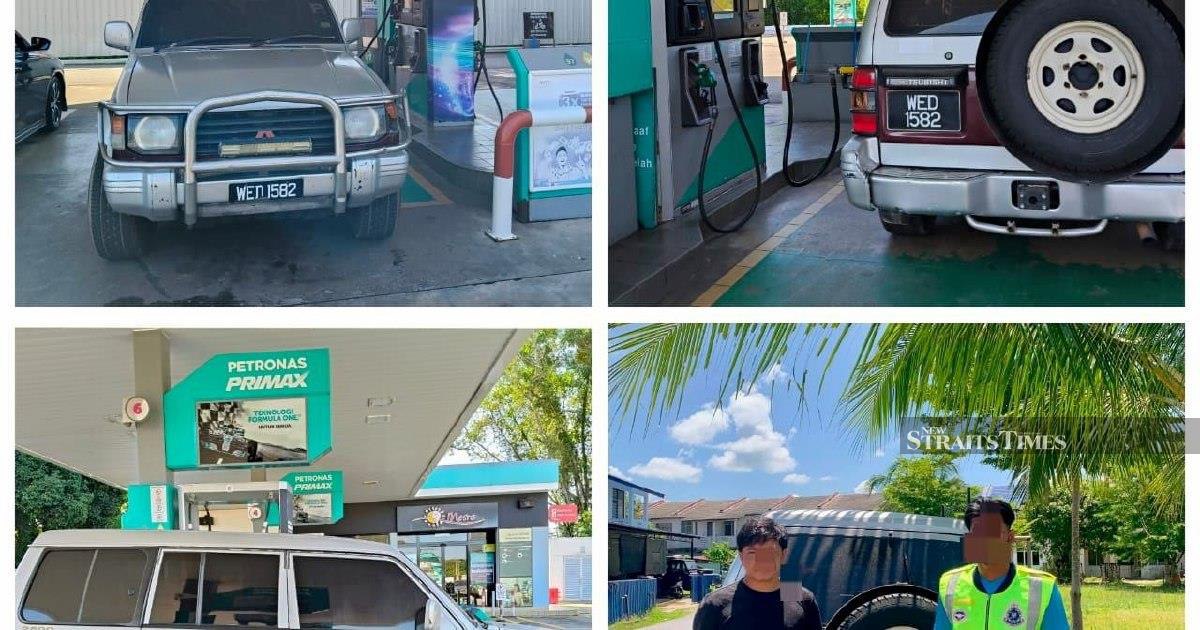
A 36-year-old man has been apprehended at a petrol station in Rantau Panjang on suspicion of engaging in a systematic scheme to smuggle petrol across the border into Thailand. The arrest, made yesterday, represents another development in the authorities' ongoing crackdown against fuel trafficking operations that continue to plague Malaysia's northern border regions.
Officers conducting routine surveillance at the petrol station identified the suspect making repeated fuel purchases on multiple occasions, triggering suspicions of involvement in cross-border smuggling activities. The pattern of behaviour—frequent visits within a short timeframe to buy significant quantities of fuel—raised red flags among enforcement personnel monitoring the Kelantan-Thailand corridor, one of Southeast Asia's most active smuggling routes.
The Rantau Panjang border checkpoint, located in Kelantan along the Malaysia-Thailand frontier, has long been a critical focal point for authorities combating fuel smuggling. The area's geography and infrastructure make it particularly vulnerable to illicit trading, with criminal networks exploiting the porous border to move subsidised Malaysian petrol into Thailand where fuel prices command a significant premium. This economic differential continues to incentivise smuggling operations that cost the Malaysian government substantial revenue annually.
Fuel smuggling from Malaysia has become a multi-layered criminal enterprise involving networks of buyers, transporters, and distribution networks on the Thai side. The scale of this illicit trade is estimated in hundreds of millions of ringgit annually, with syndicates employing increasingly sophisticated methods to evade detection. Individual runners like the suspect arrested at Rantau Panjang form the operational backbone of these networks, making repeated small purchases that collectively constitute major losses to state resources.
The economic incentive driving this smuggling cannot be overstated. Malaysian domestic fuel prices, heavily subsidised by the government, stand substantially below market rates in neighbouring Thailand. This artificial price gap creates persistent arbitrage opportunities that criminals exploit mercilessly. For a smuggler, the margin on petrol sold across the border provides returns far exceeding most legitimate commercial activities, explaining the tenacity with which these operations persist despite enforcement efforts.
Authorities have intensified operations along the northern border in recent years, deploying additional checkpoints and deploying technology to intercept fuel smuggling attempts. However, the vast volume of vehicles crossing at Rantau Panjang and other legitimate border crossings complicates enforcement significantly. Criminal networks adapt quickly to detection methods, employing cutouts and using inconspicuous vehicles to transport fuel in smaller quantities designed to avoid triggering inspection thresholds.
The suspect's arrest underscores a fundamental challenge facing Malaysian law enforcement: the distinction between legitimate personal fuel purchases and those intended for smuggling requires close observation and intelligence gathering. While individual petrol purchases appear innocuous, patterns of repeated visits and large volumes become suspicious. This investigation likely benefited from coordination between various enforcement agencies monitoring the border area, including customs and border security personnel.
The implications of fuel smuggling extend beyond immediate financial losses. The diversion of subsidised fuel into illicit channels undermines the government's ability to manage domestic energy economics effectively. Furthermore, smuggling networks operating along the border often intersect with other criminal enterprises, creating connections between fuel trafficking and broader organised crime activities. Disrupting smuggling operations thus serves broader law enforcement objectives beyond simply protecting fuel revenues.
Malaysia's strategic location between major economies makes it inherently vulnerable to smuggling pressures. The Thai border presents particular challenges because of the persistent price differential and the density of cross-border commerce that provides excellent cover for criminal activity. Unlike some forms of contraband that can be more easily detected through physical inspection, fuel smuggling relies primarily on the volume of traffic to succeed, with perpetrators betting that enforcement resources cannot intercept every violation.
The case also highlights the reliance of enforcement on intelligence-led policing rather than random interdiction. The petrol station arrest suggests that authorities had specific information about the suspect's activities and were positioned to apprehend him. Such intelligence typically derives from tip-offs, surveillance of known smuggling networks, or pattern analysis identifying suspicious purchasing behaviour. This investigative approach has proven more effective than blanket enforcement at busy border checkpoints.
For Malaysian motorists and taxpayers, the ongoing fuel smuggling problem represents an immediate cost. The government's subsidised fuel system—designed to benefit domestic consumers—is undermined when significant quantities are diverted for black-market sales abroad. Each tonne of fuel smuggled represents foregone revenue that might otherwise support the subsidy programme or be redirected to other public services. The arrest at Rantau Panjang, therefore, is not merely a criminal matter but reflects broader economic tensions inherent in Malaysia's fuel pricing structure.
Moving forward, more effective solutions may require addressing the root cause—the fuel price differential that motivates smuggling. Some analysts advocate for pricing mechanisms that maintain domestic subsidies while reducing the margin that makes cross-border smuggling profitable. Others emphasise enhanced enforcement and stiffer penalties for perpetrators. The suspect arrested at Rantau Panjang will likely face charges under relevant customs and smuggling legislation, with the outcome potentially establishing important precedent for prosecuting similar cases.
The arrest at the Rantau Panjang petrol station serves as a reminder that fuel smuggling remains a persistent challenge requiring sustained, multi-agency commitment. As long as substantial price differentials exist between Malaysia and neighbouring countries, entrepreneurial criminals will continue developing new methods to exploit these gaps. Effective border management will remain essential to protecting Malaysia's economic interests and ensuring that subsidised fuel systems achieve their intended domestic policy objectives.

