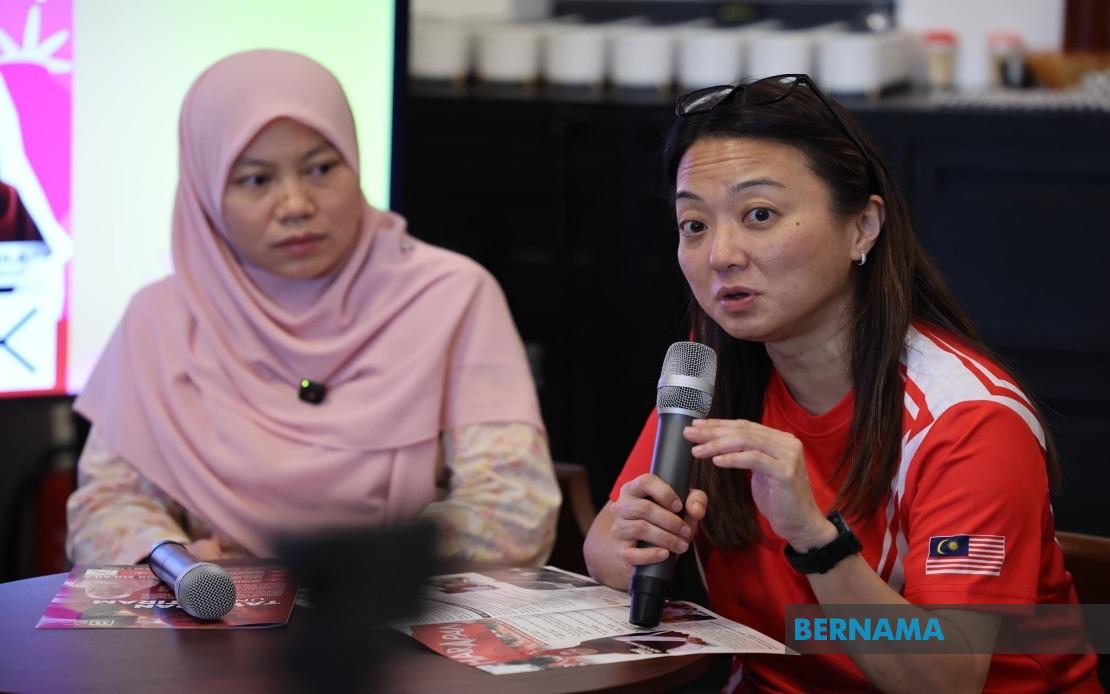
The charge that political parties are recycling identical campaign promises deserves scrutiny only if observers misunderstand what manifestos actually represent, according to federal minister Hannah Yeoh. Speaking in Johor Bahru on the eve of the state election, the DAP deputy secretary-general reframed the debate around manifestos that bear striking similarities across competing coalitions, suggesting instead that convergence on key policy areas signals responsible governance rather than intellectual laziness.
Yeoh's comments came in response to criticism levelled at Pakatan Harapan's platform for the 16th Johor state election, with detractors claiming substantial portions simply mirror the Barisan Nasional's published commitments. Rather than accepting the "copy-paste" framing, she argued that when multiple parties pledge action on welfare, housing, healthcare, and education, they are responding to an identical constituency—voters whose daily struggles transcend factional divides. This perspective reorients the conversation from accusations of imitation to an acknowledgement that democratic mandate flows from addressing overlapping community needs.
As Minister in the Prime Minister's Department (Federal Territories), Yeoh brings both a federal and state-level vantage point to Johor's electoral contest. She elaborated that welfare programmes, affordable housing initiatives, and economic security form the bedrock of public concern across Malaysia's socioeconomic landscape. When political opponents pledge to tackle identical challenges, she suggested, questioning their sincerity becomes less productive than evaluating their track records and implementation capacity. The overlap in policy language, by this logic, reflects not plagiarism but the democratic imperative that competing parties must credibly address shared grievances.
A central dimension of DAP's campaign strategy in Johor centres on gender representation and diversity within candidate selection. The party has fielded eight women among its total slate of 17 candidates, a move Yeoh framed as integral to DAP's institutional commitment to women's empowerment in governance. Beyond numerical representation, she underscored that female candidates possess the capability to occupy positions traditionally dominated by men, including senior executive roles such as Menteri Besar, provided voters grant their parties the mandate to govern.
Yeoh highlighted Nor Zulaila Abd Ghani, the DAP candidate contesting in Tiram, as exemplifying the calibre of women seeking election. With twelve years of administrative experience spanning local authorities, state agencies, and federal departments, Nor Zulaila brings substantive professional credentials to her candidacy. Yet Yeoh's endorsement extended beyond résumé credentials. She emphasised that Nor Zulaila's mixed-heritage background—Malay mother and Chinese father—symbolises the possibility of transcending racial categorisation that has long constrained Malaysian electoral discourse. Candidates of such profiles, Yeoh suggested, carry potential to normalise cross-communal conversation and defuse longstanding interethnic tensions through lived example.
The Tiram contest itself remains highly competitive, with Nor Zulaila facing opponents representing Barisan Nasional, Parti Bersama Malaysia, and Perikatan Nasional in a four-cornered battle. This fragmentation of the contest reflects broader dynamics in contemporary Malaysian politics, where the traditional binary between established coalitions has fractured into multiple smaller formations competing for voter attention and legislative seats. Each additional contender divides the electorate further, potentially reshaping expected outcomes and making ground-level campaigns increasingly consequential.
Pakatan Harapan's decision to contest all 56 state assembly seats across Johor signals confidence in its organisational capacity and electoral appeal, despite facing entrenched competition from Barisan Nasional's long tenure as the state's ruling coalition. This comprehensive contestation strategy requires significant resources, volunteer mobilisation, and candidate quality across constituencies ranging from urban centres to rural areas. The breadth of PH's campaign footprint in Johor carries implications not only for state-level governance but also for the coalition's national trajectory, as outcomes in Malaysia's second-largest state by population carry disproportionate weight in shaping federal political dynamics.
The election calendar compressed the campaign period into a tight window, with early voting scheduled for July 7 and general polling on July 11. This compressed timeframe reduces the duration available for sustained public engagement and candidate visibility, placing premium value on pre-existing party machinery, media penetration, and voter identification systems. Parties with stronger ground networks and name recognition enjoy structural advantages during abbreviated campaigns, potentially amplifying the relevance of incumbent status and established coalition identity.
Yeoh's intervention in the manifestos debate arrives at a moment when Malaysian voters increasingly demand concrete policy differentiation among competing parties. Her reframing attempts to shift discussion away from superficial accusations of plagiarism toward substantive evaluation of which coalitions can most credibly deliver on shared commitments. This argumentative strategy implicitly acknowledges that modern voter expectations focus less on rhetorical originality and more on demonstrable capacity to transform promises into results. The Johor election thus becomes a test case for whether such practical governance considerations can displace purely partisan messaging in electoral competition.

