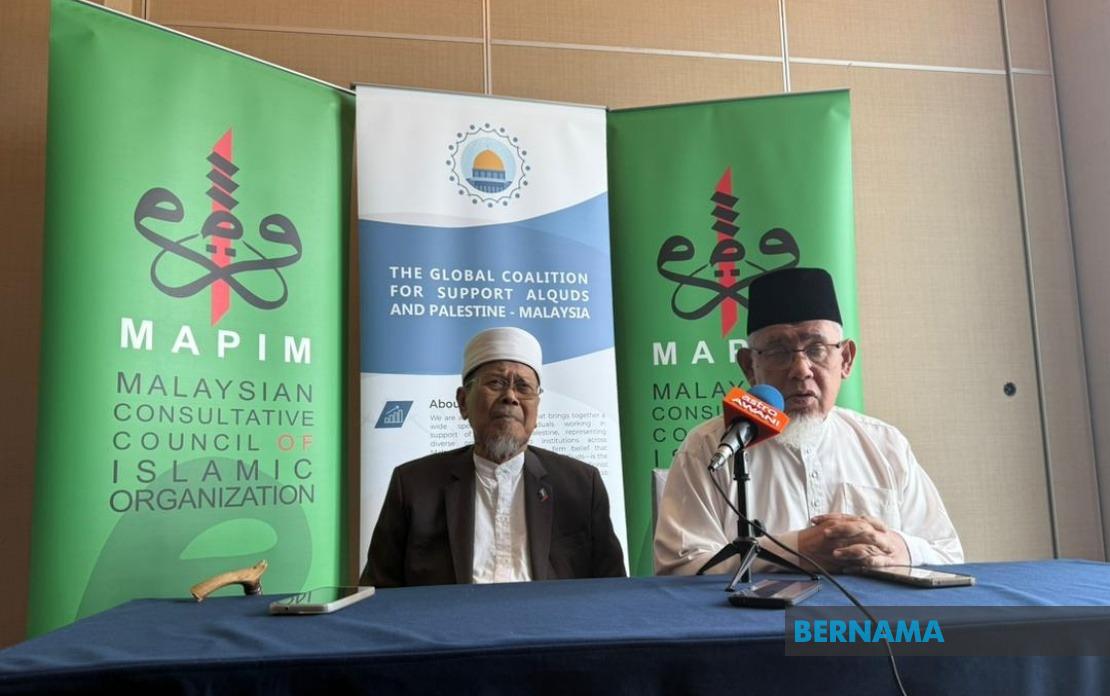
The Malaysian Consultative Council of Islamic Organisations (MAPIM) is preparing to convene a landmark gathering in Ipoh tomorrow that aims to strengthen institutional ties among mosques throughout Southeast Asia and beyond. In partnership with the Perak Islamic Religious Department (JAIPk), MAPIM will host the two-day Regional Mosque Conference 2026 at a prominent hotel in the state capital, drawing roughly 400 mosque representatives from Malaysia and eight neighbouring nations, as well as delegations from Turkiye, Iran and Pakistan. The assembly represents an ambitious attempt to forge regional cooperation among Islamic institutions at a critical moment for Muslim communities globally.
According to MAPIM president Mohd Azmi Abdul Hamid, the conference carries deeper significance than a routine annual observance. The gathering coincides with World Mosque Day, commemorated annually on August 21 to honour the memory of the devastating 1969 arson attack on Al-Aqsa Mosque in Jerusalem. However, Mohd Azmi stressed that the occasion should transcend symbolic remembrance and instead catalyse substantive action. "For MAPIM, commemorating World Mosque Day should not merely be an annual symbolic event," he stated at a press briefing, emphasising instead the need to "revive the mosque's role as a centre of strength for the Muslim community." This framing reflects a broader conviction within MAPIM's leadership that mosques must evolve beyond their traditional spiritual functions to address contemporary social and economic challenges.
The conference structure reflects an ambitious agenda spanning multiple dimensions of institutional development. MAPIM has identified seven primary objectives guiding the two-day programme, chief among them establishing a durable regional cooperation network binding mosques across participating nations. The conference also prioritises integrating youth into mosque governance and community initiatives, whilst simultaneously fostering economic participation within Muslim communities. Strengthening partnerships with Islamic non-governmental organisations constitutes another pillar, recognising that secular and religious institutions must coordinate effectively to serve Muslim populations comprehensively. These objectives signal MAPIM's recognition that isolated institutional efforts cannot adequately address the multifaceted challenges confronting Muslim communities in Southeast Asia.
The geographical scope of participation underscores the pan-regional character of this initiative. Delegates from Indonesia, Singapore, Brunei, Timor-Leste, Myanmar, Cambodia, Thailand and Vietnam will join Malaysian counterparts in deliberations. This unprecedented assembly of mosque leaders across Southeast Asia's diverse Muslim communities—from Indonesia's substantial Islamic majority to Singapore's minority Muslim population and Myanmar's embattled Rohingya communities—creates unusual opportunities for knowledge-sharing and coordinated advocacy. The inclusion of representatives from Turkiye, Iran and Pakistan broadens the conference's international dimension, potentially enabling dialogue between Southeast Asian interpretations of Islamic practice and those prevailing in traditional Islamic heartlands.
The conference programme combines academic rigour with strategic visioning. Scheduled presentations will address theological and institutional dimensions of mosque governance, whilst international dialogue sessions will facilitate direct exchange among senior Islamic leaders. Notably, the agenda devotes specific attention to the Palestinian cause and the Al-Aqsa Mosque, reflecting widespread sentiment among Muslim communities throughout Southeast Asia regarding these geopolitical concerns. This thematic emphasis acknowledges that religious institutions increasingly must articulate positions on global humanitarian crises affecting Muslim populations, particularly those with deep historical and spiritual significance within Islamic consciousness.
Three major initiatives will be formally launched during the conference, each addressing distinct but complementary objectives. A regional mosque coalition devoted to Palestine will establish an organisational framework for coordinated advocacy on Middle Eastern affairs. Concurrently, MAPIM will unveil a comprehensive book examining the contemporary role of mosques, presumably offering guidance to mosque administrators navigating evolving community expectations. Most innovatively, MAPIM will introduce the MAPIM Gold Dinar, a financial instrument designed to facilitate public contributions toward the Al-Aqsa Mosque Fund. This instrument represents an attempt to democratise participation in supporting Palestinian Islamic institutions, enabling individual Muslims across the region to contribute tangibly regardless of their financial capacity.
Mohd Azmi articulated the philosophical underpinning of these initiatives, emphasising their contribution to advancing global humanitarian concerns beyond sectarian boundaries. The MAPIM Gold Dinar specifically addresses a practical impediment to fundraising—the difficulty ordinary Muslims encounter when attempting to contribute to international Islamic causes. By creating a structured financial mechanism, MAPIM facilitates participation whilst simultaneously generating sustainable revenue streams for Al-Aqsa-related projects. This approach reflects sophisticated understanding of how institutional innovation can mobilise grassroots support for transnational Islamic causes.
The conference's most consequential expected outcome involves producing a substantive declaration and implementable action plan emerging from deliberations among 400 mosque leaders. Unlike symbolic resolutions adopted at countless gatherings and subsequently abandoned, MAPIM envisions concrete operational commitments that participating mosques will execute within their respective communities and nations following the conference's conclusion. This emphasis on post-conference implementation distinguishes the gathering from rhetorical exercises, suggesting organisers are attempting to translate rhetorical commitment into institutional practice. The durability and effectiveness of such implementation mechanisms will ultimately determine whether this conference initiates meaningful regional cooperation or merely constitutes a momentary gathering.
For Malaysia specifically, the conference's Ipoh location elevates the nation's profile within regional Islamic governance networks. Hosting such an assembly positions Malaysia as a centre for Islamic institutional development and inter-mosque dialogue, enhancing its soft power within Muslim-majority and Muslim-minority nations throughout Southeast Asia. This positioning aligns with Malaysia's broader diplomatic strategy of positioning itself as a bridge between Southeast Asia and the broader Islamic world. The involvement of the Perak Islamic Religious Department alongside MAPIM signals institutional alignment within Malaysia's federal structure, potentially establishing models for cooperation between national organisations and state-level Islamic authorities that other jurisdictions might emulate.
The broader significance of this conference extends to questions about how Southeast Asian Muslim institutions coordinate responses to geopolitical developments affecting Islamic communities globally. The deliberate inclusion of perspectives from nations with disparate Muslim population demographics—from Indonesia's Islamic-majority context to Myanmar's persecuted minority communities—creates space for nuanced discussion acknowledging regional diversity. Whether such gatherings can translate rhetorical solidarity into sustained institutional cooperation remains uncertain, but the attempt itself reflects recognition that Muslim communities throughout Southeast Asia face interconnected challenges demanding coordinated responses transcending national boundaries and individual mosque jurisdictions.

