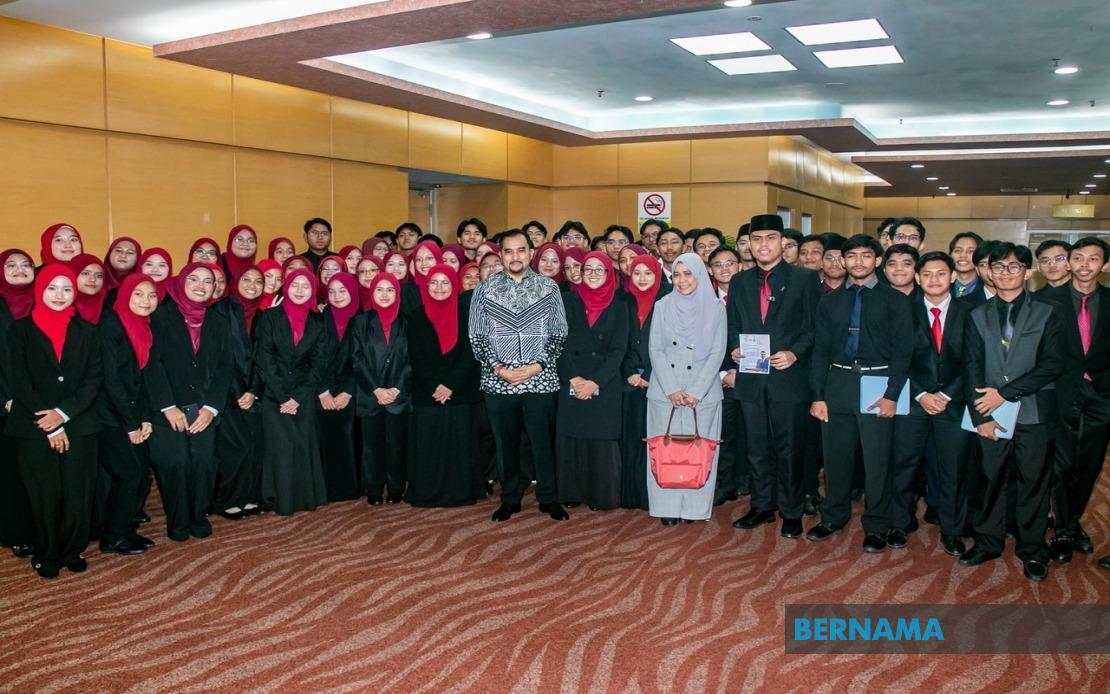
Majlis Amanah Rakyat (MARA) has restarted its medical education programme at Al-Azhar University in Egypt, welcoming 78 students in its first intake since the initiative was shelved in 2019. The resumption marks a significant milestone for Malaysia's premier indigenous scholarship body, reflecting renewed strategic interest in diversifying pathways for training medical professionals across the Southeast Asian region and beyond. The decision underwent formal Cabinet approval, positioning the scheme within Malaysia's broader educational cooperation framework with international institutions.
Mara chairman Datuk Dr Asyraf Wajdi Dusuki outlined the financial parameters underpinning the programme's revival during comments made at the 2026 Premier MARA-Sponsored Overseas Students Pre-Departure Programme in Kuala Lumpur. The organisation negotiated a 50 per cent discount with Al-Azhar University, reducing the per-student expenditure to RM350,000 across the five-year medical curriculum. This pricing structure delivers substantial cost savings compared to domestic medical education pathways, where institutional fees and living expenses typically accumulate to between RM700,000 and RM800,000 per student, making the Egyptian option approximately half the price of equivalent local provision.
The financial efficiency of the Al-Azhar arrangement underscores a pragmatic approach to managing educational expenditure whilst maintaining academic rigour. For MARA and the government sponsoring bodies supporting these trainees, the discount negotiated with the Egyptian institution represents tangible progress in stretching limited scholarship resources across larger student cohorts. Such cost containment strategies become increasingly important given Malaysia's demographic pressures and rising demand for subsidised tertiary education among bumiputera constituencies.
Prime Minister Datuk Seri Anwar Ibrahim granted approval for dispatching the initial cohort, an endorsement that reflects the administration's commitment to sustaining MARA's core mission of enabling indigenous Malaysian youth to access world-class professional training. Asyraf Wajdi extended formal gratitude to the Premier, signalling both institutional deference and appreciation for executive backing essential to programme implementation. This political endorsement carries weight beyond ceremonial gesture, as Cabinet-level clearance ensures budgetary allocation and sustained governmental commitment necessary for long-term programme viability.
Beyond the Al-Azhar initiative, MARA is orchestrating a broader international student placement wave affecting 600 learners who have completed their preparatory-level studies at three major Kolej MARA facilities. These institutions—Kolej MARA Seremban in Negeri Sembilan, Kolej MARA Banting in Selangor, and Kolej MARA Kuala Nerang in Kedah—serve as gateways channelling talented bumiputera students toward tertiary institutions across multiple continents. Staged departures commencing the following week will distribute these cohorts systematically, accommodating logistical requirements and enabling tailored pre-departure orientation processes.
The geographic distribution of overseas destinations reveals MARA's diversified international education strategy. New Zealand, Canada, Australia, South Korea, the United Kingdom, and Egypt feature prominently among receiving nations, reflecting bilateral education agreements, institutional reputation criteria, and aligned professional standards sought by Malaysian policymakers. This multi-destination approach mitigates concentration risk whilst establishing networks of Malaysian-trained professionals across strategically important markets and allied nations.
Within the broader cohort, elite academic placement constitutes a notable achievement dimension. Forty students gained entrance to universities ranked among the world's top ten institutions, whilst a further 107 secured places at globally-ranked top-twenty universities. Most impressively, eleven students obtained places at Imperial College London, one of Britain's most selective scientific institutions. These outcomes testify to competitive calibre of MARA preparatory training and rigorous selection protocols identifying exceptional candidates capable of thriving within demanding international academic environments.
The Imperial College success represents particular significance for Malaysian scientific advancement. Imperial College's elite engineering, medicine, and natural sciences programmes have historically produced transformative research and professional leaders. Malaysian graduates emerging from such institutions often return with advanced credentials and international networks, potentially catalysing innovation ecosystems and elevating professional standards across domestic sectors ranging from healthcare to technology and infrastructure development.
Mara's revival of the Al-Azhar programme occurs within evolving regional contexts regarding professional workforce development and educational cooperation. Egypt's ancient university carries substantial prestige within Islamic educational traditions whilst maintaining accredited medical curricula meeting international competency standards. For Malaysian medical trainees, Al-Azhar exposure provides intercultural experience, theological scholarship traditions, and integration with fellow Muslim medical professionals from across the broader Islamic world—dimensions extending beyond conventional Western medical training environments.
The seven-year suspension period preceding programme resumption warrants contextual consideration. The 2019 discontinuation coincided with broader reviews of overseas scholarship efficiency and cost management within Malaysian public sector frameworks. Intervening years witnessed debates regarding optimal allocation of limited educational subsidies and comparative returns from different institutional partnerships. The 2024 resumption suggests these deliberative processes yielded conclusions favouring Al-Azhar engagement, presumably grounded in revised cost structures, institutional performance metrics, and alignment with government workforce planning priorities identifying physician shortages within public healthcare systems.
Looking forward, the reactivated scheme signals governmental confidence in MARA's stewardship and commitment to maintaining pathways for indigenous professional development. Successful placement of initial cohorts will likely determine programme trajectory and potential expansion of student numbers. For Malaysian medical education broadly, the Al-Azhar initiative supplements domestic capacity constraints whilst introducing alternative training experiences enriching the professional knowledge base and international perspectives characterising Malaysian medicine.
The programme carries implications extending beyond individual beneficiary trajectories. Graduates completing medical qualifications at accredited international institutions enhance Malaysia's professional prestige and capability. Their return typically strengthens public healthcare provision, academic medicine, and research capacity. Additionally, the visible commitment to sponsoring bumiputera medical education reinforces MARA's institutional legitimacy and governmental investment in affirmative educational policies serving indigenous communities—politically resonant objectives within Malaysian governance priorities.

