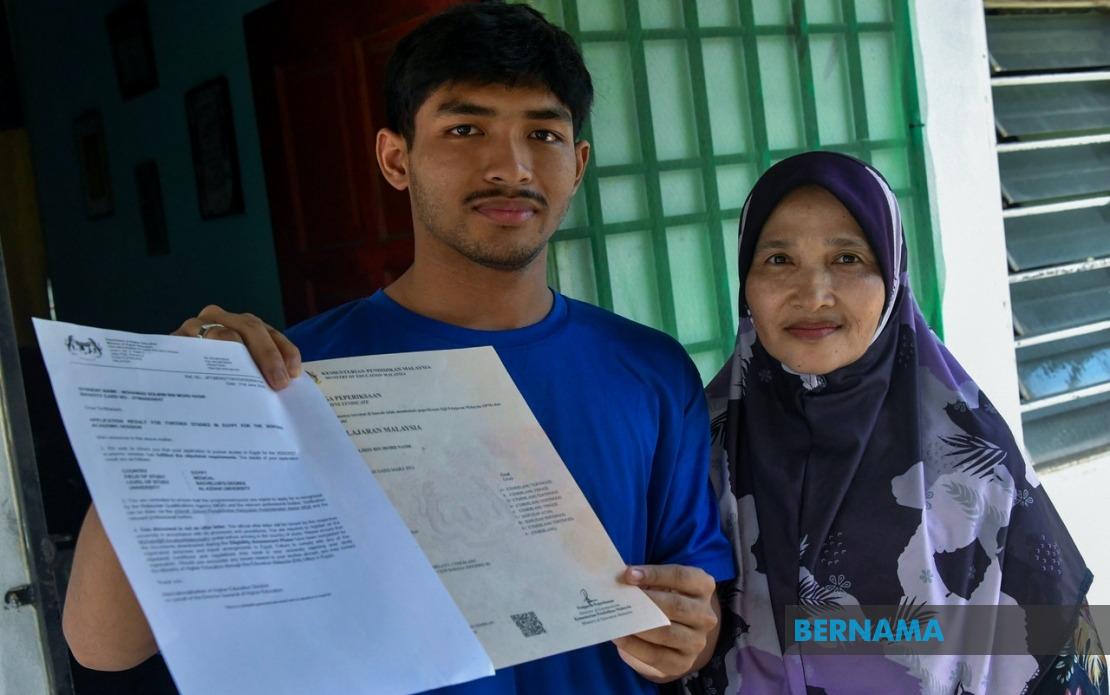
A Kelantan teenager with exceptional academic credentials has been rescued from financial hardship that threatened to derail his medical ambitions, after the Majlis Amanah Rakyat (MARA) intervened with a comprehensive support package. Mohamad Solihin Mohd Nasir, 19, had reached the difficult point of considering rejection of his Al-Azhar University acceptance when confronted with the reality of RM100,000 needed across five years for tuition and living costs. The intervention represents both a personal turning point for the student and a demonstration of MARA's commitment to preventing talent from slipping through society's cracks due to economic circumstance.
The student's circumstances exemplify the complex barriers facing bright young Malaysians from disadvantaged backgrounds. Mohamad Solihin achieved a stellar 3.96 cumulative grade point average at Kelantan Matriculation College, earning his medical school place through pure academic merit. However, his family situation presented an insurmountable obstacle: his father died of a heart attack when Mohamad Solihin was in primary school, and his mother, now 60 years old and battling thyroid disease, relies on support from her other children. As the youngest of five siblings in a household already stretched financially, the prospect of funding overseas medical education seemed impossible, despite representing a lifelong aspiration.
MARG chairman Datuk Dr Asyraf Wajdi Dusuki, during a video call with the student at his home in Kampung Kubang Keranji in Kota Bharu, outlined two pathways forward. The first option involves MARA funding his Egyptian studies, including provision of an intensive Arabic language course to meet institutional entry requirements before formal medical coursework commences. The second option offers sponsorship for medical studies at Universiti Sains Malaysia Health Campus (USMKK), providing an alternative that would keep him within Malaysia while pursuing his medical qualification. This flexibility demonstrates MARA's pragmatic approach to removing barriers for talented students, recognising that choice matters when addressing financial obstacles.
MARG's selection criteria prioritise precisely this demographic: high-achieving students from economically disadvantaged backgrounds, with particular emphasis on those who have experienced the loss of a parent. Asyraf Wajdi emphasised that Mohamad Solihin represents the core of MARA's mission, combining exceptional academic performance with genuine financial hardship and the absence of a parent's income and support. This targeted approach reflects an institutional philosophy that academic potential should not be squandered by accident of birth or family circumstance, particularly when the investment in a young person's education yields a qualified physician who will serve Malaysia's healthcare system.
The student's motivation for pursuing medicine carries profound personal significance. Mohamad Solihin aspires specifically to become a cardiothoracic surgeon, a specialisation directly inspired by his father's death from cardiac disease when he was seven years old. Rather than allowing this tragedy to derail his ambitions, he has channelled his grief into a determined pursuit of the medical knowledge that might help him save others from similar loss. This personal narrative adds weight to the investment MARA is making, as it represents not mere credential accumulation but a genuine calling to serve in a critical healthcare field.
Before MARA's intervention, the student and his school community had already mobilised to address the funding crisis. Teachers at MARA Junior Science College (MRSM) Jeli, where Mohamad Solihin completed his secondary education, launched fundraising initiatives on his behalf. The student also submitted applications to multiple government and community organisations seeking assistance, including the Kelantan Islamic Religious and Malay Customs Council, Kelantan Islamic Foundation, and Kelantan Darulnaim Foundation. This multi-pronged approach, typical of disadvantaged families seeking educational opportunities, underscores the systemic gaps that exist when promising students face financial barriers to advancement.
His mother, Faridah Mohamad, articulated the family's position with clarity born of genuine struggle. While she expressed joy at her son's achievement in gaining admission to Al-Azhar University, she simultaneously conveyed the painful reality that the household possessed no financial capacity to realise the opportunity. Her plea for assistance—rooted in her son's lifelong ambition to study medicine—represents the position of countless Malaysian families where academic success does not automatically translate to educational advancement due to resource limitations. The fact that MARA could reverse what appeared to be an inevitable disappointment demonstrates the power of targeted institutional support.
Timing has proven critical in this case. Mohamad Solihin is scheduled to depart for Egypt between August 21 and 29, provided funding is secured. This compressed timeline explains the urgency of MARA's intervention and the direct nature of Asyraf Wajdi's engagement with the case. The chairman's personal involvement in a video call with the student and his family signals institutional priority and removes bureaucratic delays that might have prevented his departure. This responsiveness distinguishes MARA's approach from more cumbersome government processes that might have taken months to process applications.
MARG's decision to offer multiple pathways—Egypt or Malaysia—acknowledges a reality often overlooked in discussions of overseas education: not all students benefit equally from studying abroad, and domestic alternatives can deliver comparable medical qualifications. Universiti Sains Malaysia Health Campus enjoys strong academic standing and produces physicians who serve Malaysia's healthcare system effectively. By offering this option alongside the Al-Azhar pathway, MARA demonstrates flexibility while maintaining commitment to ensuring Mohamad Solihin's medical training proceeds regardless of location. However, the student has indicated his continued preference for Al-Azhar, suggesting that his choice has been driven by intrinsic interest in the institution rather than desperation born of limited options.
The public dimension of this case carries implications for how Malaysia addresses talent development within disadvantaged communities. By publicising Mohamad Solihin's story and his bank account for public contributions, MARA has created opportunity for private citizens and organisations to participate in funding his education. This crowdsourcing approach complements government investment and acknowledges that educational support need not be exclusively public responsibility. It also demonstrates how individual stories, when given platform, can mobilise community resources beyond what formal institutions alone can provide.
From a policy perspective, Mohamad Solihin's case illustrates both the existing infrastructure of educational support and its limitations. That a student of his calibre nearly had to abandon medical studies due to financial constraints reveals gaps in reaching talented youth from underprivileged backgrounds early enough to prevent crisis-mode decision-making. While MARA's intervention prevents this particular tragedy, it also suggests that earlier, more systematic identification and support for promising students from low-income households could prevent numerous talented Malaysians from falling through gaps. The investment in his medical education will eventually yield a physician; the question remaining is how many other potential doctors have quietly abandoned their aspirations without equivalent institutional rescue.
Mohamad Solihin's journey from near-rejection to funded medical studies encapsulates both Malaysia's capacity to support meritorious talent and the vulnerability of that system to economic circumstance. His case provides a template: targeted identification of high-achieving students from disadvantaged backgrounds, rapid institutional response, and complementary support from schools and community organisations working in concert. As he moves toward his departure for Egypt and his Arabic language preparation, Mohamad Solihin represents not merely personal success but validation of a support system functioning as intended when it works well. The broader question facing Malaysian policymakers concerns how to systematise such interventions to ensure that talent remains the determinant of educational advancement, rather than family financial resources.

